
A toilet that keeps running usually needs attention soon, but not every case is an emergency. Call a plumber immediately if water is overflowing, leaking onto the floor, coming through a ceiling, or if you cannot shut off the supply. If the toilet is quietly refilling now and then, it is unlikely to flood the room, but it can waste a surprising amount of water and should not be ignored.
In many cases, the fault is a worn seal, sticking flush mechanism, or failing fill valve. You can make a few safe checks first, but a persistent running toilet or any external leak is a good reason to bring in a professional.
When to Call a Plumber for a Toilet That Keeps Running
Shut off the water and seek urgent help if it is overflowing, leaking onto the floor, or cannot be controlled. Book a plumber soon for visible damage, external leakage, or a fault that returns after adjustment. Safe checks may be reasonable when the cistern is accessible and the issue is limited to a quiet refill or sticking control.
A faint refill sound every few minutes is usually caused by water slowly escaping from the cistern into the bowl. It may seem minor, especially if the toilet still flushes normally, but it wastes water continuously. Fix it promptly rather than waiting for the mechanism to fail completely.
First, Stop the Water and Check for an Emergency
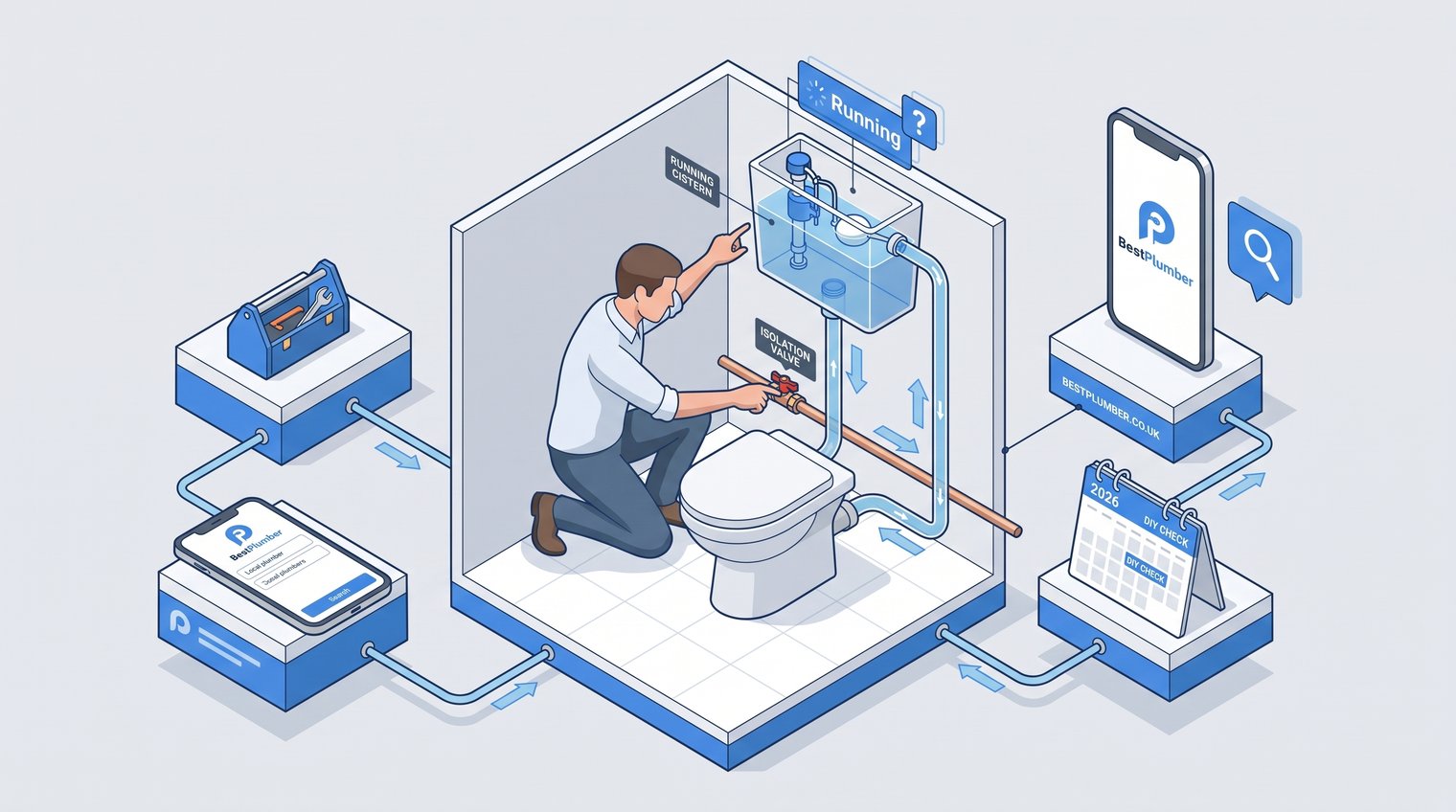
If the cistern is filling uncontrollably or water is escaping onto the floor, stop the supply before trying to diagnose anything. Most toilets have a small isolation valve on the pipe behind or beside the pan. Turn it clockwise to close it.
If that valve is stuck, damaged, or does not stop the flow, use the property's main stopcock instead. Do not force a seized valve with excessive pressure, and do not dismantle the cistern while water is still running freely.
Arrange urgent help today if water is spilling onto the floor, reaching electrical points, leaking through the ceiling below, or actively damaging flooring, walls, or cupboards. For practical steps while you wait, see what to do while waiting for an emergency plumber. A running toilet is inconvenient; an uncontrolled leak can quickly become a property-damage problem.
What a Constantly Running Toilet Usually Means
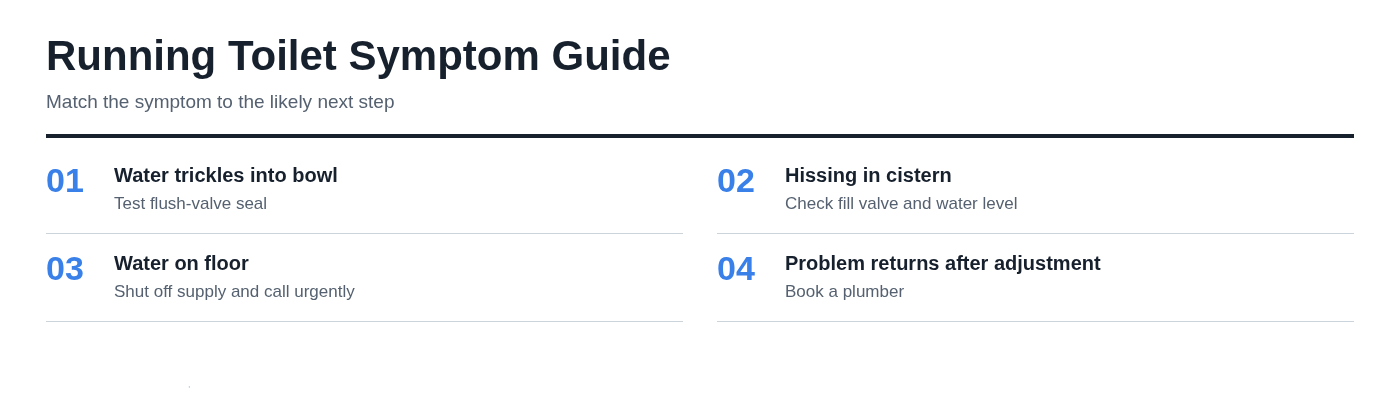
The first useful distinction is where the water is going. If water is trickling into the bowl, the flush valve or seal is often allowing cistern water to escape. If the cistern is hissing, filling constantly, or sending water into its overflow, the fill valve or float is more likely to be at fault.
Internal cistern components wear down over time. Rubber seals harden, limescale affects moving parts, and plastic mechanisms can stick or become misaligned. In hard-water areas, mineral buildup can make these problems appear sooner. Some faults are quiet enough to remain unnoticed until a water bill rises or the sound becomes persistent.
The flush valve or flapper is not sealing
A worn rubber seal, debris around the valve seat, or a misaligned flushing mechanism can let water slowly leave the cistern and enter the bowl. Once the water level drops, the fill valve activates again. This creates the familiar cycle of a toilet that refills intermittently without anyone flushing it.
A simple dye test can help confirm this. Add a dye tablet or a few drops of food colouring to the cistern water, then wait 15 to 30 minutes without flushing. If coloured water appears in the bowl, the flush valve seal is leaking.
The fill valve or float is set too high or failing
When the fill valve does not shut off at the correct level, water can continue rising until it enters the overflow. The inlet may then keep cycling, often with a steady hissing sound from inside the cistern.
Look for water sitting at or above the overflow level, a float that sticks in one position, or a valve that continues to run after the cistern appears full. An accessible float adjustment may solve a simple setup issue, but a failing valve usually needs replacement.
The flush button, handle, or linkage is sticking
A flush button or handle that does not return fully can hold the flush valve partly open. This is common with dual-flush systems, where a button mechanism or linkage may become worn, loose, or obstructed.
If pressing and releasing the button carefully stops the running, the issue may be a straightforward adjustment. However, concealed cisterns are more complicated because the access panel, frame, and internal parts are not as easy to reach safely.
Safe Checks You Can Make Before Booking a Plumber
You do not need to identify the exact failed part before calling for help. A few low-risk observations can make the decision clearer and help a plumber arrive prepared.
- Carefully remove the cistern lid, if the cistern is accessible, and check the water level.
- Listen for a hiss, repeated refill cycle, or a steady trickle into the bowl.
- Press and release the flush button or handle to see whether it returns properly.
- Check around the cistern, supply pipe, toilet base, and nearby floor for visible moisture.
- Note whether the problem is constant, intermittent, or happens only after flushing.
Do not pour strong chemical cleaners into the cistern, overtighten plastic fittings, or attempt to alter pipework hidden behind a wall or furniture unit. Plastic cistern parts can become brittle, and a small repair can turn into a leak if fittings are forced.
Before making a call, note the toilet type, whether it has a button or handle, and whether the water is entering the bowl or overflowing inside the cistern. Those details are more useful than trying to name a component you are not sure about.
When a DIY Fix Is Reasonable - and When It Is Not
A DIY repair can be reasonable when the cistern is easy to access, the cause is obvious, and you are confident working with the correct compatible part. For example, a flush button that is visibly sticking or a simple seal replacement may be manageable for someone comfortable with basic household repairs.
Stop and hire a plumber if the fault returns after an adjustment, fittings look brittle or corroded, you are unsure which replacement part fits, or water is leaking outside the cistern. If the same issue comes back after a repair, see what to do if the same plumbing problem comes back after repair. There is no benefit in repeatedly adjusting a valve that is worn out or guessing at a repair while water continues to escape.
Concealed cisterns are another sensible dividing line. Their components can often be serviced through the flush plate opening, but limited access makes it easier to damage parts or miss the actual cause of the problem.
Call a Plumber Today for These Warning Signs
When deciding whether a toilet keeps running and when to call a plumber, use the risk of water damage and loss of toilet use as the main test. A plumber today is appropriate when any of these signs are present:
- Water is overflowing, spilling onto the floor, or cannot be stopped at the isolation valve.
- There is water around the toilet base, behind the pan, or beneath the cistern.
- The cistern or toilet pan is cracked.
- Water is leaking through the ceiling below the bathroom.
- There is a sewage smell, especially alongside dampness near the base.
- The toilet will not flush, will not stop filling, or has become unreliable after a failed repair attempt.
Water at the base is not necessarily an internal cistern fault. It can indicate a failed pan connector, damaged seal, loose connection, or another installation issue. Because these leaks may be hidden until water reaches the floor, they deserve prompt attention.
What a Plumber Will Check and Repair
During the visit, the plumber will isolate the supply, inspect how the toilet fills and flushes, and check the water level, overflow, valves, seals, controls, and visible pipe connections. They can identify the failed part and fit a compatible replacement, which may be a fill valve, flush valve seal, siphon, button mechanism, or isolation valve rather than a whole new toilet.
Afterward, they should flush the toilet several times and confirm that the cistern fills to the correct level and stops. The scope can increase where the cistern is concealed, fittings or pipework are damaged, or the ceramic cistern or pan is cracked.

How to Describe the Problem When You Find a Plumber
A clear description helps a plumber judge urgency and bring suitable parts. You can keep it simple:
- Does water trickle into the bowl, hiss inside the cistern, or overflow?
- When did the issue start, and is it constant or intermittent?
- Is there water on the floor, around the base, or in the room below?
- Is the toilet close-coupled, concealed, push-button operated, or handle operated?
- Can the supply be shut off, and is access to the toilet restricted?
A photo of the cistern interior or a short video capturing the sound, water level, and button action can also be useful. If you need to find local help, this guide to finding a plumber locally can help you compare your options. BestPlumber can help you locate a plumber to contact in your area.
A Running Toilet Is Small Until Water Damage Makes It Urgent
A toilet that runs quietly is often repairable before it becomes a major problem, but it is still wasting water every day. Shut off the supply if water is escaping, make only safe basic checks, and arrange professional help if the fault persists or there is any sign of leakage, cracking, or damage.
When the issue needs prompt attention, use BestPlumber to find a local plumber and explain the symptoms before they arrive.