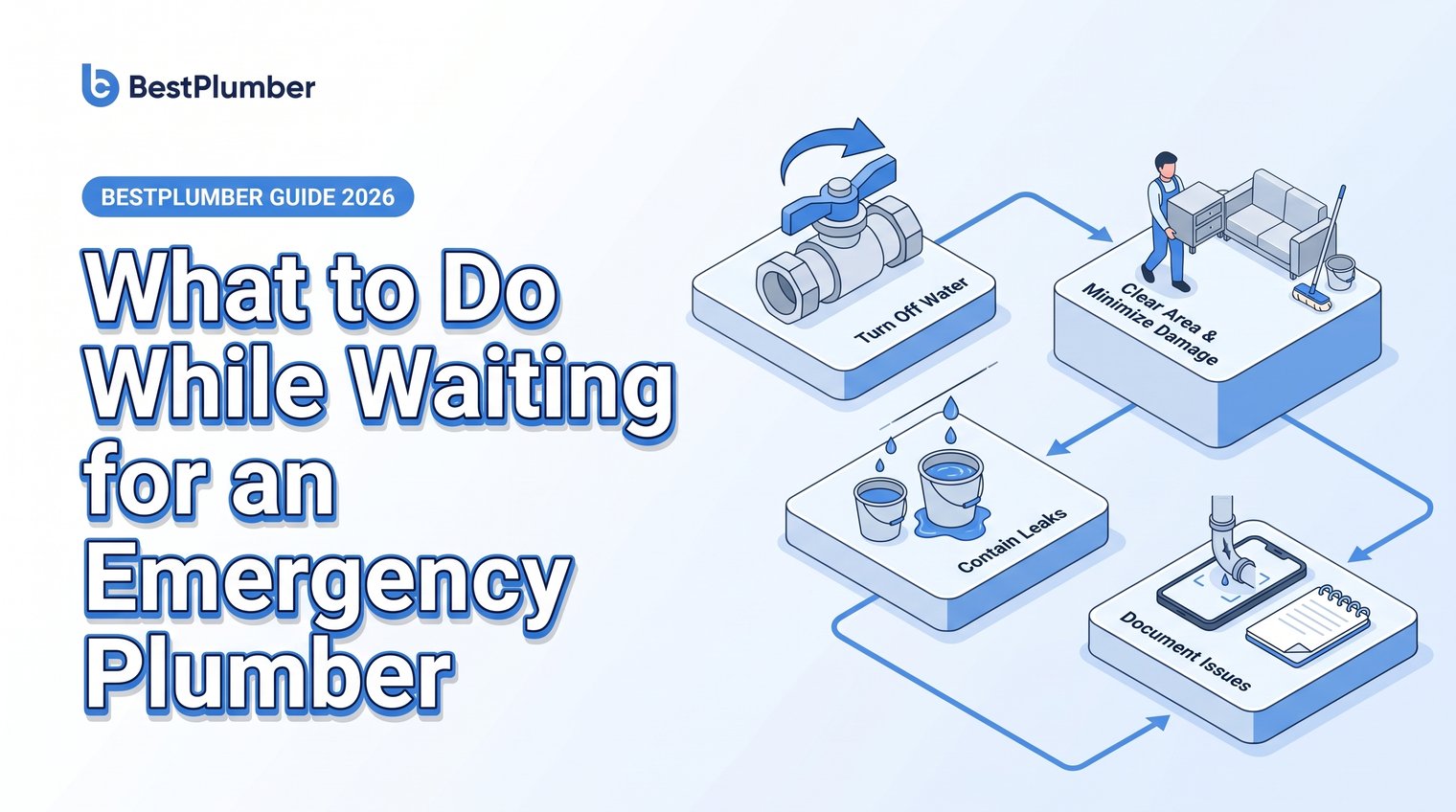
When deciding what to do while waiting for an emergency plumber, the priority is not fixing it yourself. Protect people from electrical, gas and slip hazards, stop the water only if it is safe to do so, and contact an emergency plumber with clear details.
A few calm actions can prevent a small plumbing fault from becoming major property damage. Do not enter flooded rooms, force stiff valves or take apart pipework while you wait for help.
First, make the situation safe and stop the water if you can
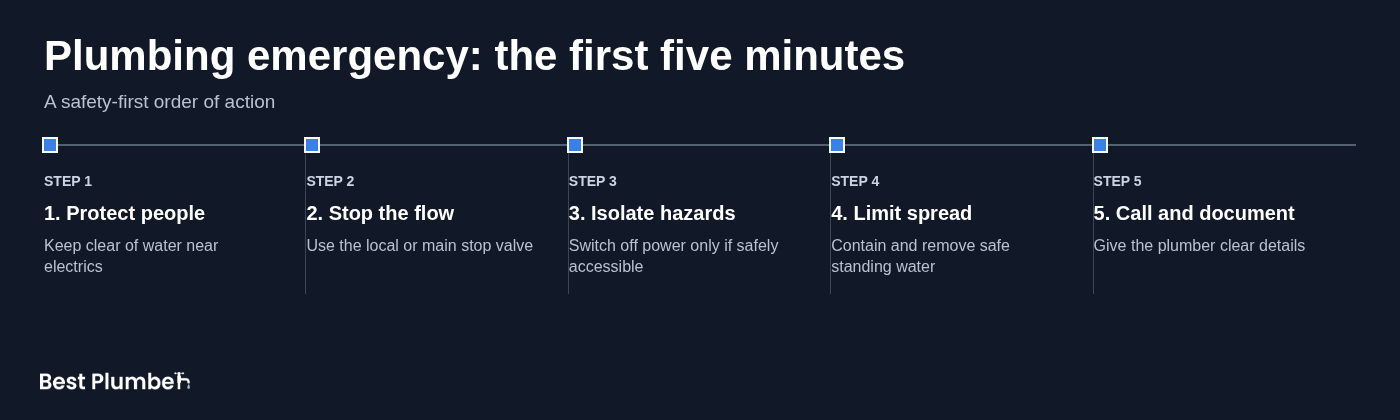
Start with safety. Keep everyone away from water near sockets, appliances, extension leads or the consumer unit, and do not wade into a flooded area to reach a valve. If there is immediate electrical danger, a gas smell, structural damage or anyone is at risk, contact the appropriate emergency service first.
If the area is safe to approach, move people and pets away, then isolate the water supply. A local valve may stop one fixture; the internal stop valve may be needed for a burst pipe or an unknown leak. Once the flow is stopped or reduced, contact an emergency plumber and explain exactly what has happened.
Do not confuse fast action with risky action. A valve that cannot be reached safely, a ceiling that is sagging, or water around live electrical equipment are all reasons to step back rather than improvise.
Decide whether it is a plumbing emergency
A plumbing problem is an emergency when it creates uncontrolled water damage, sewage exposure, an immediate safety risk or loss of essential water that particularly affects vulnerable occupants. The key question is whether you can safely isolate the problem and prevent it from getting worse.
Not every leak needs an out-of-hours call. A slow drip into a bowl can often wait for normal working hours, while a concealed pipe sending water through a ceiling cannot. Reassess the situation if the leak speeds up, sanitation is affected, or water gets near electricity.
A suspected gas leak is not a wait-for-the-plumber situation. If you smell gas, hear hissing near gas equipment, or suspect carbon monoxide exposure, leave the property and follow emergency gas utility guidance.
Situations that need urgent help now
Call for urgent plumbing help when water is actively escaping and cannot be controlled safely. That includes a burst pipe, a toilet overflowing despite attempts to stop the incoming water, an active ceiling leak, sewage backing up into sinks or drains, and a failed stop valve during a leak.
Water close to electrical equipment is especially serious. Even a modest leak can become dangerous if it reaches a socket, appliance, light fitting or consumer unit. The severity also depends on the property: a controlled leak in a ground-floor utility room is different from water pouring through a ceiling above a bedroom.
Problems that may be safe to book for normal hours
A slowly dripping tap, a single cold radiator, a mildly slow drain or a minor leak under a sink may be able to wait if the water can be caught or isolated and another fixture is available. A toilet with a weak flush is inconvenient, but it is not necessarily an emergency if there is another usable toilet.
That judgement changes quickly if a drain begins backing up, a leak becomes constant, there is sewage contamination, or the issue affects essential washing or drinking water. When in doubt, describe the situation honestly to a plumber and ask whether it needs immediate attendance.
Shut off the right water supply without making the problem worse
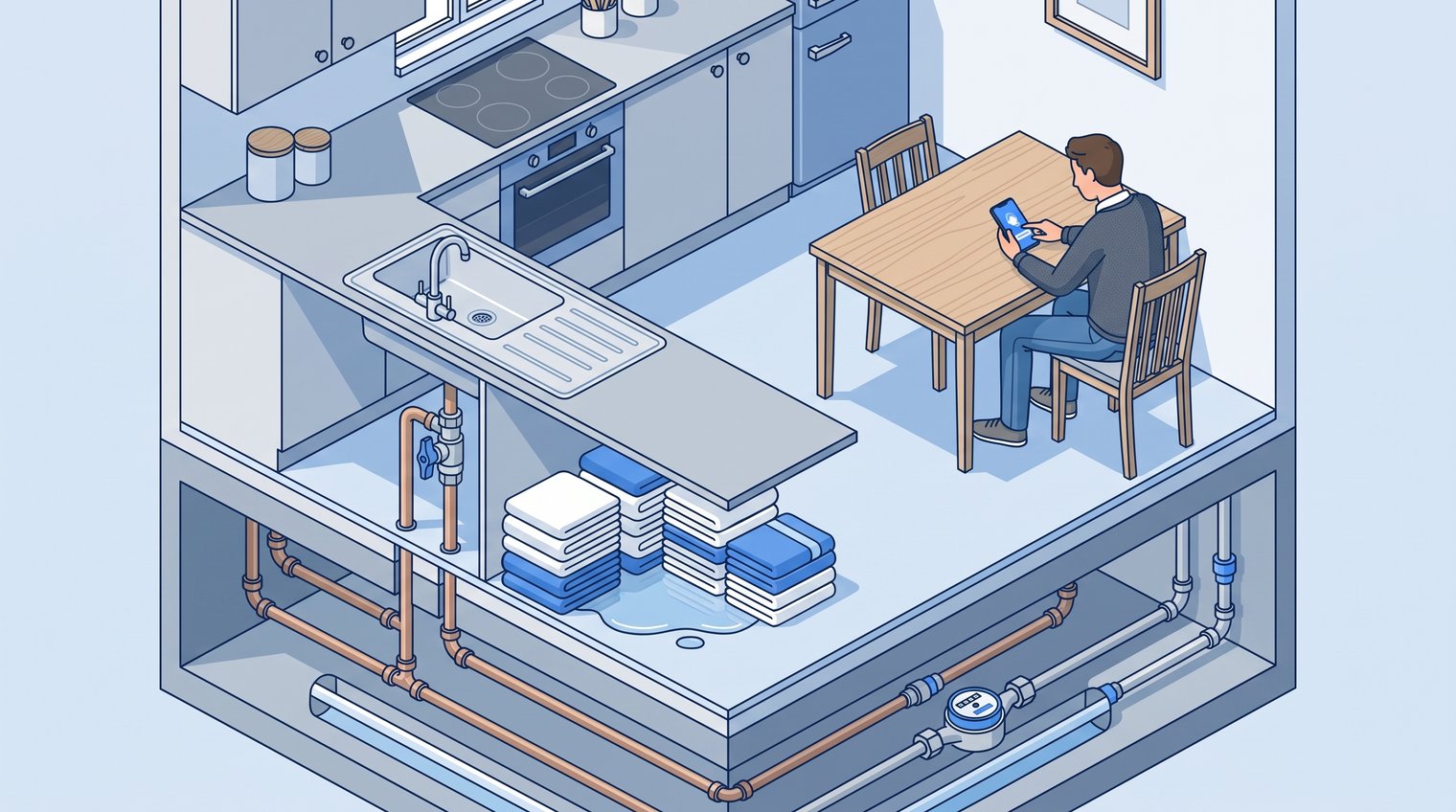
Use the smallest safe shut-off that controls the problem. For a leak from one tap, toilet or washing-machine hose, a local isolation valve can preserve water to the rest of the property. For a burst pipe, a hidden leak or water spreading from an unknown source, use the internal stop valve to cut off the whole supply.
Local valves are often found under sinks, behind toilets, or on the pipework serving an appliance. The internal stop valve is commonly close to where the mains water enters the property, near a water meter, under a kitchen sink or in a utility area. Locations vary, so it is worth finding yours before an emergency happens.
Turn a conventional stop valve gently clockwise to close it, where applicable. Do not force a seized valve, dismantle pipework, or use tools aggressively; a damaged valve can make the emergency worse. If you are unfamiliar with a hot-water appliance or its controls, do not tamper with it while trying to isolate water.
Use a local isolation valve for one leaking fixture
A local valve is useful when the source is obvious and accessible. For example, if the flexible hose beneath a toilet cistern is leaking, shutting off that toilet's supply can stop the flow while leaving kitchen taps and other fixtures operational.
The same approach may work for a washing machine or dishwasher connection. Only do this if the valve and surrounding floor are dry enough to access safely, and never reach through pooled water to find it.
Use the internal stop valve for a burst pipe or unknown leak
Turn off the main internal supply when a pipe has burst, water is coming through a ceiling, or you cannot tell where the leak is originating. A whole-property shut-off is disruptive, but it is usually preferable to allowing water to continue damaging walls, floors and belongings.
After the immediate emergency, make locating and gently testing the stop valve part of basic home preparation. Everyone responsible for the property should know where it is and how to reach it safely.
Manage electricity, heating and gas risks safely
Water and electricity are the most immediate danger in many plumbing emergencies. Switch off electricity at the consumer unit only if you can reach it without walking through water, touching wet surfaces or entering the affected room.
Do not use switches, appliances, chargers or extension leads in a wet area. Avoid rooms where water is close to sockets, electrical points, light fittings or appliances until they can be assessed safely. A wet ceiling with a light fitting beneath it is not a DIY investigation.
Gas-related concerns need a different response. If there is a gas smell, hissing, unexplained dizziness, headache or concern about carbon monoxide, evacuate the property and contact the relevant emergency gas service. Do not operate electrical switches, attempt repairs, or wait for a general plumbing appointment.
Limit damage while you wait
Once the water is stopped or reduced and there is no electrical risk, focus on simple containment. Put buckets under drips, use towels to prevent water travelling across floors, and move furniture, rugs, documents and electronics away from the area.
Remove standing water only if the floor is safe and electricity is not involved. A mop, towels or a wet vacuum used in a dry, safe area may help, but do not use electrical equipment near water. After the flow is under control, open windows or ventilate the room where practical to reduce lingering dampness.
Avoid the common "quick fixes" that create more work for the plumber. Do not pour chemical drain cleaner into a problem drain, repeatedly flush an overflowing toilet, puncture a water-damaged ceiling, or wrap an active burst pipe with tape and hope it holds. The objective is containment, not a permanent repair.
Give the emergency plumber the information that speeds up the visit
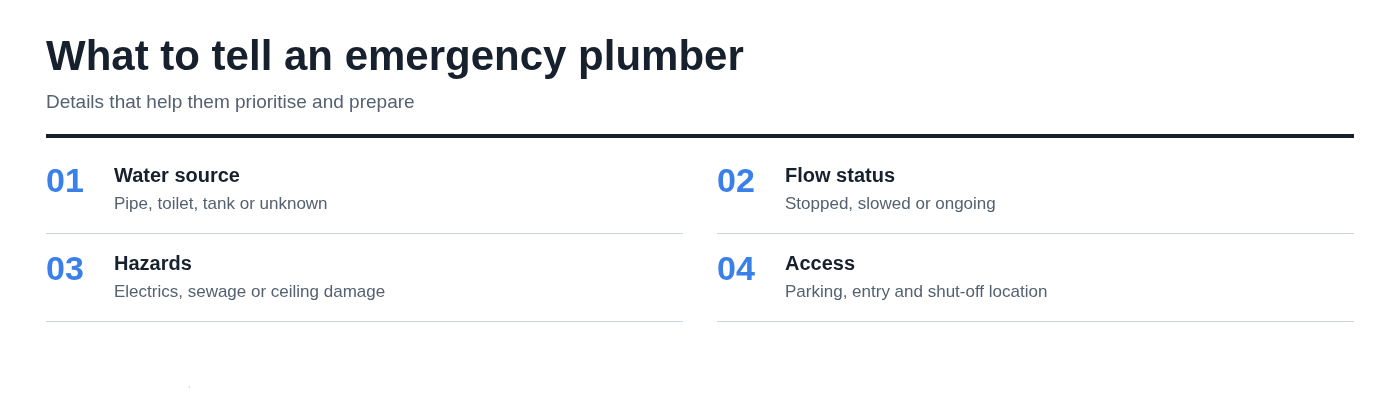
A clear call helps a plumber understand the urgency and arrive with a better idea of what may be needed. Explain the problem in plain terms rather than trying to diagnose it: where the water is coming from, whether it is still flowing, and what you have already done.
- Your address, contact number and any access or parking details
- The likely water source: pipe, toilet, tank, appliance, drain, ceiling or unknown
- Whether the water has stopped, slowed down or is continuing to flow
- Which rooms are affected and whether the leak has reached another floor
- Any electrical, sewage, ceiling or gas-related hazards
- The location of the stop valve, if known, and whether it worked
- Photos or a short video, but only if taking them is safe
Ask for an estimated arrival window, what to do if conditions worsen, and whether the plumber has any specific instructions for your situation. Good information can help a local plumber prepare, but no one can responsibly promise a fixed emergency response time before accounting for travel, demand and the nature of the fault.
Prepare the property for the plumber's arrival
Make access straightforward without putting yourself at risk. Clear a safe route to the affected fixture, stop valve, boiler cupboard or visible leak, and keep children and pets away from the work area.
Keep a short note of what happened and when, including which valves you closed and whether the flow changed. If safe, take photographs before moving damaged items, especially if you may need to inform a landlord, managing agent or insurer. Safety and stopping further damage come first; documentation comes second.
Have relevant details available, such as the make of an appliance involved, any recent plumbing work, and information about access restrictions in flats or shared buildings. This can save time once the plumber arrives.
How long should you wait for an emergency plumber?
There is no universal emergency plumber arrival time. It depends on your location, time of day, weather, current demand, travel distance and the seriousness of the information provided when you call.
If the situation worsens, water cannot be controlled, new electrical hazards appear, or the stated arrival window passes, call back promptly. Update the plumber about any change rather than assuming the original description still reflects the risk.
If you need a local contact today, BestPlumber can help you look for plumbing providers in your area. Check availability directly with the provider and describe the emergency clearly before relying on an attendance time.
Do not attempt these repairs before help arrives
Waiting for a plumber is not passive, but there is a firm line between safe damage control and risky repair work. Do not open pressurised fittings, remove pipe sections, work on boilers or gas appliances, or attempt to repair hidden leaks inside walls and ceilings.
- Do not use mains-powered equipment near water or wet surfaces.
- Do not force a stuck isolation or stop valve.
- Do not use harsh chemical drain cleaners in a blocked or backing-up drain.
- Do not repeatedly flush a toilet that is already overflowing.
- Do not climb into lofts or ceiling spaces affected by leaks.
- Do not puncture a bulging or water-damaged ceiling.
Leave diagnosis and repair to the attending professional. Your job is to isolate what you safely can, protect the property and communicate useful details.
Stay safe, contain the leak and keep the plumber informed
While waiting for an emergency plumber, protect people first, isolate the water only when it is safe, and treat water near electrics or any suspected gas issue as a serious hazard. Contain the spread with simple measures, avoid makeshift repairs, and call back if conditions change.
If you use BestPlumber to find a local provider, share the essential details of the problem and confirm availability directly.