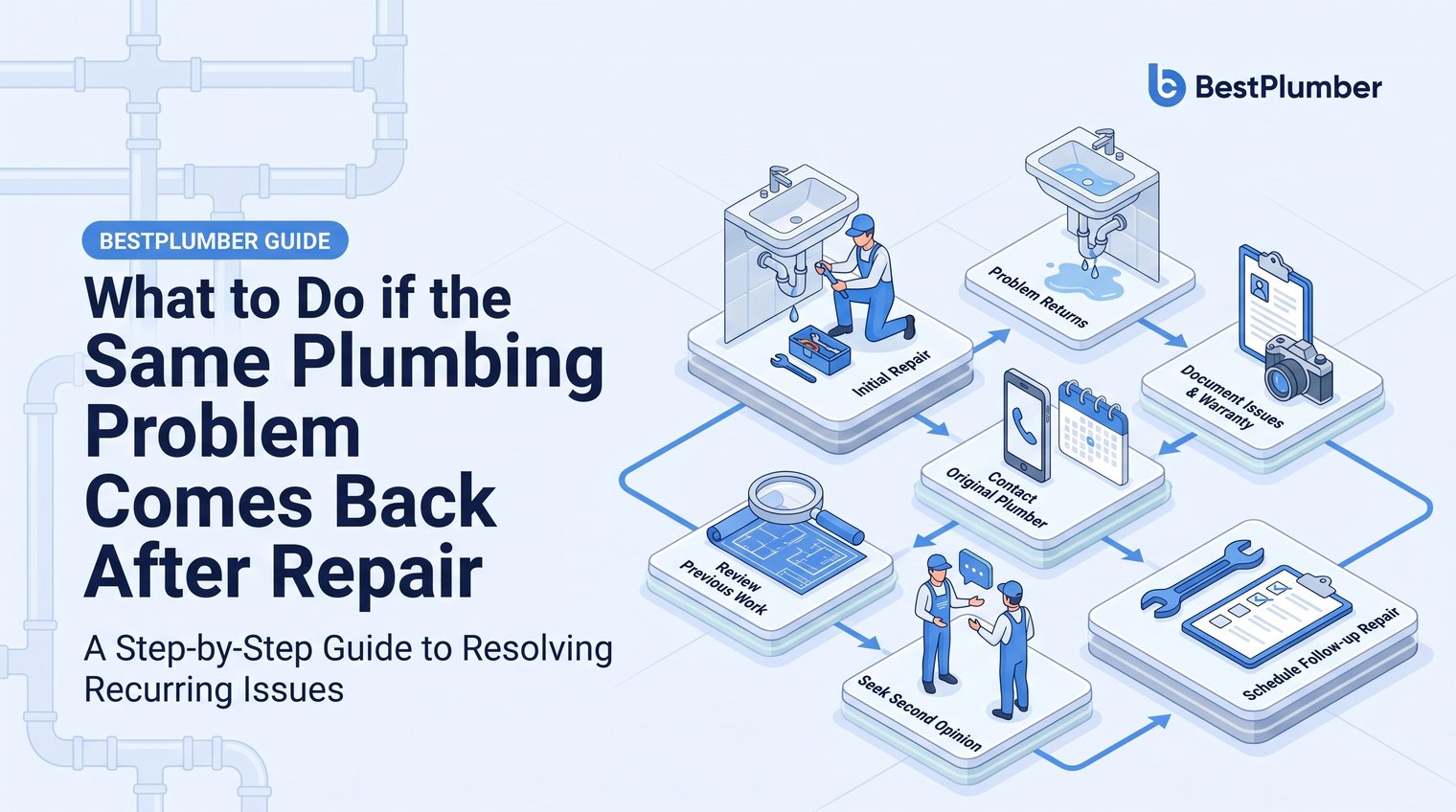
If the same plumbing problem comes back after repair, stop using the affected fixture where it is safe to do so, limit any water damage, and contact the original plumber promptly with clear evidence. Do not keep trying DIY fixes or assume the recurrence is normal; a returning leak, blockage, pressure issue, or running toilet often means the underlying cause needs further investigation.
Start by taking photos or short videos, finding the original invoice, and noting exactly when the problem returned. That record makes it easier for the plumber to assess whether the repair itself has failed, whether a nearby component has developed a fault, or whether a larger issue was missed.
Start by containing the problem and documenting that it returned
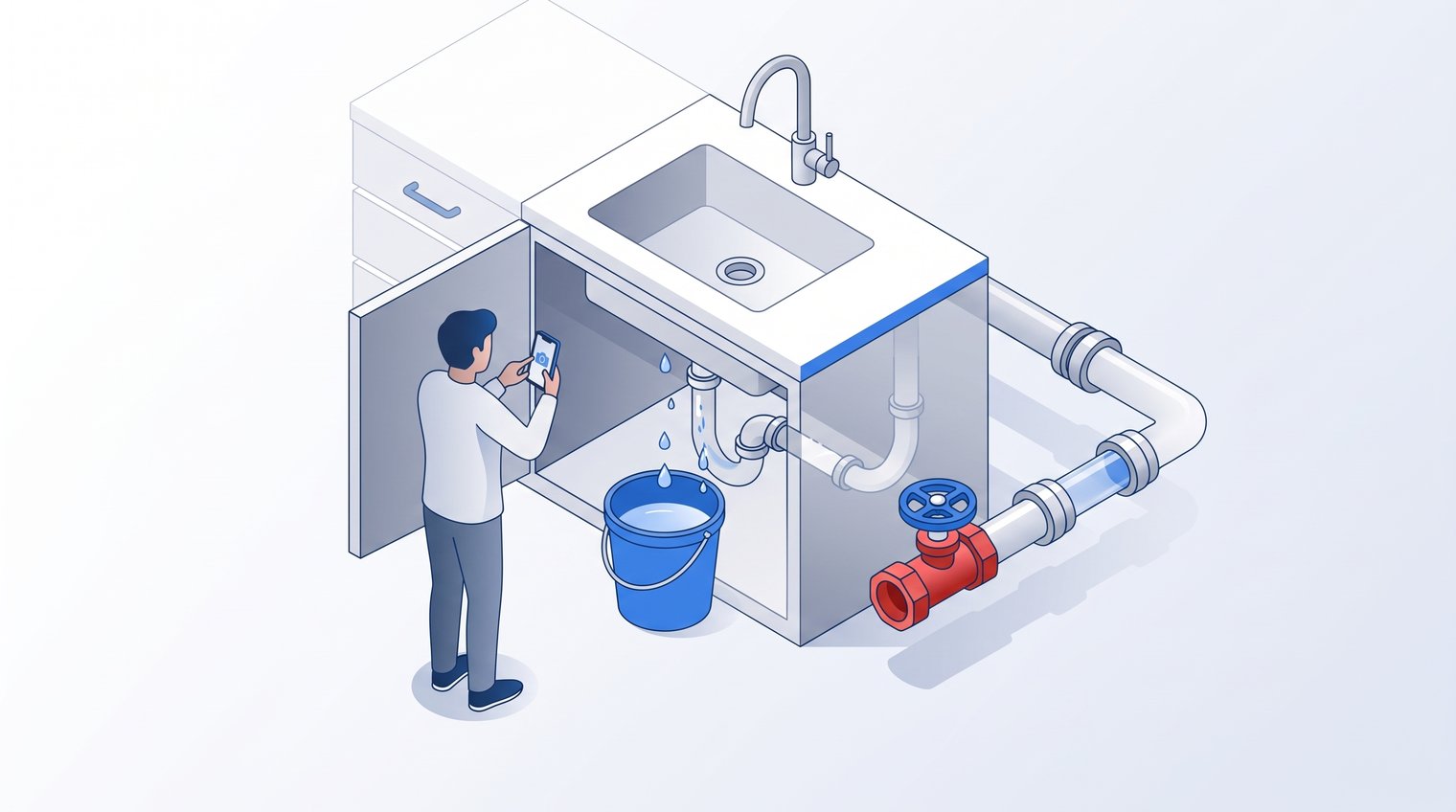
Your first priority is preventing damage, not working out who is at fault. Turn off the local isolation valve if you know it is safe to do so, place a bucket or towels under a small leak, and avoid using a blocked sink, toilet, shower, or appliance until it has been checked.
Contact the plumber who carried out the repair as soon as practical. Repeated tightening, plunging, or using chemical products can worsen the problem and may make it harder to identify what happened. This is especially important when a plumber did not fix the problem the first time and the fault returns shortly after their visit.
Keep a simple evidence file containing:
- Photos and videos of the current symptom, including any pooling water, damp marks, or overflow
- The date the original repair was completed and the date the issue returned
- Your invoice, quote, job report, payment confirmation, and guarantee wording
- Texts, emails, and messages exchanged with the plumber
- Evidence of new damage, such as affected flooring, cupboards, ceilings, or belongings
Some situations need urgent help rather than waiting for a routine return visit. If you suspect a gas leak or there is water near electrical sockets, wiring, or appliances, leave the area if it is safe and contact the appropriate emergency service. For active flooding, sewage backing up into the property, or complete loss of water to the home, contact an emergency plumber or the person responsible for the property.
Check whether it is truly the same fault or a related issue
A returning symptom is not always an identical failed repair. A leak at a kitchen sink may appear to be from the repaired pipe but actually come from a nearby fitting, while a drain that blocks again may have a deeper obstruction or damage further along the pipework.
Before assigning blame, compare the original diagnosis and completed work with what is happening now. This gives the plumber useful information and helps you request the right investigation instead of simply asking for the same quick fix again.
Match the symptom to the original repair
Look for precise similarities. Is the same pipe leaking from the same joint? Is the toilet still running after the same type of flush? Does the same basin drain slowly, or is a different fixture now affected?
Write down details that may seem minor but can change the diagnosis: when the issue occurs, how often it happens, whether it follows use of a washing machine or shower, and whether there are new noises, smells, or visible changes. A boiler pressure problem, for example, may only become clear after a heating cycle rather than immediately after a repair.
Useful observations include:
- The exact location of drips, moisture, backups, or water marks
- Whether the problem is constant or happens only during normal use
- Gurgling sounds, bad odours, banging pipes, or discoloured water
- Whether other taps, toilets, drains, radiators, or appliances are affected
- Whether the problem appeared immediately or days later
Watch for signs of a wider underlying problem
Repeated faults across more than one room usually deserve a broader diagnosis. Several slow drains, recurring blockages, sewage smells, unexplained damp patches, or a water meter that continues moving when all taps are off can point to a hidden leak, drainage issue, or supply problem beyond one fixture. For more warning signs, see What Are the Signs of a Hidden Water Leak in Your Home?
In that situation, the next visit may require more than replacing a washer or clearing a visible trap. The plumber may need to carry out pressure testing, inspect concealed pipework, or arrange a drain survey. A lasting repair depends on finding the cause, not merely removing the symptom for a few days.
Review the invoice, diagnosis, and workmanship guarantee
Check what was actually agreed and completed before you request a return visit. The paperwork should show the job scope, parts fitted, labour performed, and any limits on the repair.
Gather the itemised invoice, quotation, job sheet, payment record, and any written guarantee. If the plumber explained the issue verbally, write down what you remember now, while the details are fresh.
A workmanship guarantee generally relates to how the repair was carried out. That is different from a manufacturer warranty on a replacement part, and different again from a new, unrelated fault. For example, a failed new valve may fall under the part manufacturer's terms, while a leaking connection installed during the job may concern workmanship.
Do not assume every plumber offers the same guarantee period or that every return visit is automatically free. Use the written terms you were given and ask the plumber to confirm, in writing, whether the reported issue is covered and why.
Contact the original plumber with a clear repair request
In most non-emergency cases, give the original plumber a reasonable opportunity to inspect and rectify work that may be incomplete or defective. They know what was done, may have a workmanship guarantee in place, and should be able to assess whether the recurrence is linked to the first job.
Keep the message factual and specific. Avoid accusations before the cause has been established, but be clear that the problem has returned and is causing disruption or damage.
You can use this format:
"You repaired [problem] at my property on [date]. The issue has returned: [brief description]. It began again on [date/time] and is affecting [area or fixture]. I have photos/video and the original invoice. Please confirm whether you can inspect this under the agreed guarantee, whether there will be a call-out charge, and your earliest available appointment."
Where possible, communicate in writing and keep a record of appointment times, explanations, agreed actions, and any new costs discussed. If the plumber visits, ask for the findings and next steps to be written down.
Ask the questions that establish the next step
A return visit is more useful when both sides are clear on its purpose. Ask direct questions before additional work begins:
- Is this inspection or return visit chargeable?
- Is the original repair covered by the workmanship guarantee?
- What do you believe caused the recurrence?
- What tests will you carry out before recommending further work?
- Is any proposed work outside the original repair scope?
- Will you provide your findings and any additional costs in writing before proceeding?
That last question matters. A recurring fault can reveal a separate issue, and it is reasonable to distinguish between correcting an original repair and paying for genuinely new work.
What to check after a plumber repairs a leak or blockage
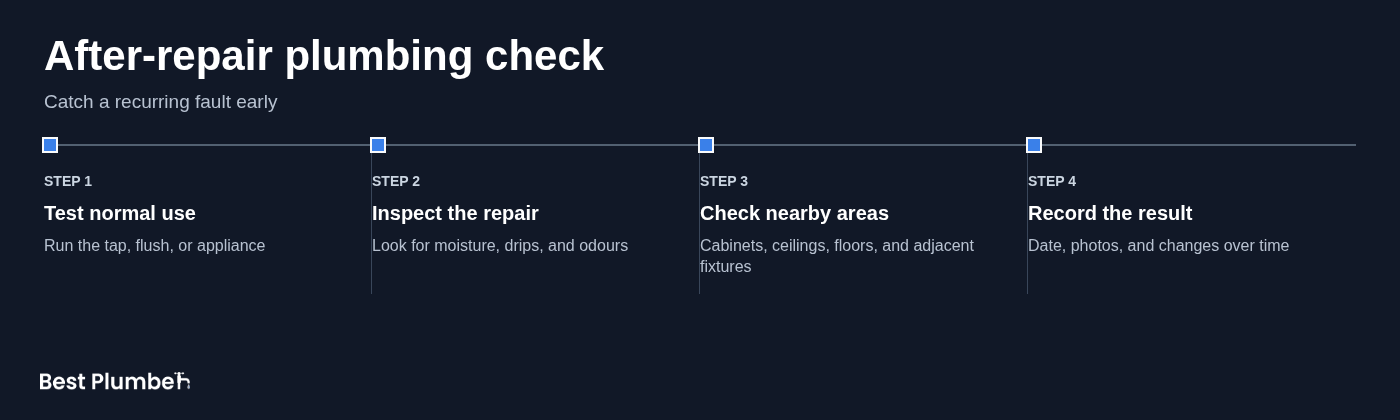
After a repair, test ordinary use carefully rather than assuming the problem is solved the moment the plumber leaves. You do not need to dismantle anything or attempt technical checks; a few sensible observations can catch a repeat issue early.
Run the relevant tap, flush the toilet, use the shower, or operate the appliance as normal. Then inspect the repair area and nearby surfaces immediately and again after several hours or the next typical use cycle.
- Check joints, valves, pipes, and surrounding surfaces for drips or moisture
- Make sure water drains at a normal speed without gurgling, backing up, or bad smells
- Look inside cupboards and below floors or ceilings near the affected area where accessible
- Listen for unusual pipe noise, repeated filling, or a toilet that continues to run
- Check the water meter for unexpected movement when all water use is stopped
- For heating-related work, monitor boiler pressure if that is relevant to the repair
Testing must remain safe. Do not interfere with gas appliances, remove panels, dismantle pipework, or use harsh chemical drain cleaners in an attempt to prove a blockage. Those actions can create a separate problem and complicate a later inspection.
Know when to call a different plumber for an independent assessment
A second opinion is sensible when the original plumber is unresponsive, keeps repeating the same repair without identifying the cause, disputes a well-documented recurrence, or the fault continues to threaten the property. It is also appropriate when you no longer have confidence in the diagnosis.
Before another plumber changes anything, preserve your photos, invoices, messages, and details of the original work. If circumstances allow, giving the first plumber a chance to inspect the issue can prevent later disagreement about what caused it. In an urgent situation, protecting the property comes first.
Tell the second plumber what work was previously completed, but ask for an independent written diagnosis rather than an opinion on another contractor's conduct. The valuable question is: what is causing the fault now, what evidence supports that conclusion, and what work is needed to fix it?
If you need to find a plumber for that assessment, BestPlumber can help you browse plumbers by location and make contact. Ask for a written diagnosis and a clear scope before authorising substantial new work.
If you rent, report the recurring repair to your landlord or letting agent
Tenants should report a recurring plumbing problem to the landlord or letting agent promptly in writing, even if a plumber has already attended. Do not assume the earlier report remains open just because the same fault has returned.
Include the original repair date if known, the location and symptoms, photos or video, and whether the home can be used safely. State clearly if there is water damage, loss of a toilet or washing facilities, sewage, or a risk near electricity.
Follow the reporting route set out in your tenancy agreement. Responsibilities and rules for arranging repairs can depend on the agreement and local law. Unless it is an emergency or you have authorisation, avoid hiring and paying for a non-emergency repair yourself. The landlord or agent may need to arrange access, approve the work, or send their chosen contractor.
Escalate a poor or unresolved repair with evidence
If the issue remains unresolved, escalate in stages rather than relying on informal calls. Start with a written request for rectification, set a deadline that reflects the urgency of the problem, and use the company's formal complaints process if one is available.
Keep the focus on facts: what was agreed, what was completed, what failed or returned, what evidence you have, and what outcome you want. Separate the cost of correcting potentially defective work from the cost of unrelated work discovered later. A blocked drain caused by a deeper damaged pipe, for instance, may not be the same issue as an earlier trap clean.
If the matter still cannot be resolved, consider obtaining independent evidence or consumer advice. Check whether the plumber has stated a complaints process, belongs to a relevant trade body, or has provided insurance details where property damage is involved. Available complaint and escalation routes can depend on local law, as well as the evidence, cost, and severity of the damage.
Prevent a repeat problem from becoming a repeat repair
The practical approach is straightforward: contain the problem, document it, give the original plumber a clear chance to assess it, and seek an independent diagnosis if the cause remains uncertain. A returning symptom should trigger better investigation, not a cycle of temporary fixes.
Keep all repair records, especially for hidden leaks, drainage faults, pressure issues, sewage problems, and anything that could cause damage or create a safety risk. Those details help the next professional understand the history quickly and recommend work based on evidence.
If you need a reliable second opinion, use BestPlumber to find a local plumber and request a written diagnosis before agreeing to further repairs.