
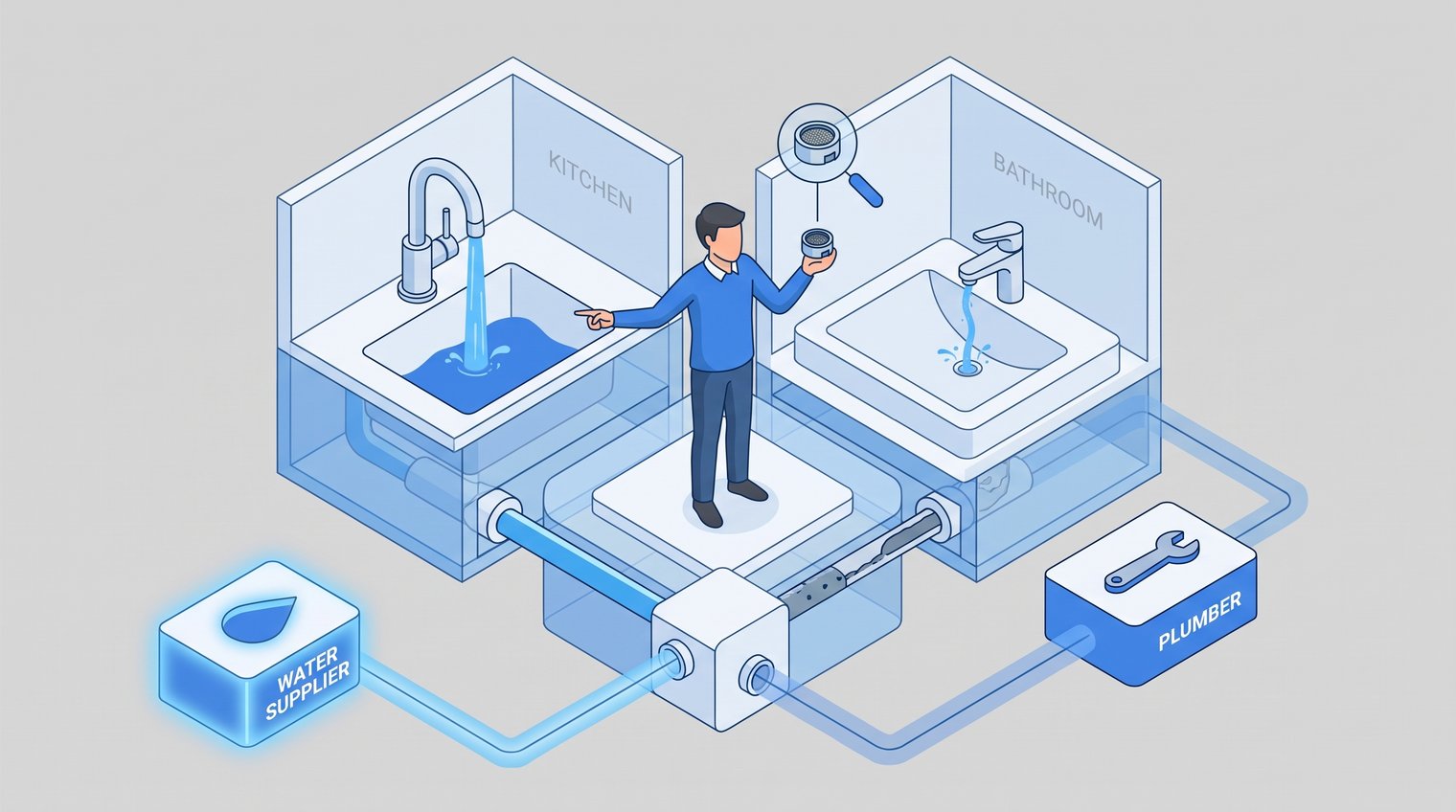
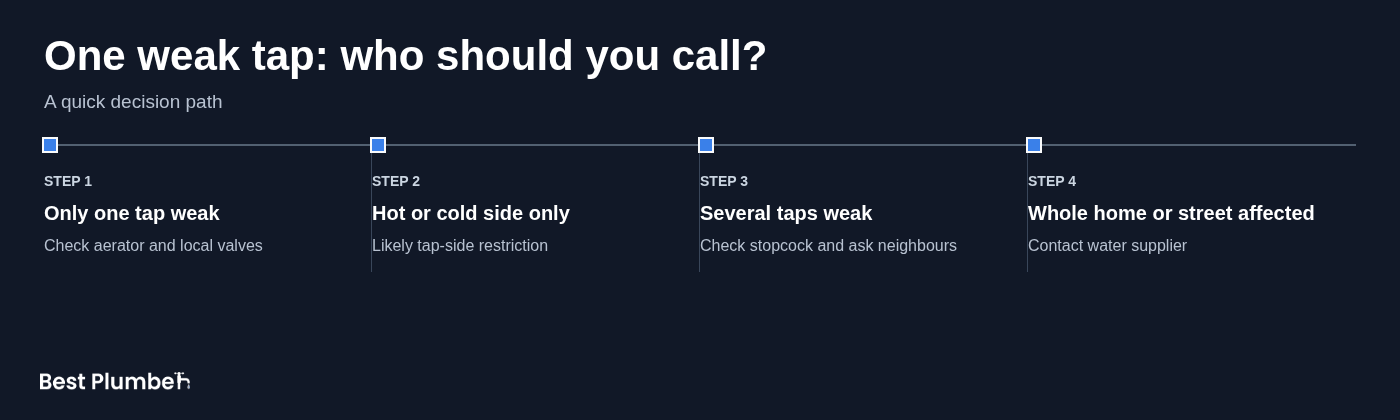
First, compare the affected tap with nearby outlets. If only one tap is weak, the fault is usually inside the tap or its local pipework; if several outlets or neighbouring properties are affected, the water supplier is more relevant.
A blocked aerator, restricted hose, partly closed valve, or worn cartridge are common local causes. A few safe comparisons can narrow down what is wrong before you arrange help.
The short answer: call a plumber, not the water supplier
If nearby taps have normal flow but one bathroom basin tap is weak, the issue is likely at that fitting, its isolation valves, flexible connectors, or the short section of pipe serving it. Contact the supplier instead when several taps are weak, the change is sudden throughout the house, or neighbours have the same problem.
Why low pressure in one tap usually points to a local fault
When water pressure is low in one faucet but not others, the incoming mains supply is doing its job well enough to serve the rest of the property. The restriction is usually downstream, close to the affected outlet.
The most common cause is a clogged aerator: the small mesh fitting at the end of many tap spouts. Limescale, grit, rust particles, and debris disturbed by plumbing work can collect there and reduce the flow dramatically.
Other likely causes include:
- A partially closed isolation valve under the sink or basin.
- Debris lodged inside a mixer tap or its cartridge.
- A kinked, crushed, or deteriorating flexible hose.
- A blocked inlet filter, where the tap design includes one.
- A local restriction in older pipework, often caused by scale or corrosion.
Do not assume a weak stream proves that the property has low water pressure. A restriction at the outlet can make the tap feel weak even while pressure in the supply pipe is normal.
Check whether the problem affects hot water, cold water, or both
The most useful next step is to test the hot and cold sides separately. At a mixer tap, run cold water, then hot water, and compare the flow. Then test a nearby tap supplied by the same hot and cold systems.
This simple comparison helps identify whether the restriction is in the tap itself or on one side of its supply. Do this gently and avoid repeatedly forcing stiff tap handles.
Low hot water pressure only in one tap
If hot water pressure is low only in one tap while cold water is normal, the fault is usually local to the hot side of that fitting. A blocked hot-side filter, restricted cartridge channel, partly closed isolation valve, debris after plumbing work, or a constrained hot flexible hose can all cause it.
A boiler or unvented cylinder issue is less likely when hot water flow is normal elsewhere in the home. For example, if the hot kitchen tap and shower run normally but one bathroom mixer produces only a trickle on hot, the basin tap and its connections deserve attention first.
A plumber can isolate the tap safely, inspect the relevant components, and determine whether cleaning or replacement is the better repair.
Cold water pressure is low in one tap but hot water is normal
Normal hot flow with weak cold flow also indicates a local restriction, this time on the cold side. Check whether the accessible cold isolation valve below the fitting is fully open, but do not force it if it is stiff, corroded, or concealed.
The likely causes are a restricted cold flexible connector, sediment in the tap, a blocked filter, or a cartridge problem. If a straightforward aerator clean and visible valve check do not help, a plumber should investigate rather than risking a damaged fitting or leak.
Both hot and cold are weak at the same tap
If both sides are weak at the same mixer tap, start with the aerator and spout. A blockage there affects all water leaving the outlet, regardless of whether the hot or cold side is selected.
If the aerator is clean or the tap has no removable aerator, the mixer cartridge or internal passages may be restricted. This is still a tap-repair or plumbing issue, not normally a reason to report a problem to the water supplier.
Safe checks to make before calling a plumber
You do not need to dismantle plumbing to gather useful information. A few careful checks can sometimes solve the issue and, if they do not, give the plumber a clearer starting point.
- Compare other taps. Check a nearby basin, kitchen tap, bath tap, and shower where possible. Note whether the issue is isolated or more widespread.
- Test hot and cold separately. This distinguishes a whole-tap blockage from a restriction on one supply side.
- Clean a removable aerator. If the end of the spout has a screw-on aerator and it comes away easily, rinse it under water and remove loose debris. Refit it carefully without over-tightening.
- Look at accessible isolation valves. Under-sink valves may have a small lever or screwdriver slot. Check whether they appear fully open, but stop if a valve is seized or corroded. If you are unsure where the main valve is, see this guide to finding the internal stopcock in your home.
- Think about timing. A sudden weak flow after plumbing work, a water interruption, or replacing a tap can point to disturbed debris in the system.
Keep any grit or flakes found in the aerator. They can help a plumber identify whether the source is limescale, corrosion, or debris introduced during recent work.
Do not dismantle concealed valves, loosen old compression fittings, alter boiler or cylinder components, or attempt to adjust mains equipment. A small flow problem is not worth turning into a leak.
When a plumber is the right person to call
Call a plumber when the problem remains after safe checks, or when anything about the tap or its connections looks unreliable. A local plumber is the right first contact for one weak tap because they can assess the fitting and the plumbing immediately around it.
Arrange help if the aerator is clean but flow is still poor, the tap drips, the handle is stiff, the flow changed after a new installation, or a valve and hose cannot be accessed safely. Visible corrosion, dampness below the sink, or a damaged flexible connector also need professional attention.
A plumber may check the tap internals, isolation valves, inlet filters, flexible connectors, and pressure or flow at nearby points. That wider check matters because replacing a cartridge will not solve a restriction caused by a kinked hose, and cleaning an aerator will not fix a failing valve.
When you call, explain which tap is affected, whether hot, cold, or both are weak, whether other outlets work normally, and when the change began. Those details can make the visit more efficient and help the plumber bring likely replacement parts. If you need help arranging a visit, follow this guide to order a plumber.
When to contact your water supplier instead
Contact the water supplier when the problem is clearly broader than one fixture. Low flow at several taps, a sudden whole-house change, reports from neighbours, or known works, bursts, and outages in the area are all stronger signs of a supply-side issue.
Check your supplier's service-status information first if the problem has appeared suddenly. If several homes on the street are affected, a plumber cannot repair the external network and the supplier needs to know.
Responsibility boundaries can vary, especially around external supply pipes and in shared or unusual property arrangements. Confirm the boundary with your supplier, landlord, or managing agent; an individual tap fault is nevertheless usually investigated as a local plumbing issue.
If you rent, report the issue to your landlord or managing agent as well, especially if the tap is leaking or the fault may involve fixed pipework.
Do not confuse low flow with low water pressure
People often say "low pressure" when they mean low flow from one outlet. A blocked aerator can reduce the water leaving a tap even when supply pressure is adequate.
True pressure problems are more likely to affect multiple outlets. Compare your taps and their hot and cold flow rather than buying a pressure gauge or carrying out risky tests.
What a plumber may repair or replace
Many single-tap flow faults have a straightforward repair. Depending on the diagnosis, a plumber may clean or replace an aerator, service or change a cartridge, clean a filter, adjust or replace an isolation valve, or fit a new flexible hose.
If the problem lies in local pipework, they can investigate restrictions or damage without guessing at the cause. Older taps with corroded internals or unavailable spare parts may be more economical to replace than repair, particularly if they already drip or operate poorly.
Seek urgent help if there is active leaking, visible corrosion around connections, water staining, swollen cabinetry, or any suspicion of a burst pipe. If you also notice unexplained dampness or staining, review these signs of a hidden water leak in your home. Low flow on its own is often inconvenient; low flow combined with a leak can quickly become expensive.
Resolve a single weak tap with the right local help
A single weak tap normally means a local restriction in the aerator, cartridge, valve, hose, or nearby pipework. After checking the aerator and any easily accessible valves, a plumber is the appropriate first call if normal flow does not return.
Save the water supplier for wider problems affecting several outlets, the whole home, or nearby properties. If your tap needs diagnosis or repair, use BestPlumber to find and contact a local plumber in your area.