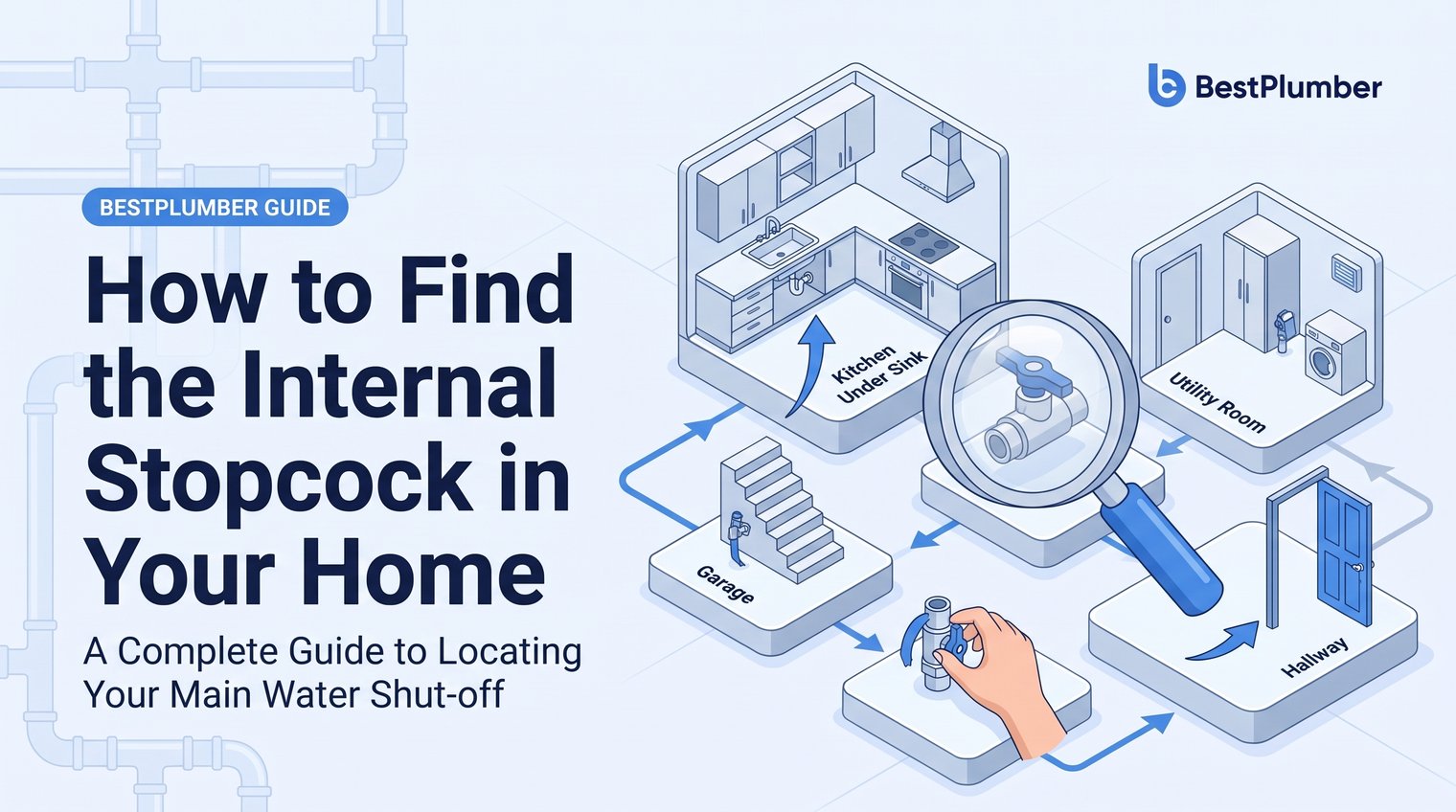
A burst pipe does not give you time to empty cupboards, search behind appliances, or work out which valve controls what. The practical time to find your internal stopcock is now, while the floor is dry and you can inspect it without panic.
Your internal stopcock, also called an internal stop tap, shuts off the incoming mains water supply to your home. Find it, confirm it is the right valve, test it carefully, and make sure everyone who lives there knows where it is.
Why finding your internal stopcock before an emergency matters
When water is leaking from a pipe, appliance hose, or failed fitting, stopping the mains supply quickly can limit damage to floors, walls, furniture, and electrics. The internal stopcock is usually the fastest whole-home shut-off point because it is inside the property.
It is different from an outside stopcock, which may be in a meter chamber, pavement box, or boundary area. That external valve can be useful, but it may be harder to reach, shared with another property, or inaccessible when you need it most.
The aim is not simply to spot a valve. You need to know that it controls your home's incoming water, understand how to close it without forcing it, and leave clear instructions for other household members.
Know what an internal stopcock looks like
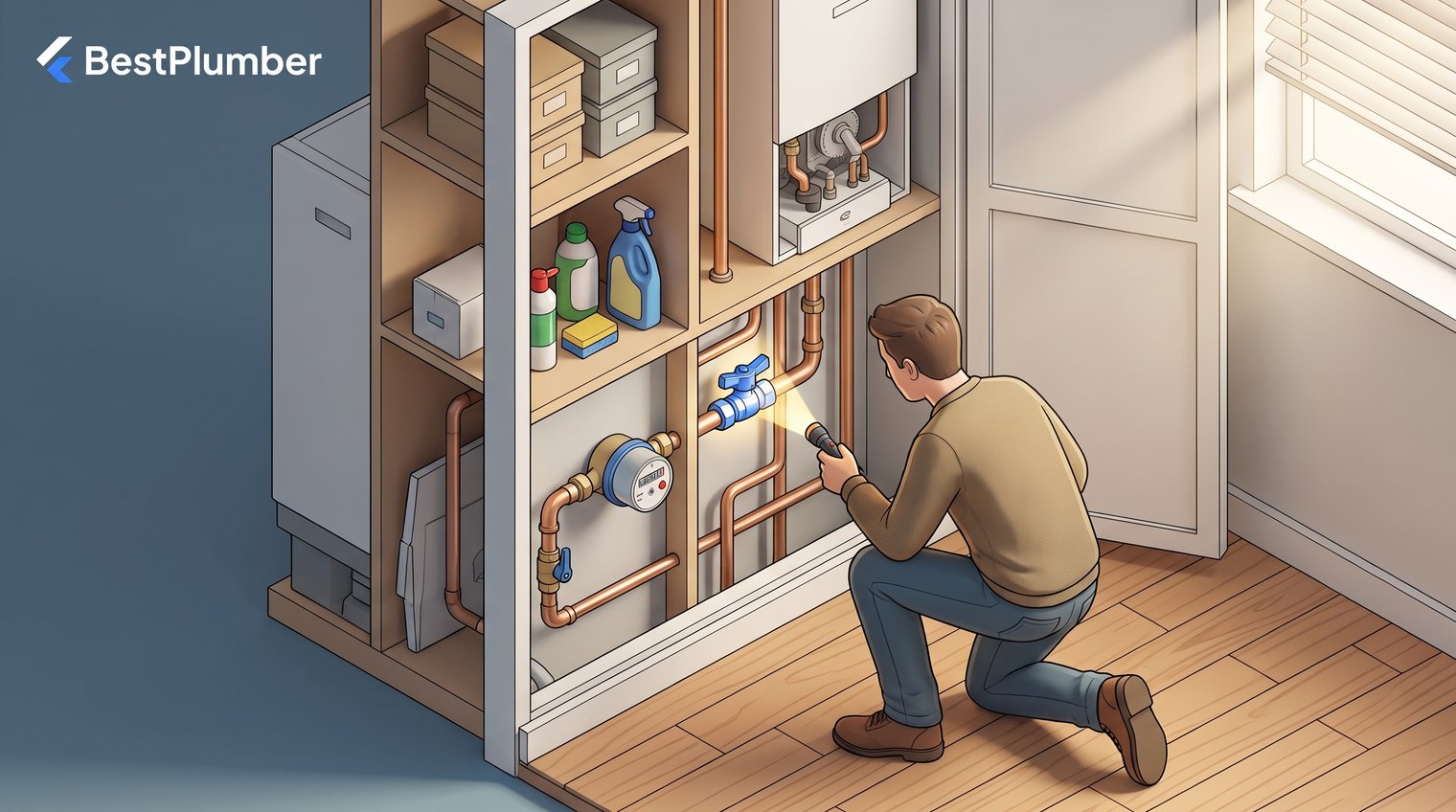
An internal stopcock is normally fitted inline on the cold-water pipe that brings mains water into the property. It is often brass, though modern installations may use plastic components or a different valve body. Older homes commonly have a round wheel handle; newer pipework may have a short lever instead.
Do not rely on the handle alone. A similar-looking valve may isolate only a washing machine, toilet, sink, or dishwasher. The key clue is the pipe route: the whole-home valve will be on the incoming mains pipe before it branches off to supply individual fixtures.
The valve may be visible in a cupboard, tucked behind stored items, positioned low on a wall, or concealed behind a removable access panel. A torch and your phone camera are useful for checking tight spaces without pulling on pipework.
Wheel-handle stopcocks and lever isolation valves
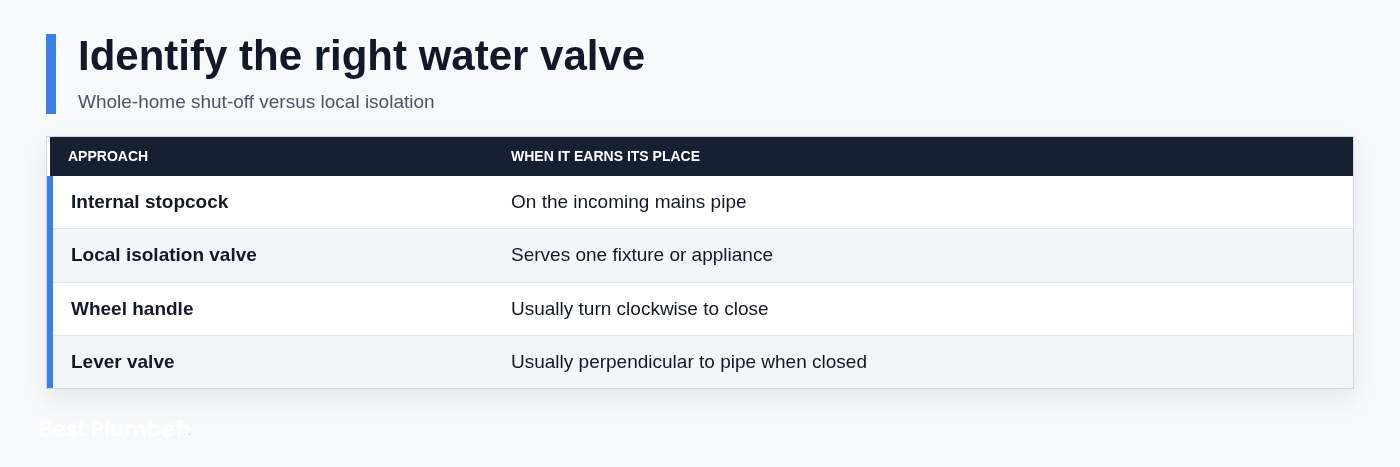
A traditional stopcock usually has a round wheel handle. In most cases, turning the wheel clockwise closes it and turning it anticlockwise opens it. It may take several turns to close fully.
A modern lever valve generally works in a quarter turn. As a broad rule, the lever is parallel with the pipe when open and perpendicular to the pipe when closed. Check the valve body for arrows or markings where available, rather than guessing.
Under-sink isolation valves are a frequent source of confusion. They are usually small valves on the pipes serving one tap or appliance, often close to flexible hoses. Closing one may stop a kitchen tap while every other tap in the home still runs. That is not the internal stopcock you need in an emergency.
Prepare to search without causing damage
Gather a torch, gloves, a towel, and your phone before you begin. Open cupboards slowly, move stored items out one at a time, and use the phone camera to look behind appliances or beneath low shelves. Take care not to lean on pipework or use it as a handhold.
Stop searching if you find corrosion, a damp patch around a joint, active dripping, damaged pipes, or a valve buried in an inaccessible void. Do not force open fixed boxing, remove kitchen units, or pull at old panels in the hope of finding it. The risk of creating a leak is not worth it.
If the stopcock is hidden behind fixed fittings or appears compromised, a plumber can locate it and make it accessible. This is particularly worthwhile in older properties where pipe layouts have changed over time.
Start with the most likely locations in a house
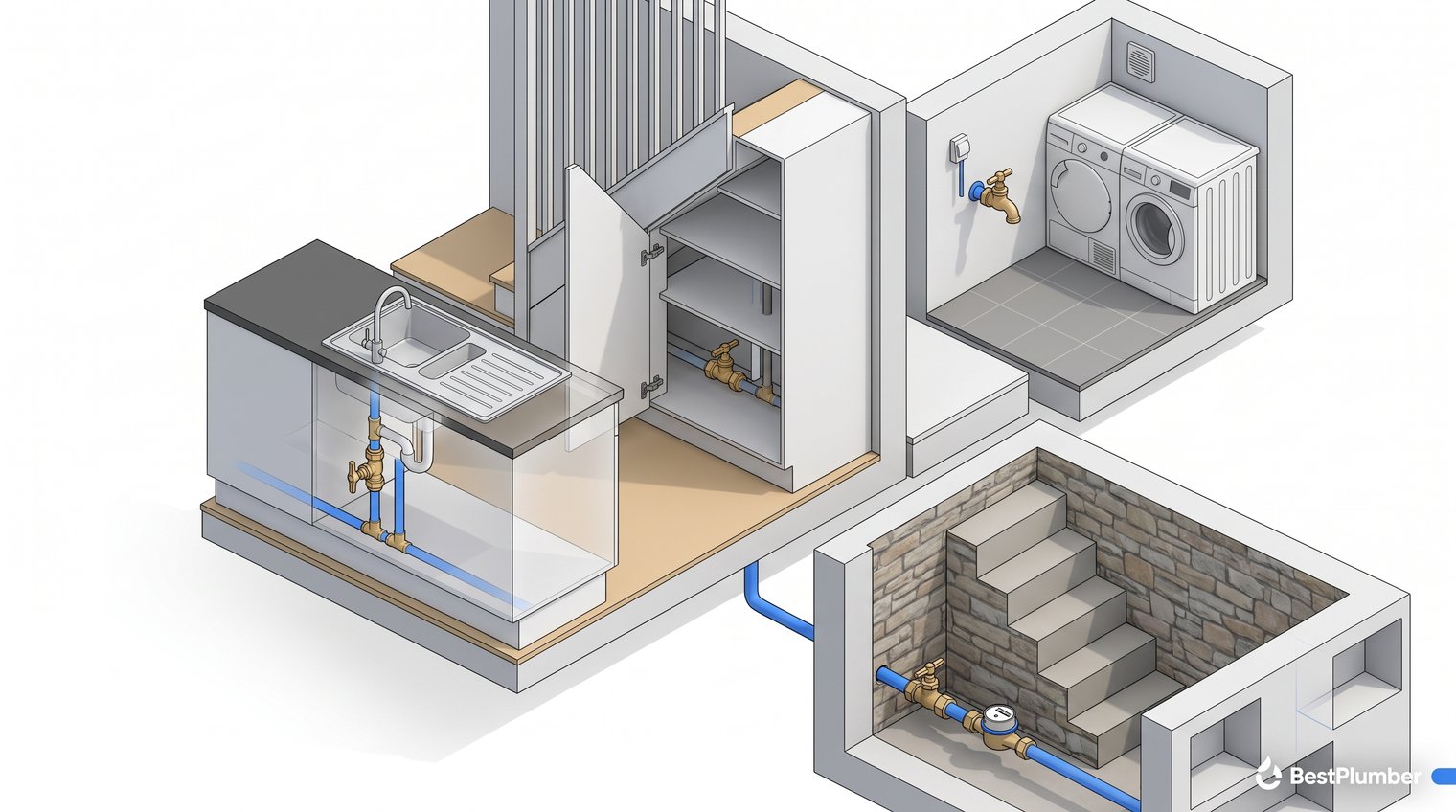
Search logically from where the water supply is likely to enter the building instead of checking every room at random. In many UK homes, the incoming pipe enters at ground-floor level, often near the kitchen, front of the property, or a utility area.
Check these common locations first:
- Under the kitchen sink or at the rear of a kitchen cupboard
- In a utility room, especially near a washing machine or water meter
- Inside a downstairs toilet or cloakroom cupboard
- Under the stairs
- In an airing cupboard or service cupboard
- In a garage, cellar, or basement
- Near the front entrance, meter position, or low-level access panel
Kitchen, utility room, and downstairs toilet
Kitchens are a common location because water services are already concentrated there. Empty the cupboard beneath the sink and look toward the back wall, floor, and side panels. Check behind removable plinths only if they are designed to come away easily.
In a utility room, inspect around the washing machine connections and any visible incoming pipework. A boiler cupboard can also contain water pipes, but do not assume the nearest valve is the main stopcock. Follow the pipe route where you can, and avoid touching boiler controls, electrical wiring, or unfamiliar equipment.
A downstairs toilet may have accessible water pipes in a small cupboard or behind a neat service panel. Again, look for the valve on the main incoming cold-water line, not the small isolation valve serving the cistern.
Under-stairs, airing cupboards, garages, and cellars
Older homes often route services through under-stairs cupboards, airing cupboards, garages, and cellars. Look at low level along external-facing walls, around meter installations, and where pipes emerge from the floor. Pipes may be boxed in, but there may be a small access hatch or removable cover.
Do not dismantle permanent boxing, cut into panels, or reach around electrical equipment. If access requires tools or the pipework is not clearly identifiable, leave it alone and arrange professional help. A stopcock is only useful if it can be reached safely.
Trace the incoming mains pipe to confirm you have found it
The best way to confirm a suspected stopcock is to trace the cold-water supply inward. If you can see an internal meter, the point where a pipe enters through an external wall, or pipework close to the outside meter position, follow that pipe toward the first substantial shut-off valve.
The correct valve should affect the water supply across the home. During a careful test, closing it should stop cold water at more than one tap. Try a downstairs cold tap and an upstairs cold tap if possible; testing only one fitting can be misleading.
Hot water can behave differently. A hot tap may continue to run briefly because water is stored in a cylinder or remains in pipework. In homes with certain combi boiler systems, hot water flow may also stop once the incoming mains supply is closed. Do not use hot-water behaviour as your only confirmation.
Do not mistake the outside stopcock for the indoor one
The outside stopcock is often located in a chamber near the property boundary, in a pavement cover, or near an external water meter. It may isolate the supply before the water enters your home, but it is not a replacement for knowing the indoor valve.
In an emergency, getting to an internal stopcock is usually quicker and safer than opening an outdoor chamber. Outdoor valves may be difficult to identify, seized, covered by debris, or potentially associated with neighbouring supplies. Do not operate a valve unless you are confident it serves your property.
If you live in a flat, check the right service spaces
Flats have less predictable plumbing routes, but the individual shut-off is often close to the point where the water supply enters the flat. Check beneath the kitchen sink, in a utility cupboard, hallway service cupboard, cupboard by the front door, or behind a clearly intended access panel near an internal meter.
Some blocks have riser cupboards or communal service areas containing several pipes and valves. These may supply multiple flats, so they should not be treated as your personal stopcock. Turning the wrong valve could interrupt another resident's water supply.
When the stopcock may be in a communal cupboard
If you cannot identify an individual stopcock inside the flat, contact your landlord, managing agent, building concierge, or maintenance provider. Ask for the exact location of your flat's isolation valve, who has access to it, and what you should do if there is an active leak outside normal hours.
Request the information in writing, then save it with your tenancy or property documents. Photograph the access route and label the note with the flat number so it remains useful to future occupants.
Test the stopcock gently and safely
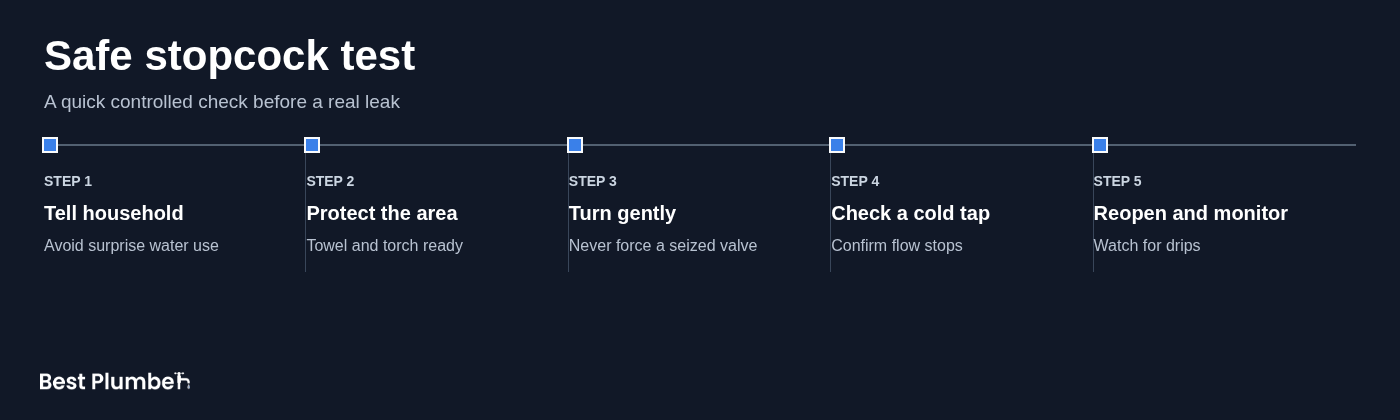
Once you believe you have found the internal stopcock, test it before an emergency. Tell everyone in the home that the water will be off briefly, and pause appliances that may draw water, such as a washing machine or dishwasher.
Place a towel beneath the valve, keep a torch nearby, and turn the handle or lever gently toward the closed position. Do not use pliers, grips, or extra force. Then open a cold tap and check whether the flow reduces and stops.
After confirming it works, reopen the valve slowly and check around the spindle and pipe joints for drips. Leave the cold tap running for a few seconds to clear trapped air, then close it and inspect the valve again.
A common mistake is closing the valve tightly "just to be sure." Stop when it reaches its normal closed position. Overtightening an older wheel-handle valve can damage the mechanism or create a leak around the spindle.
What to do if the inside stop tap is stiff, leaking, or not working
Leave the valve alone if the handle will not move with gentle pressure, water appears around the spindle, the pipework starts to vibrate, or the valve fails to stop the water completely. These are signs that the stopcock may be seized, worn, or internally damaged.
Do not treat a stiff valve as a DIY challenge. Old stopcocks can fail when disturbed, and a leaking valve can turn a simple inspection into an urgent plumbing problem. Arrange for a qualified plumber to repair or replace it while you still have control of the situation.
Label it and make an emergency plan
Once you have confirmed the correct valve, attach a clear waterproof label reading "Main Water Stopcock." If the valve is in a crowded cupboard, label the cupboard door as well. A visible label matters when somebody else needs to act quickly.
Take two photos: one close-up of the valve and one showing how to reach it from the nearest doorway. Add a note stating whether it closes clockwise or, for a lever, which direction is off. Keep the cupboard reasonably clear so that boxes, cleaning products, or stored appliances do not block access.
Tell every adult in the household where it is. If you rent out the property or manage it for someone else, include the information in the handover notes. A trusted neighbour or property manager should also know the location if they may need to access the home during an emergency.
When to call a plumber instead of searching or turning valves
Call a plumber if you have an active or suspected hidden leak, a seized or corroded stopcock, a valve that does not close fully, or pipework that leaks when the valve is moved. You should also seek help when there is no identifiable individual shut-off in a flat or when reaching the valve would require removing fixed units, wall panels, or other fittings.
Replacing a main stopcock is not usually a casual DIY job. It can require isolating the external supply and working directly on incoming mains pipework. A plumber can fit a reliable, accessible replacement and advise on the best arrangement for your home.
If you need help finding a local professional, BestPlumber can help you locate plumbers to contact in your area.
Find it now, not when water is escaping
Take a few minutes to locate the valve on your incoming mains pipe, distinguish it from local isolation valves, and test it gently. Then label it, photograph it, and make sure the people around you know where it is.
If your internal stopcock is missing, inaccessible, stiff, or unreliable, do not wait for a leak to expose the problem. Use BestPlumber to find a local plumber who can assess the setup and replace the valve if needed.