
A hidden water leak rarely announces itself with a dramatic burst pipe. More often, it shows up through a higher meter reading, a stale smell, a brown ceiling mark, or a patch of ground that never seems to dry. If you notice unexplained water use, damp damage, mould, running-water sounds, reduced pressure, or persistent outdoor wetness, investigate promptly.
Any one symptom can have another explanation. Several appearing at once, however, are a strong reason to check your plumbing and arrange professional help before a small leak becomes expensive damage.
The signs that point to a hidden water leak
The most common signs of a hidden water leak in your home are unexplained water use, new damp patches, staining, mouldy smells, peeling finishes, sounds of water when nothing is running, and changes in water or heating pressure. Outside, unusually wet paving, lush grass, or a damp external wall can also point to a buried pipe problem.
Do not assume a stain tells you exactly where the leak is. Water can travel along pipes, joists, masonry, and insulation before it becomes visible. The aim at this stage is to spot the pattern, limit further damage, and give a plumber useful information.
1. Your water bill or meter reading rises unexpectedly
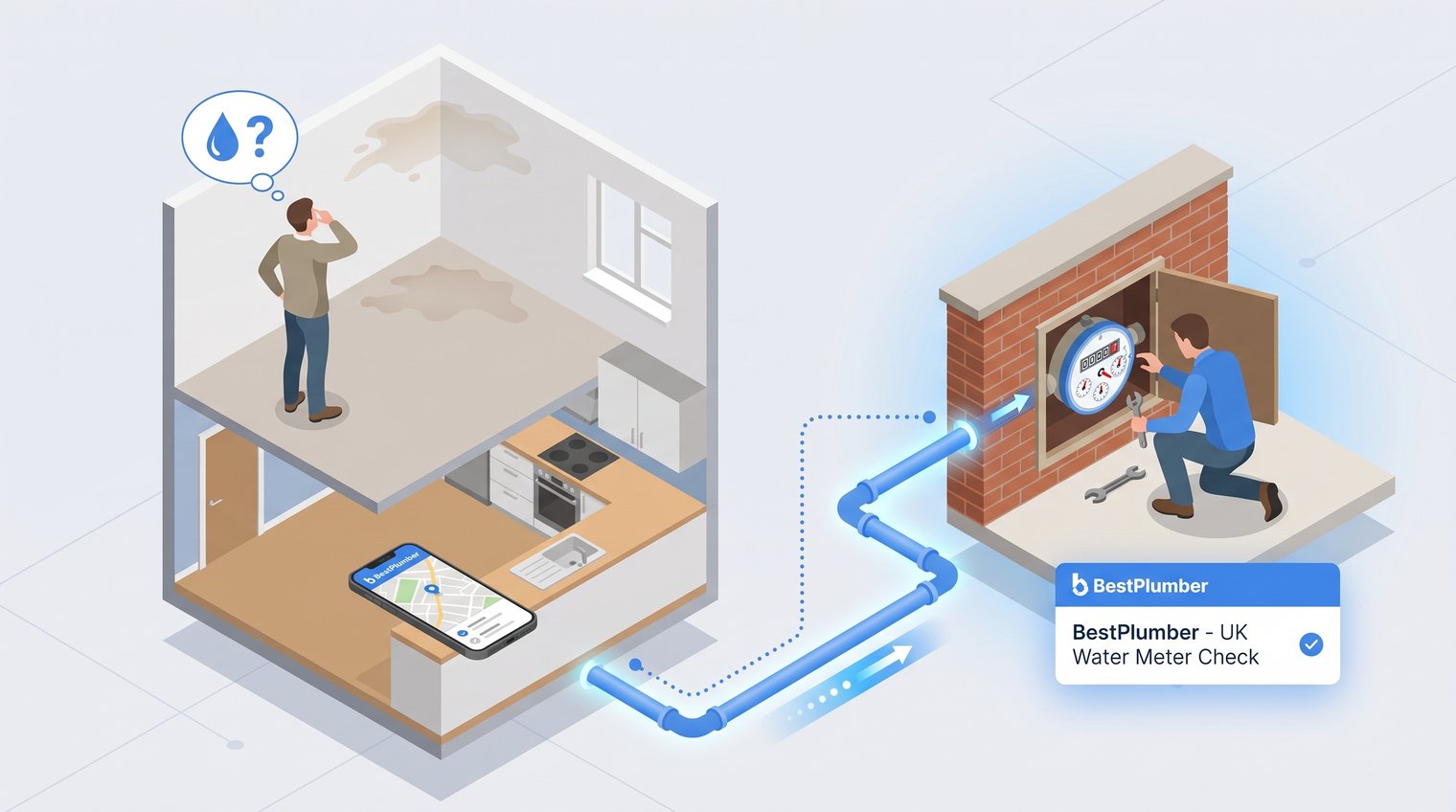
An unexplained increase in water use is one of the clearest warnings because a leak can keep consuming water around the clock, even while every tap appears to be off. It may be a concealed supply-pipe leak, but first rule out common causes such as a toilet cistern that is continuously refilling, a dripping tap, or an appliance issue.
Try a simple meter test. Stop all intentional water use in the property: do not run taps, showers, washing machines, dishwashers, or flush toilets. Note the meter reading, wait 30 to 60 minutes, then check it again. If the reading has changed, water is likely moving somewhere in the system.
A moving meter does not reveal where the leak is. If possible, check visible toilet overflow pipes, cisterns, taps, and appliance connections before assuming the issue is inside a wall or underground.
2. Damp patches, peeling paint or bubbling wallpaper appear
New damp marks on a wall, ceiling, skirting board, or floor are a common answer to the question of how to find a leak in a wall or ceiling. Brown or yellow staining, bubbling paint, peeling wallpaper, swollen skirting, and discoloured plaster all deserve attention, particularly if they grow after using a bathroom or appliance nearby.
Look at what is above, behind, or adjacent to the damaged surface. A ceiling stain below a bathroom may relate to a shower tray, bath waste, toilet, radiator pipe, or supply pipe. A wall mark near a kitchen may be connected to pipework serving a sink, washing machine, or dishwasher.
Still, visible damage is not always directly below the source. A leak can run along a joist before dripping through a ceiling, or spread through masonry before emerging on a different part of the wall.
3. You can smell mustiness or see mould returning
A persistent localised musty smell often means moisture is being trapped somewhere it should not be. Ordinary condensation can cause surface mould in poorly ventilated bathrooms and bedrooms, but mould that repeatedly returns in a previously dry area should not be dismissed as a cleaning problem.
Pay particular attention when mould appears alongside staining, soft wallpaper, cold damp-feeling walls, or a recent increase in water use. Cleaning visible mould may improve the appearance temporarily, but it will return if the leak or damp source remains.
Ventilation still matters, especially in bathrooms. The difference is persistence: if one area stays damp despite normal ventilation and cleaning, it needs investigation.
4. Floors, walls or ceilings feel different
Water damage can change the feel of building materials before it creates an obvious wet patch. Soft or springy flooring, warped floorboards, lifting vinyl, loose tiles, crumbling plaster, swollen timber, and cold damp areas on a wall can all indicate moisture beneath the surface.
Ceilings deserve extra caution. A bulging, sagging, or visibly saturated ceiling may be holding a significant weight of water and can fail without much warning. Keep people away from the area, avoid placing anything underneath it, and seek urgent professional help.
Do not press hard on a damaged ceiling, cut into it, or investigate near light fittings. Water and electrics are a dangerous combination.
5. You hear water when everything is switched off
Hissing, dripping, trickling, or the sound of a toilet repeatedly refilling can suggest a leak. The most useful time to listen is when taps, showers, appliances, and heating controls are quiet.
Check near bathrooms, kitchen cabinets, boiler cupboards, and known pipe runs. A continuously refilling toilet is particularly easy to overlook and can waste substantial water without leaving a puddle.
Not every noise is a leak. Central-heating systems can make normal expansion noises, and appliances may cycle intermittently. But a new, persistent water sound combined with damp, meter movement, or pressure changes should not be ignored.
6. Water pressure drops or your boiler keeps losing pressure
A sudden drop in water pressure can indicate a plumbing problem, although it is not proof of a hidden leak. It may also result from work on the local supply, a faulty tap or shower component, or an issue with a pressure-reducing valve.
Repeated pressure loss on a sealed central-heating system is more concerning. If you find yourself regularly repressurising the boiler, contact a qualified heating engineer or plumber rather than continuing to top it up. The cause could be a leak, an issue with the expansion vessel, or another fault that needs proper diagnosis.
Do not confuse heating-system pressure with mains water pressure. They are different systems, and the right professional will assess which one is affected.
7. The garden, driveway or outside wall stays unusually wet
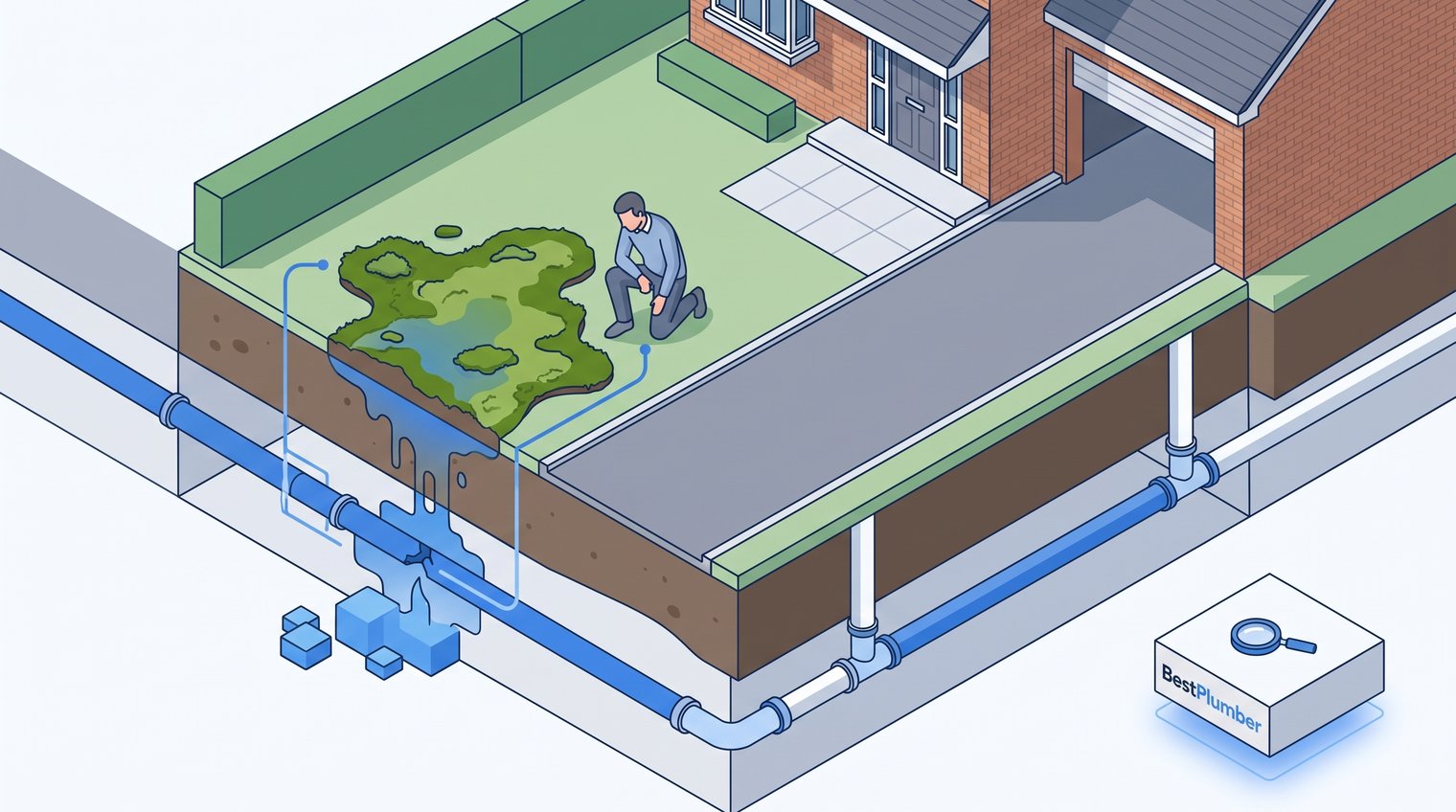
To tell if you have a water leak underground, look for wetness that does not match recent weather or normal drainage patterns. Persistently lush grass, unexplained pooling, wet paving, sinking ground, a soft patch beside a driveway, or an external wall that remains damp can all be clues.
An underground supply-pipe leak may be more noticeable during dry weather, when one area remains green or muddy while the surrounding ground dries out. You may also see water emerging near the property boundary, meter area, or where the supply pipe enters the house.
Be careful not to jump to conclusions. Blocked drains, poorly sloped paving, gutter overflow, heavy rain, and surface runoff can create very similar symptoms. Note whether the patch worsens after rainfall, when certain appliances are used, or even during dry periods.
How to narrow down a hidden leak safely before calling for help
You do not need to open a wall to gather useful evidence. A few safe checks can help establish whether water is being lost and make a plumber's visit more efficient.
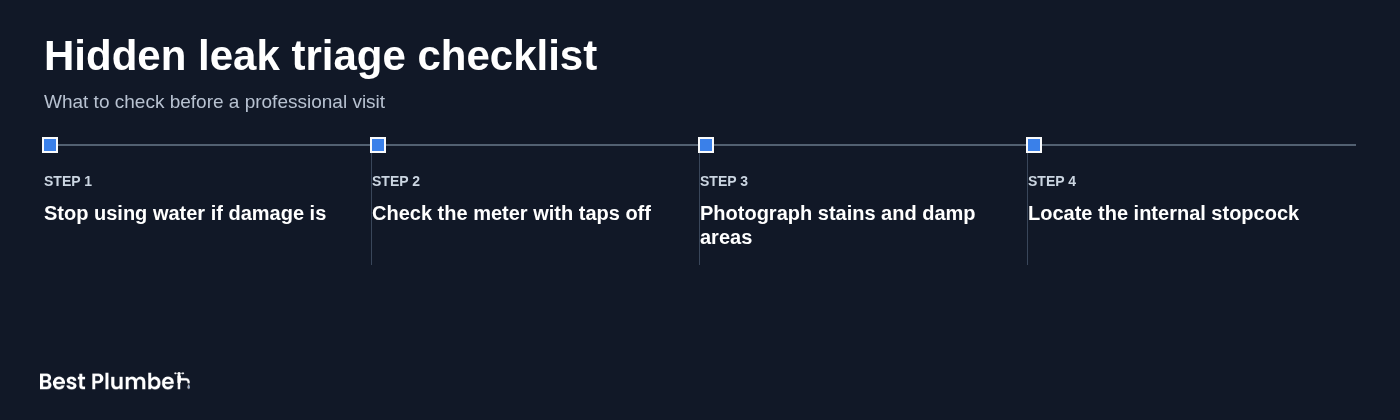
- Check visible taps, pipe joints, radiator valves, appliance hoses, and toilet cisterns for drips, overflow, or continual refilling.
- If safe, stop using suspected appliances such as a washing machine or dishwasher until you know whether their connections are sound.
- Carry out a water-meter test with all water use stopped.
- Photograph stains, damp patches, mould, and any outdoor pooling. Take follow-up photos if the area spreads.
- Write down when the symptoms appear or worsen, such as after showering, flushing a toilet, using the heating, or following rain.
It is also worth locating your internal stopcock before there is an emergency. See how to find the internal stopcock in your home. It is commonly under the kitchen sink, near the front door, in a utility room, airing cupboard, or beneath a floor access panel. If you rent, ask your landlord or managing agent where it is rather than guessing.
Do not drill walls, lift ceilings, remove electrical fittings, or attempt invasive repairs. Those actions can turn a manageable leak into a larger repair or create a safety risk.
When to call a plumber - and when it is an emergency
For suspected leaks in domestic water supply pipes, waste pipes, bathrooms, kitchens, or concealed household plumbing, call a plumber. If the concern is repeated loss of pressure in a sealed heating system, a qualified heating engineer or plumber should assess it.
Treat the situation as urgent if water is coming through a ceiling, is near electrics, is flooding the property, comes from a burst pipe, spreads rapidly, or cannot be controlled. If it is safe to do so, turn off the internal stopcock to stop the incoming water supply, then contact an emergency plumber. Keep clear of affected electrical circuits and do not touch switches or fittings that may be wet.
A hidden leak can go unnoticed for weeks or months, especially if it is small and concealed. That does not make it harmless. Continued moisture can damage plaster, timber, floors, insulation, and finishes, encourage mould growth, and add avoidable costs to your water bill.
How plumbers locate leaks without unnecessary damage
A competent plumber will usually start by narrowing down the type of leak rather than cutting into walls at random. The appropriate method depends on whether the suspected source is a mains supply pipe, heating pipe, waste pipe, drainage line, roof-related water ingress, or a faulty fixture.
Common diagnostic methods include pressure testing to check whether a system is losing water, moisture meters to map dampness, thermal imaging to identify temperature differences associated with moisture or pipework, and acoustic equipment to listen for pressurised water escaping. In some cases, tracer gas can help locate a concealed leak, while CCTV drain surveys may be appropriate for suspected drainage defects.
Diagnosis can involve ruling out possibilities. For example, a ceiling stain may come from a plumbing leak, but it could also result from failed bathroom sealing, a roof defect, condensation, or drainage problems. Clear notes about when the problem occurs make that process faster.
Prepare for the visit and check the repair afterwards
Before a plumber arrives, clear access to the affected room and any nearby cupboards, boiler areas, or utility spaces. Have your meter-test result, photographs, and a brief timeline ready, including when you first noticed the problem and whether it changes after using water or during rainfall.
Show them the stopcock location if you know it, and mention any recent building work, appliance installation, bathroom repairs, or heating problems. Those details can point to likely causes.
After a repair, repeat the meter check when all water use is off to confirm the reading no longer changes. Monitor the affected area as it dries, and ask what was repaired, whether any drying work is needed, and when it is safe to redecorate or replace damaged materials.
A wall, floor, or ceiling may remain marked or damp for some time after the water source is fixed. Visual recovery is not immediate, so follow professional advice before sealing, painting, or covering the area.
Act early to limit hidden leak damage
Unexplained water use, persistent damp, musty smells, unusual water sounds, pressure changes, and wet outdoor patches are all signs worth taking seriously - especially when they occur together. Early investigation is usually far less disruptive than waiting for visible damage to worsen.
If you need local help, you can use BestPlumber to find and contact a plumber in your area.