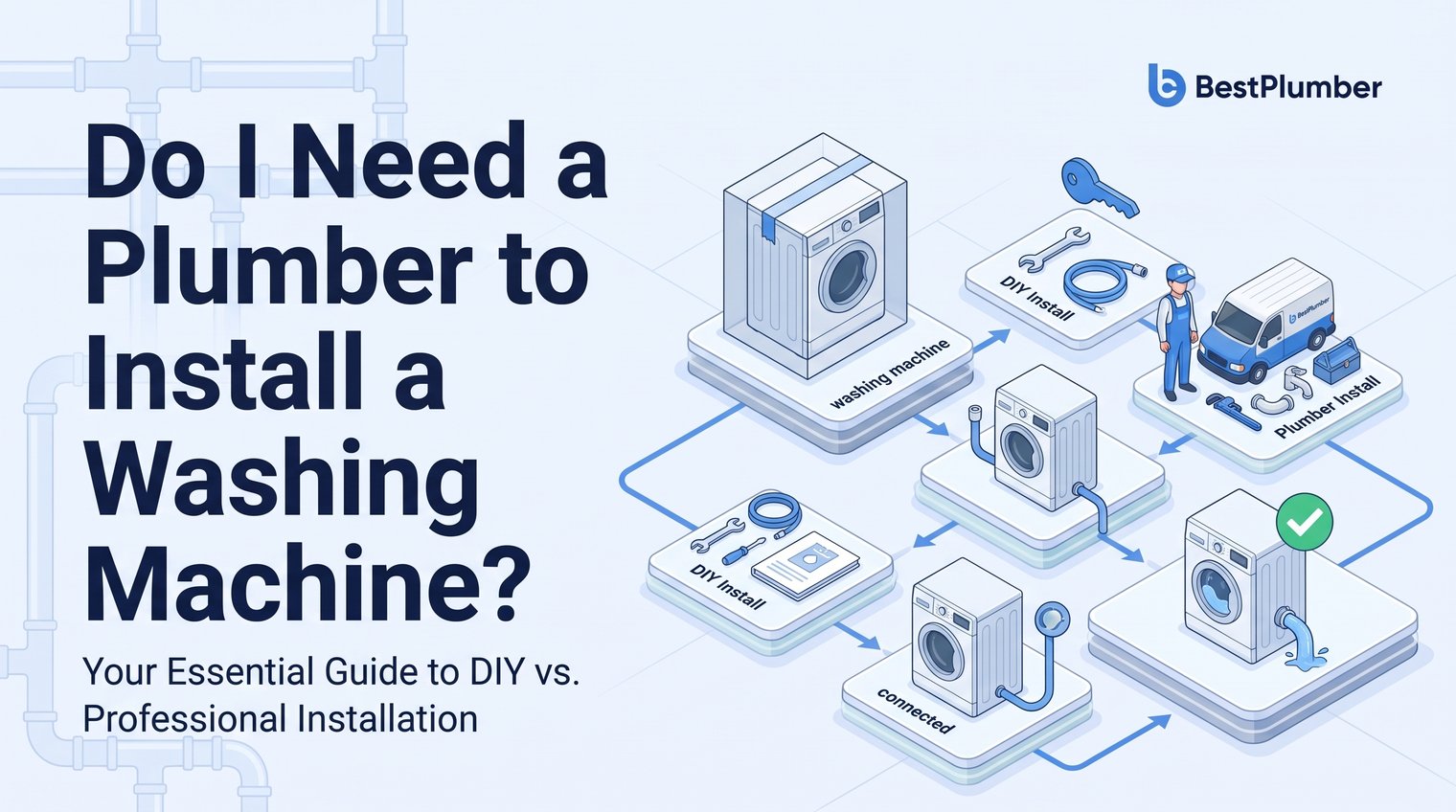
So, do you need a plumber to install a washing machine? Usually not if you are replacing a freestanding model and the cold-water valve, waste connection and suitable wall socket are already in place and working properly. But if anything needs altering, leaks, will not turn off, or is difficult to reach, booking a plumber is the safer decision.
The distinction matters. Connecting a machine to sound existing services is one job; adding or modifying water and waste pipework is another. Electrical alterations should be handled by an appropriately qualified professional where required.
Usually no - if you are replacing an existing washing machine
A confident homeowner can often manage a like-for-like replacement without a plumber. The new appliance needs to fit the available space, its hoses must reach without being stretched or crushed, and the existing connections need to be in good condition.
This is not an invitation to force old fittings to work. A stiff isolation valve, corroded pipe, cracked waste fitting or unexplained damp patch turns a simple appliance swap into a plumbing problem. Stop before water is running through the new machine and get the setup checked.
It is also worth separating plumbing from electrical work. Plugging an appliance into an appropriate existing wall socket is one thing; moving a socket, changing a circuit or improvising an electrical supply is not a DIY washing-machine installation task.
The quick decision check before you book anyone
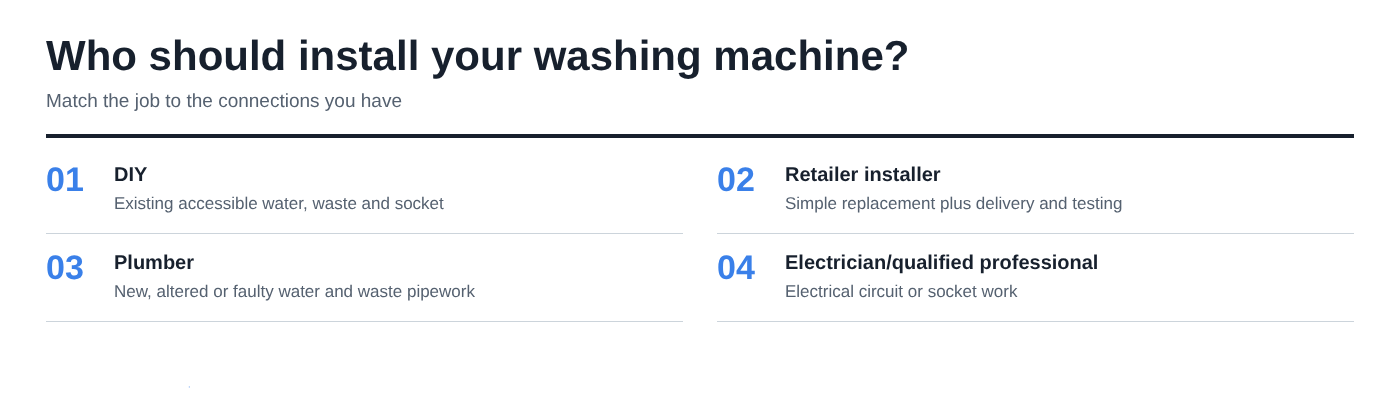
Before delivery day, check the three connections the washing machine relies on: water, waste and power. If all are accessible, suitable and working, a straightforward replacement may be realistic. If one is missing, damaged or in the wrong place, arrange professional help before the appliance arrives.
You can normally install it yourself when all three connections are already there
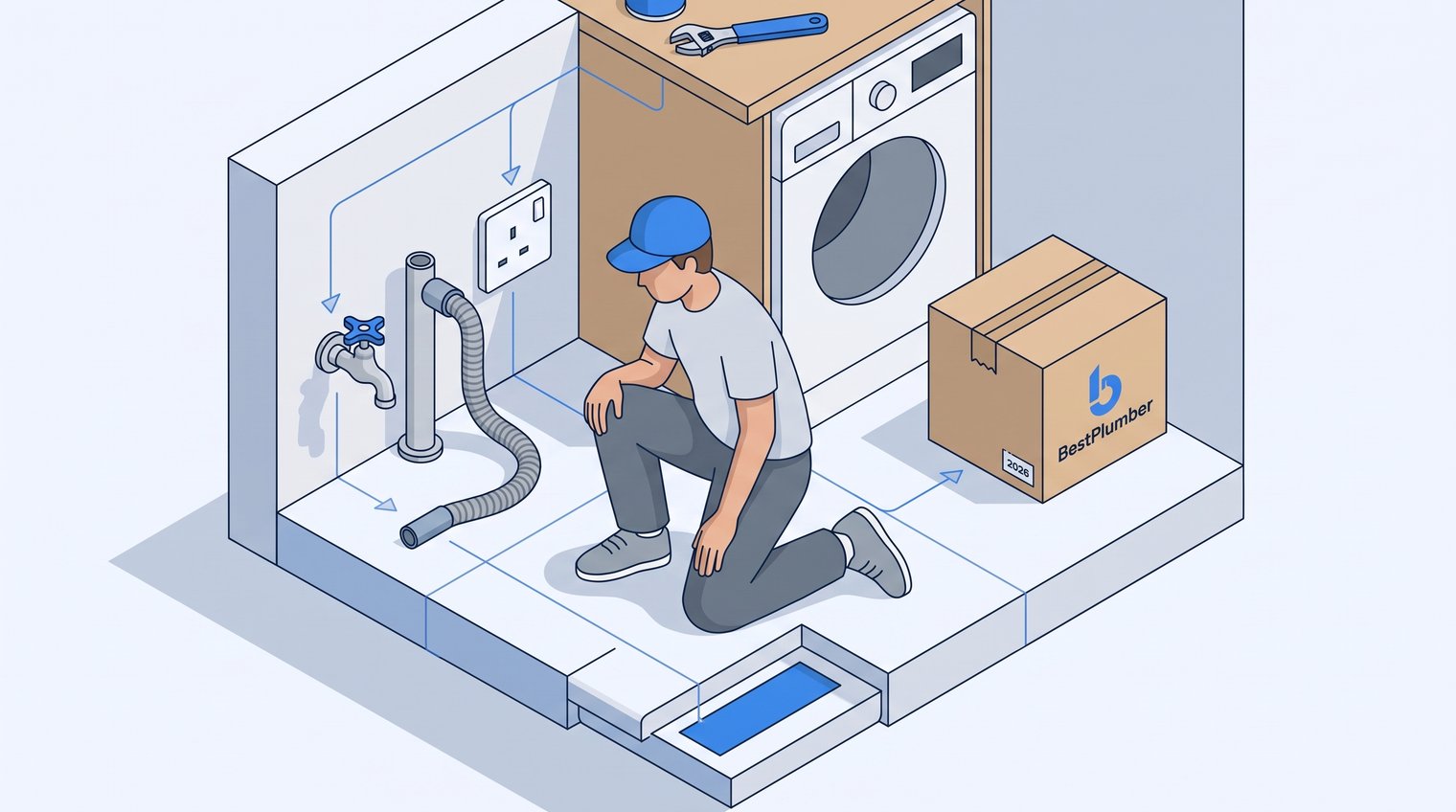
Look for an accessible cold-water isolation valve, a suitable waste connection such as a standpipe or appliance spigot on a sink trap, and a nearby appropriate fixed wall socket. You should be able to reach the valve and plug after installation, rather than sealing them behind an appliance with no practical access.
Measure the gap as well as the machine. A washing machine that technically fits but presses tightly against the wall can kink its drain hose, strain its fill hose or make the plug impossible to access. Leave the clearance specified in the appliance manual.
Book a plumber when the water supply or waste connection needs changing
Call a plumber if there is no isolation valve, the valve is seized, fittings are corroded, pipework is unusual, or the machine has no suitable place to discharge wastewater. The same applies if you are moving the appliance to another wall, converting a cupboard or dealing with a drain that already backs up or drains slowly.
A plumber's value is not simply attaching a hose. They can assess whether the existing supply and drainage arrangement is suitable, identify weak fittings, and make changes that will not create a leak behind the machine later. If you need help finding and booking a suitable local professional, see How to Order a Plumber: Find, Vet and Book Local Help.
Use an appliance installation service when the connections are ready but the job needs handling
An appliance retailer or delivery installation service can be a sensible middle ground for a routine replacement. Depending on its terms, the team may unpack the machine, remove transit bolts, connect existing hoses, level the appliance and run a basic test.
Check the service details before paying for it. Some services cover only simple freestanding replacements, while integrated machines, disconnection of the old appliance, removal and pipework changes may be excluded or charged separately.
What a safe straightforward washing-machine installation involves
Follow the appliance manual if its instructions differ from general advice, and keep the transit bolts for a future move. A routine installation means removing those bolts, positioning the machine without trapping hoses, connecting the cold fill and waste hoses, levelling the feet, and running a supervised test cycle.
Water supply and drainage
Use the supplied hose seal, turn the water on gradually and check for drips before pushing the machine fully into place. The drain hose must follow the manufacturer's specified height and arrangement; do not kink, crush, pull it tight or seal it airtight into a waste pipe. Stop and call a plumber if threads or fittings are damaged, the valve will not turn, or the drain gurgles, overflows or backs up.
Power and positioning
Use an appropriate fixed wall socket, not an extension lead or overloaded adaptor, and keep the plug accessible. Do not alter sockets or wiring yourself. Finally, level the machine using its adjustable feet to reduce movement and strain on hoses during spin cycles.
Situations where a plumber is the sensible choice
Paying for professional plumbing is often cheaper than repairing flooring, cabinetry or ceilings after a preventable leak. The right time to call is before delivery day when the setup is uncertain, not after a new machine is already sitting in the hallway.
There is no suitable water or waste connection
A first-time installation in a kitchen, utility room, garage or outbuilding usually needs a plumber. They may need to add a suitable supply valve and create an appropriate waste arrangement for the appliance.
Do not assume every pipe below a sink can accept a washing-machine hose. The trap, pipe size, route and drainage capacity all matter, and an improvised connection can leak or cause wastewater to return to the sink.
The machine is sharing drainage with a sink
A sink and washing machine can often share a drain when the sink trap has a proper appliance spigot and the pipework and layout are suitable. This is a common arrangement in kitchens and utility rooms, but it must be connected correctly rather than wedged or taped into place.
Persistent gurgling, slow sink drainage, foul smells or wastewater rising in the sink during a wash are signs that the setup needs attention. A plumber can assess whether the trap, waste pipework or downstream drainage is the real issue.
You are fitting an integrated machine or changing the kitchen layout
Integrated washing machines need more than a water and waste connection. The cabinet door must align properly, ventilation and clearances need to be maintained, and future access for servicing should not be forgotten.
If cabinets are being moved or a machine is relocating within the kitchen, coordinate the appliance installer, cabinet fitter and plumber. Treating it as a simple swap can leave you with hoses that are inaccessible or a machine that cannot be removed without dismantling the kitchen.
Can a washing machine go under a sink?
It depends on the appliance dimensions, the basin and worktop arrangement, hose clearances and access to the valves and plug. A washing machine should never be forced into a gap where pipes are compressed, hoses are pinched or essential connections cannot be reached.
Many standard machines can sit under a continuous worktop beside a sink, provided the plumbing is routed appropriately. Putting one directly beneath a basin is more restrictive because the sink waste, trap and supply pipes occupy valuable space. Purpose-designed compact laundry solutions may suit tight rooms better, but always check the manufacturer's required clearances.
What does it cost to have a plumber install a washing machine?
In the UK, a straightforward washing-machine connection is commonly priced as a modest call-out plus labour. The total rises when a plumber must replace a valve, alter a sink trap, install new waste pipework, work around difficult access or move connections to a new location.
Ask for a written scope rather than relying on a vague installation price. It should state whether the work includes disconnection of the old machine, connection and leak testing of the new one, parts, travel or call-out charges, and VAT.
For a simple replacement with ready-to-use connections, a retailer's installation service may offer better value and convenience. A plumber is usually the better choice when the pipework is altered, faulty or uncertain, or when drainage needs diagnosing rather than merely connecting.
Delivery, old-machine removal and draining: check before the appointment
Confirm whether delivery staff will disconnect or remove the old machine, as this is service-specific. A disconnected machine can release residual water, so follow the appliance manual, turn off the supply where appropriate, and have towels and a shallow tray ready. Installation teams may decline unsafe, inaccessible or out-of-scope connections; arrange plumbing help before delivery rather than risk an unsafe connection.
What to ask a plumber or installer before they arrive
A short conversation before booking can prevent an aborted appointment. Explain whether the job is a like-for-like replacement or a new installation, and send clear photos of the current setup if possible. If the appointment is time-sensitive, this same-day plumber search and enquiry checklist can help you prepare.
- Will you disconnect the existing washing machine?
- Can you fit or replace an isolation valve if needed?
- Can you alter a sink trap or install a suitable waste connection?
- Do you install integrated machines and coordinate around cabinetry?
- Does the visit include a leak test and test cycle?
- Are required parts included, or should I buy them in advance?
- Do you remove the old appliance?
- What are the total charges, including call-out, travel, parts and VAT?
Photos should show the water valve, waste connection, socket location and the space around the appliance. This gives the plumber or installer a better chance of identifying limitations before arriving. After installation, you can also use these checks for spotting leaks during the first test wash.
Make the right call before washing-machine delivery day
A like-for-like washing-machine replacement with sound, accessible water, waste and power connections is often manageable without a plumber. If connections are missing, changed, seized, leaking or suspicious, bring in a professional before the new machine is installed.
For local plumbing help, use BestPlumber to look for a plumber and discuss the scope of the washing-machine installation before booking.