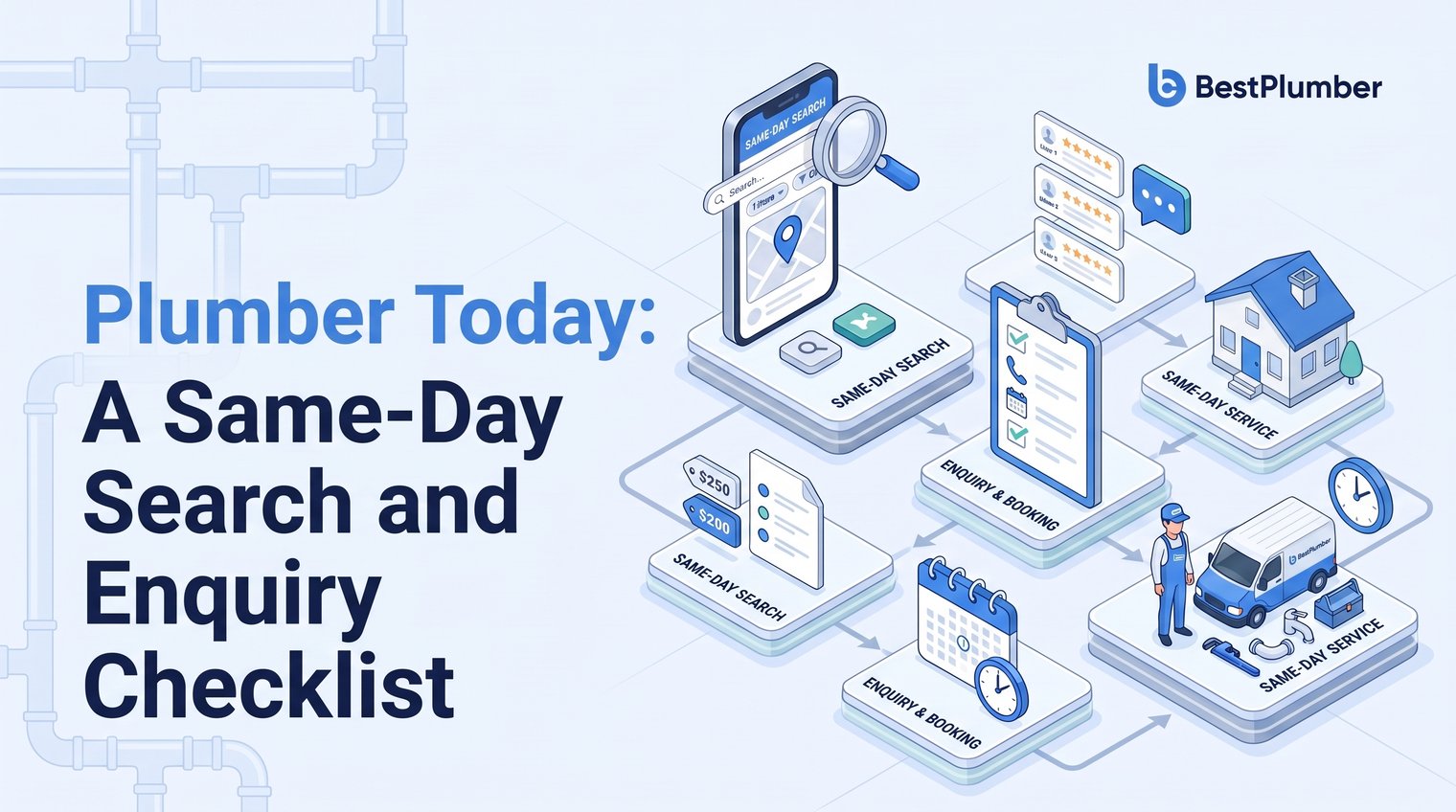
A plumbing problem can turn expensive fast, especially when water is spreading, a toilet is backing up, or heating has failed on a cold day. The goal is not simply to find a plumber today. It is to make the situation safe, reach someone who can genuinely attend, and agree the cost and scope before work begins.
Use this checklist as a practical same-day hiring guide. It helps you act quickly without skipping the checks that protect your home, your budget, and your safety.
Start with a 10-minute triage: do you need a plumber today?
Not every drip needs an emergency visit, but some problems should not wait. A slow leak under a sink that can be isolated may be suitable for a scheduled appointment. Water coming through a ceiling, a failed stopcock, a blocked toilet with sewage overflowing, or a major leak affecting multiple rooms is a same-day problem.
Start with the actions that limit damage. Do not begin dismantling pipework in the hope of finding a quick fix; that often makes a manageable fault worse. If you need immediate practical steps while arranging attendance, see what to do while waiting for an emergency plumber.
- Isolate the water supply if you can do so safely. Turn off the local isolation valve for a fixture, or use the main stopcock if water is continuing to escape. Make sure everyone in the property knows where the stopcock is once the immediate problem has passed.
- Keep water away from electricity. If water is near sockets, appliances, consumer units, or wiring, avoid the area and switch off electricity only if it is safe to do so without approaching water. Do not touch electrical equipment while standing in water.
- Protect belongings and contain minor water spread. Move valuables, place buckets beneath a contained drip, and use towels to limit water movement. Do not block drainage routes or place yourself at risk to save possessions.
- Do not tamper with gas appliances. A gas smell, suspected carbon monoxide issue, or concern about a boiler or gas appliance needs the appropriate emergency response and a properly certified professional. In the UK, gas work must be carried out by a Gas Safe registered engineer.
- Treat sewage overflow as a hygiene issue. Keep people and pets away, avoid direct contact, ventilate if practical, and seek professional help promptly. A sewage backup is not a routine DIY blockage.
If the fault is contained, no one is at risk, and you still have basic water or heating where needed, you may have time to book a normal-hours visit. That can reduce the out-of-hours premium. Do not delay, however, when there is active water damage or a safety concern.
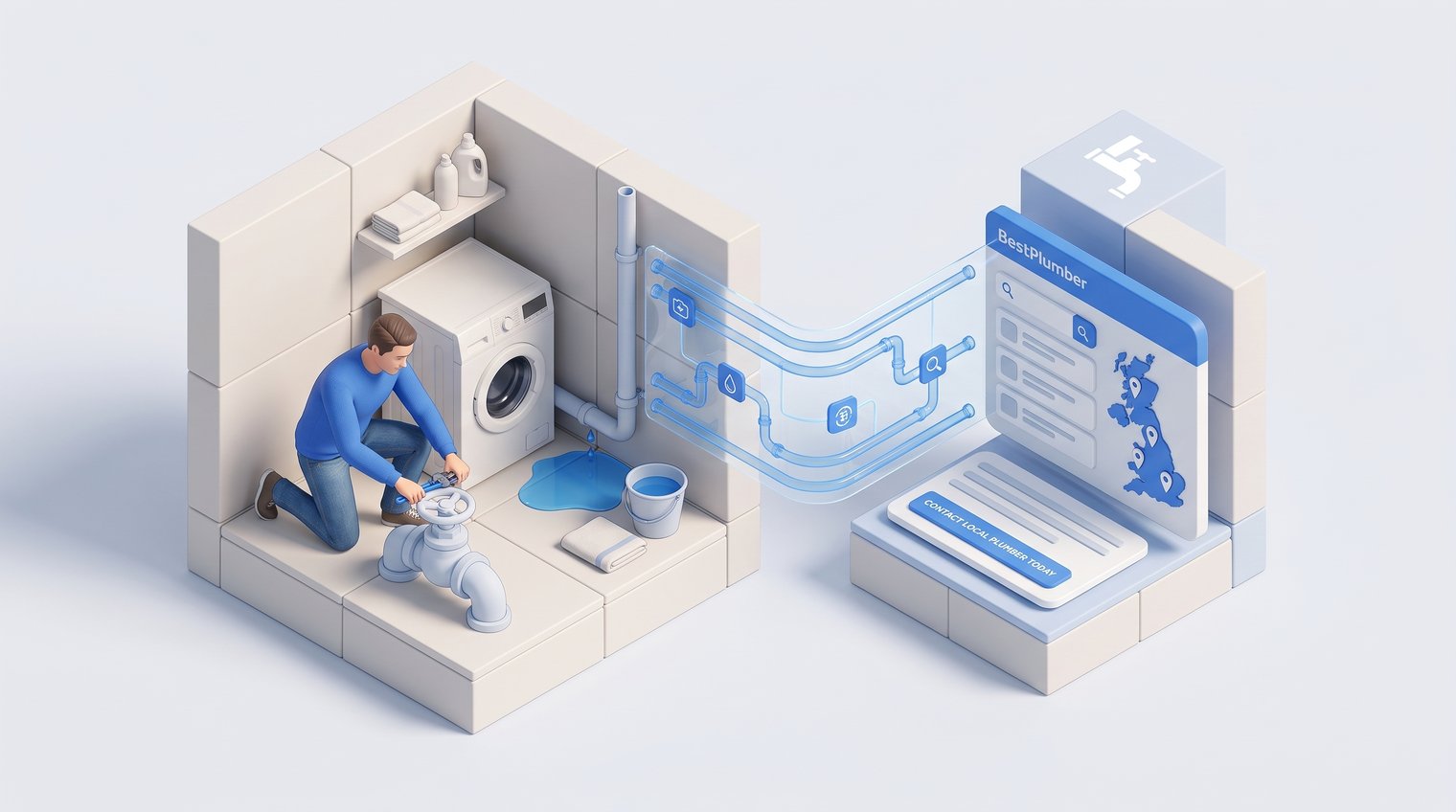
Define the job before you search
"Need a plumber" is too vague for a useful availability or price response. Before making calls, write down the essentials so every plumber receives the same description of the job.
- Name the problem clearly. Say whether it is a leaking pipe, burst radiator valve, blocked drain, failed toilet flush, no hot water, boiler pressure issue, or another specific fault. A plumber can assess suitability much faster with a direct description.
- State the exact location. Mention the room and the affected fixture, such as "leak under kitchen sink" or "water coming through first-floor bathroom ceiling." This helps identify likely access and equipment requirements.
- Record when it started and whether it is worsening. A leak that began an hour ago and is still flowing requires a different response from a stain that appeared days ago with no active water.
- Explain what has been isolated. Confirm whether water is still flowing, whether you have turned off the stopcock, and whether heating or electricity has been switched off for safety.
- Take clear photos or a short video if safe. Images can help a plumber judge the likely job before travelling. Do not put yourself near water and electrics, climb into unsafe spaces, or remove covers to get a better photo.
- Note the property type and access limits. A flat, terraced house, rental property, restricted parking, locked communal entrance, or difficult loft access can affect attendance planning and cost.
Use search terms that match the urgency and location
Broad searches can produce results from outside your area or businesses that cannot attend quickly. Add your town, postcode district, or nearby area to searches such as "plumber today near me," "plumbers near me," or "emergency leak repair."
For a wider process for comparing local options, see How to Find a Plumber: A Complete Guide to Hiring Locally. You can also include the location when searching for a plumber in Essex, Ipswich, Northampton, Oxford, Penrith, Portsmouth, Richmond, Rutherglen, or your own area. Location wording improves the chance of finding nearby contact options, but it does not prove that a business covers your postcode or has a slot today. Confirm both directly.
Search locally and check who can actually attend today
Speed matters, but waiting for one business to call back is usually the slowest approach. Open local results and directories, then contact several plausible nearby plumbers with the same short description of the fault.
- Check the service area before calling. Look for town, postcode, or regional coverage details. A business may appear in a local search yet have limited travel availability.
- Prioritise direct contact details. A phone number can be useful for an urgent fault because you can establish availability immediately. An enquiry form is still valuable when you need to send photos and a written job description.
- Ask for an arrival window, not just "today." "We can come today" could mean any time before midnight. Ask for the earliest likely window and whether the plumber will call before arrival.
- Confirm the call-out arrangement. Find out whether it is an emergency or standard visit, whether there is a separate call-out fee, and what happens if the fault needs a return visit.
- Contact more than one provider. Compare responses on attendance, communication, and price basis. You are not obliged to accept the first answer, particularly if the situation is safely contained.
A local, friendly plumber may be a good choice, but proximity alone does not establish qualifications, availability, or fair pricing. Use it as a starting point, not a substitute for asking the right questions.
Use BestPlumber to find nearby contact options
BestPlumber can be one source for finding local plumber listings by location and starting a call or enquiry. Use the listing details to identify businesses that may serve your area, then verify the job fit, availability, credentials, and quote terms directly with the plumber.
A directory helps you build a shortlist. It does not remove the need to confirm who will attend, when they can arrive, or what the visit will cost.
Ask these availability questions on the first call
Your first call should establish whether the plumber can solve this particular problem today, rather than becoming a long discussion with no appointment at the end. Keep the questions short and write down the answers.
- Can you attend today? Ask for the earliest available time and a realistic arrival window. Confirm whether it is a firm booking or a provisional slot dependent on earlier jobs.
- Is this an emergency or call-out visit? This identifies whether out-of-hours or urgent attendance charges may apply before work begins.
- Can you handle this specific fault? Describe the issue clearly and ask whether they deal with that type of repair. Plumbing, drainage, heating, and gas work do not always fall under the same service scope.
- What should I do until you arrive? A competent professional should be able to give basic, safe guidance, such as isolating water or avoiding use of a fixture.
- Who am I speaking with? Ask whether the person is the plumber, an office dispatcher, or a platform representative. This makes it clearer who is making the attendance and pricing statements.
Where possible, ask for the agreed arrival window and price basis in a text message or email. A written confirmation avoids confusion when several calls and messages are happening at once.
Check credentials and legitimacy before authorising work
Same-day urgency is not a reason to ignore basic checks. You may have only a few minutes, but you can still confirm who you are dealing with and whether they are appropriate for the job.
- Confirm the business name and usable contact details. Ask for the trading name, telephone number, and an email address or other reliable contact method. This information should match the invoice you receive later.
- Ask about relevant experience. A plumber should be able to explain whether they regularly handle the fault you describe, especially where drainage, heating systems, or specialist equipment are involved.
- Ask about public liability insurance where applicable. This is a reasonable question for work in your home, particularly where there is a risk of water damage or access to building systems.
- Verify gas qualifications for gas work. In the UK, gas appliances and gas pipework must be handled by a Gas Safe registered engineer. Check the engineer and the relevant work category through the official Gas Safe Register before authorising gas work.
- Read recent independent reviews for patterns. Do not focus only on a star average. Look for repeated comments about punctuality, clear pricing, workmanship, invoices, and how the business handled problems.
Missing business information, refusal to explain charges, and pressure to decide immediately are warning signs. They do not automatically prove wrongdoing, but they are good reasons to slow down if the problem can be safely stabilised.
Get a same-day price explanation you can compare
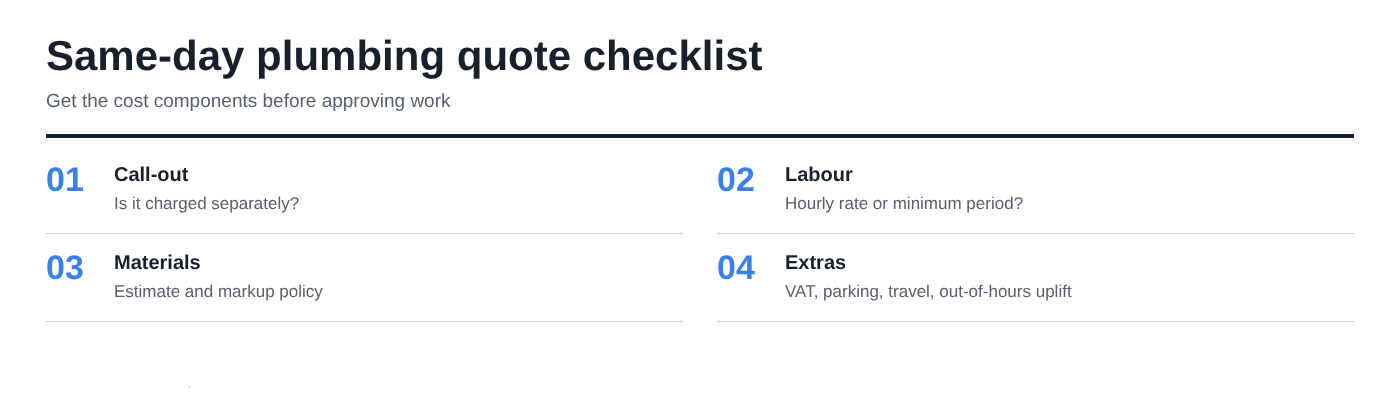
The cheapest plumber is not necessarily the lowest advertised hourly rate. A low starting price can exclude the call-out, minimum labour period, urgent attendance uplift, materials, travel, parking, or VAT. Compare the full pricing basis for the same described job.
If you are wondering how much a plumber costs for three hours, there is no reliable universal number. The total depends on location, normal versus out-of-hours attendance, the labour rate or minimum charge, parts, access, and the fault itself. Ask each provider for the components and an estimated total range based on the information you have provided.
- Ask whether there is a call-out fee. Confirm whether it is charged separately, deducted from labour, or payable even if no repair is completed.
- Confirm the minimum labour charge and hourly rate. Some businesses charge by the hour, while others have a minimum block of time. Ask when the clock starts and how additional time is billed.
- Ask about materials before they are fitted. Request an estimate for likely parts and whether there is a stated markup policy. Exact costs may be unknown until diagnosis, but the approach should be clear.
- Check extras. Ask specifically about VAT, parking, travel, and out-of-hours uplift. These are legitimate charges in some circumstances, but they should not appear as surprises.
- Get an estimated range for the stated scope. A fixed quote may not be possible before inspection. An honest estimate should still explain what is included, what could change it, and when approval will be sought.
Spot red flags that may signal an unfair plumbing quote
A higher price is not automatically a rip-off. Emergency attendance, difficult access, specialist parts, and hidden damage can all increase a legitimate bill. The concern is not the price alone; it is whether the plumber explains the work and gives you a reasonable chance to approve costs.
- Watch for charges that cannot be explained. A plumber should be able to separate labour, call-out, materials, and extras in plain language.
- Do not approve major work before a diagnosis. Immediate containment may be necessary, but expensive replacement work should normally follow an explanation of the fault and available options.
- Be cautious with verbal-only pricing. Ask for the rate, estimate, or agreed scope in writing by message or email, particularly for a larger job.
- Question surprise add-ons. Extra work may be justified, but you should be told what changed and what it will cost before non-urgent additions proceed.
- Be wary of pressure for cash or reluctance to invoice. A legitimate business should be willing to provide a proper record of the work and payment.
- Do not let anyone discourage reasonable questions. You are entitled to ask what failed, what is being repaired, and why a particular solution is necessary.
Pause before approving non-urgent extra work
When water, heating, or safety can be stabilised, ask for photos or a plain-language explanation of the fault, a revised estimate, and time to consider a second opinion. This is especially sensible for costly replacements or broad remedial work.
Urgent containment is different. If stopping a major leak prevents serious property damage, authorising that immediate step can be reasonable even if the durable repair is planned later. Ask the plumber to distinguish clearly between the urgent temporary measure and the longer-term solution.
Send an enquiry that gets a useful response
A detailed enquiry reduces back-and-forth and makes it easier for a plumber to say whether they can attend. Include the information needed to assess urgency, access, and likely work, but do not share unnecessary payment details before an attendance time and price basis are confirmed.
- Give your postcode and property access details. Mention flat numbers, parking restrictions, entry systems, or other barriers that could delay attendance.
- Describe the fault and its location. Keep the description factual and include when it started and whether the water supply has been isolated.
- Attach safe, useful photos or video. One clear image of the affected fixture and visible damage is often more useful than several unclear photos.
- State the attendance window you need. If you must leave for work, collect children, or meet a landlord, say so early.
- Request the price basis. Ask about call-out, labour, minimum charge, and invoice availability in the initial message.
Copy-and-paste same-day plumber enquiry
"I'm in [postcode]. I have [problem] at [location in property], which started [time]. [Water is/is not] isolated. Can you attend today? Please confirm your earliest arrival window, call-out fee, labour rate/minimum charge, and whether you can provide an invoice."
Prepare the property for the plumber's arrival
Simple preparation can save billable time and help the plumber diagnose the issue more quickly. Focus on safe access, not DIY investigation.
- Clear access to the affected area. Move stored items from beneath sinks, around boilers, or near radiators where possible. Do not move anything that creates a safety risk or worsens a leak.
- Secure pets and plan entry. Keep pets out of the work area and make sure the plumber can reach the property without unnecessary delays.
- Locate the stopcock and relevant system details. If the issue involves heating or hot water, have boiler details, error codes, and any manuals available if you can find them safely.
- Take photos of visible damage. Record stains, wet flooring, affected belongings, and the source area before repair work begins. This may help with later discussions with a landlord or insurer.
- Keep messages and quotes ready. Have the agreed arrival window, pricing messages, and prior repair history available for reference.
- Write down the timeline. Note when the fault began, what changed, and what temporary steps you took. These details can narrow the diagnosis.
Do not remove appliance covers, touch electrical equipment near water, or restart any system switched off for safety. Let the attending professional assess it.
Agree the repair plan before work starts
Once the plumber has inspected the fault, pause for a short agreement before tools come out. This is the point where assumptions become a defined job.
- Confirm the diagnosis. Ask what has failed and what evidence supports that conclusion. The explanation should make sense in plain language.
- Identify the immediate fix. Establish what will be done today to stop the leak, restore safe use, clear the blockage, or resolve the stated issue.
- Ask about alternatives where relevant. There may be a temporary containment repair and a more durable repair. Understand the difference before choosing.
- Confirm duration and price basis. Ask how long the work is expected to take and whether the price is fixed, estimated, or calculated from time and materials.
- Set an approval threshold for changes. Agree that the plumber will contact you before carrying out non-urgent additional work or exceeding a stated amount.
- Clarify materials. Ask which parts are likely to be fitted and whether alternatives are available if cost or timing is important.
This matters particularly for leaks, drainage faults, and heating-related problems. A repair that stops water today may be essential, but it is not always the same as a long-term repair to the underlying cause.
Check the result, invoice, and warranty details before closing the job
Do not assume the job is complete simply because the plumber has packed up. Where safe, test the affected fixture or area while they are still there and ask what you should monitor over the next day or two.
- Test the repair safely. Run the tap, flush the toilet, check for visible drips, or confirm the relevant system is functioning as appropriate. Follow the plumber's guidance where a system needs time to reset.
- Ask what was repaired. Get a clear explanation of the fault, the work completed, and any remaining issue that may need later attention.
- Request an itemised invoice. It should identify the business, work date, labour, materials, call-out or emergency charges, VAT where applicable, and the total paid.
- Record parts and warranty information. Keep details of parts fitted, guarantees or warranty terms, and any instructions for making a follow-up claim.
- Keep payment confirmation. Save receipts, bank records, messages, and the invoice together. They are useful if you need future service, speak with a landlord, or make an insurance enquiry.
Your plumber-today checklist: search, verify, agree, document
When you need a plumber today, work through the essentials in order:
- Make the situation safe. Isolate water if possible, avoid electrical hazards, and escalate gas, carbon monoxide, or serious sewage concerns appropriately.
- Describe the fault. Record the location, start time, current water flow, affected fixtures, access issues, and safe photos.
- Contact local plumbers. Search by town or postcode and contact several nearby options rather than waiting on one response.
- Confirm today's arrival window. Get a realistic time range and establish whether the appointment is firm.
- Verify relevant credentials. Check business details, experience, insurance where applicable, and Gas Safe registration for gas work.
- Compare charge components. Ask about call-out, labour, minimum charge, materials, VAT, parking, travel, and emergency uplift.
- Approve the scope before work starts. Confirm the diagnosis, immediate repair, price basis, and approval process for extra work.
- Test the result and keep the paperwork. Check the repair safely, request an itemised invoice, and retain warranty and payment records.
For local contact options, use BestPlumber alongside your own checks of availability, qualifications, and quote terms. A quick response is valuable, but a clear agreement is what helps turn a same-day call-out into a properly managed repair.