
Brown water from every cold tap, especially if neighbours have it too, is usually a water-supply issue: contact your water supplier first. Brown water limited to hot taps, one fixture, or your property is more likely an internal plumbing problem, so call a plumber.
Until you know why the water has changed colour, avoid using visibly brown water for drinking, cooking, making baby formula or ice, and washing white or light-coloured laundry. The colour may be disturbed sediment or rust, but appearance alone cannot confirm whether the water is safe.
Brown water: call the water supplier if it affects the area; call a plumber if it is isolated to your home
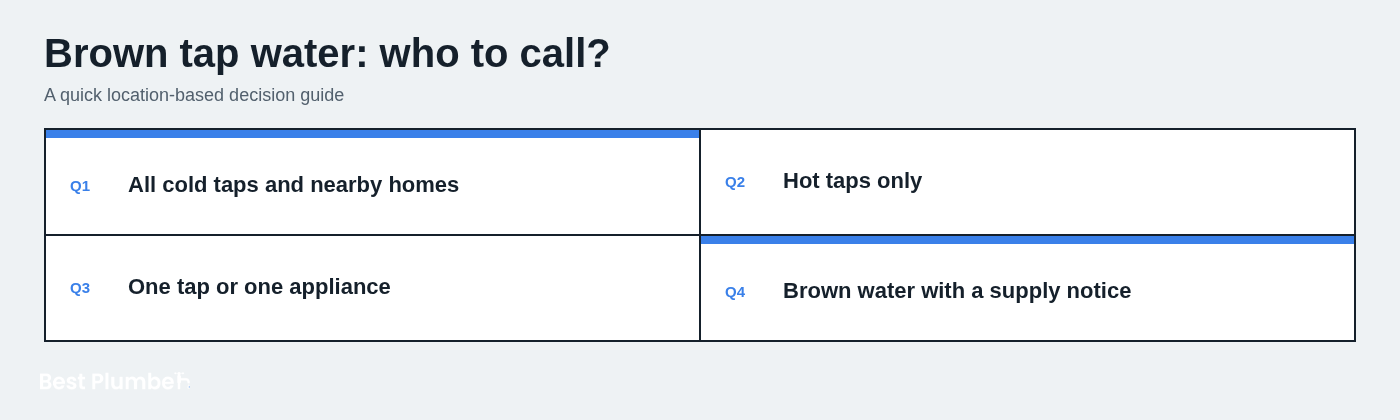
The fastest way to decide who to call is to work out where the discolouration appears. If brown water is coming from several cold taps and started suddenly, the cause may be sediment disturbed in the public water main after repairs, roadworks, a burst, or changes to the network. Your water supplier needs to know about that.
If the problem is confined to the hot water, a single tap, one toilet, or one appliance, the public main is much less likely to be responsible. Corroded internal pipes, a failing fitting, sediment in a cylinder, or a water-heating issue are better investigated by a plumber or, where relevant, a heating engineer.
First, check where the brown water is appearing
Do a few simple checks before making a call. Start with a cold tap and a hot tap, ideally at the kitchen sink, then try another outlet elsewhere in the property. Use clear glasses so you can compare the water properly rather than judging it in a dark basin or toilet bowl.
If appropriate, ask a nearby neighbour whether their cold water has also changed colour. A neighbour reporting the same issue is useful evidence that the problem may be outside your property boundary.
Do not keep running taps if you have a suspected leak, flooding, a burst pipe, very low pressure, or a supplier instruction not to use the supply. For context on one related symptom, see Low Water Pressure in One Tap: Plumber or Water Supplier? In those situations, follow the supplier's advice and protect the property first.
Brown water from both hot and cold taps
Brown water from both supplies can indicate sediment or rust has entered the water system, but the wider pattern matters. If multiple cold taps are affected and the problem began after activity in the street, a repair, or a disruption to supply, contact the water supplier. Hydrant use and work on nearby mains can temporarily disturb iron-rich deposits.
If neighbours are also affected, report it rather than assuming it will clear by itself. On the other hand, if only your household has brown water and it persists after the local supply is confirmed clear, a plumber should inspect the property's incoming pipework and internal plumbing.
Hot water is brown or orange but cold water is clear
If hot water is brown or orange but cold water is clear, the likely source is inside the property. The issue may be linked to a hot-water cylinder, water heater, associated pipework, or sediment and corrosion within that system.
Do not use the discoloured hot water for drinking or cooking. Arrange an inspection, particularly if you notice flakes, an unusual odour, reduced hot-water performance, leaks, or a change that keeps returning. A qualified plumber or heating engineer can identify whether the equipment needs flushing, repair, or replacement.
Only one tap, toilet, or appliance has brown water
A single affected outlet usually points to a local problem. Possible causes include a corroded tap fitting, an ageing flexible connector, sediment in a toilet cistern, or an appliance supply line.
Try another nearby tap on the same hot or cold supply before booking a visit. For example, brown water from one bathroom basin but clear water from the bath and kitchen cold tap makes a main-supply issue less likely. Avoid dismantling taps or pipework if you are unsure of the cause; a small fitting problem can turn into a leak quickly.
When to contact your water supplier
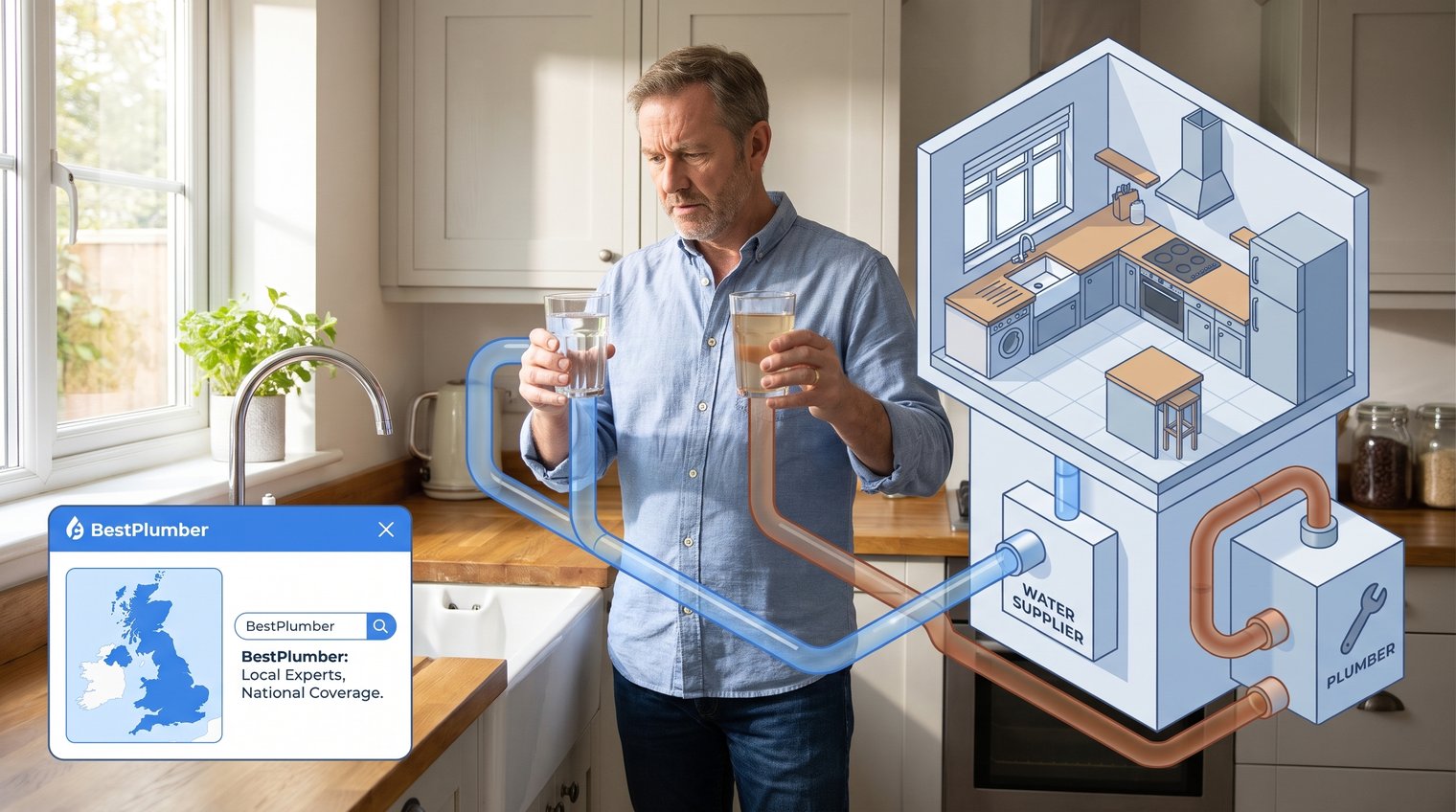
Contact the water supplier when the evidence points beyond your property. The clearest signs are brown water from several cold taps, reports from neighbours, recent roadworks or visible utility work nearby, a sudden pressure change, or an outage or maintenance notice.
Check the supplier's service-status information and report the discolouration using your postcode. Be ready to explain when it began, whether it affects hot and cold water, which taps are affected, whether pressure has changed, and whether nearby homes have the same problem.
The supplier can investigate the public main and tell you whether local flushing is underway or whether you should take specific precautions. They can also issue instructions about using the water. However, they do not normally repair pipes, fittings, or hot-water equipment inside your property boundary.
When to call a plumber
A plumber is the right first call when brown water is limited to hot water, one fixture, or your individual property. It is also time to call a plumber when the water supplier has confirmed there is no known network issue but the problem continues.
Internal rust-coloured water is more common in properties with older iron or galvanised pipework, although the exact cause needs inspection. Sediment in hot-water equipment, corroding pipe sections, and deteriorated fittings do not reliably improve with a temporary flush.
Make the visit more efficient by noting the pattern before the plumber arrives:
- Which taps, appliances, or toilets are affected
- Whether the water is brown on hot, cold, or both supplies
- When the change started and whether it comes and goes
- Any recent plumbing work or supply interruption
- Whether there are particles, flakes, reduced pressure, smells, or leaks
That information helps distinguish an isolated fitting fault from a broader issue with internal pipework or the hot-water system. If you later need to verify that a leak repair resolved the problem, see What to Check After a Plumber Repairs a Leak: 7 Key Checks.
What to do while you wait for an answer or repair
Start by recording what you see rather than repeatedly running every tap. Fill a clear glass from an affected outlet, compare hot and cold supplies, note the time the problem began, and check for nearby work or official supplier updates.
Brief flushing may be appropriate only when there is no warning from the supplier and the supplier advises it, or when the issue is clearly confined to a rarely used internal outlet. Running water blindly for a long period can waste water and may not solve the underlying problem.
Use an alternative safe water supply for drinking, cooking, ice, baby formula, and pets while the water is visibly discoloured. Keep brown water away from white or pale laundry, since rust-coloured sediment can stain fabrics. If the situation involves active flooding or a burst pipe while you wait for urgent help, see What to Do While Waiting for an Emergency Plumber.
Is brown tap water dangerous? Treat it as a warning sign, not a diagnosis
Brown tap water is not automatically dangerous, but it should not be dismissed as harmless either. The colour is often caused by rust or iron-rich sediment, especially after disruption to pipes. Still, colour alone cannot tell you whether the water meets quality standards or whether another problem is involved.
Get prompt guidance from the water supplier if the discolouration is widespread, persistent, accompanied by an unusual smell or taste, or follows a supply disruption. Follow any boil-water, do-not-use, or other official notice exactly as given.
Treat certain situations as more urgent. A suspected sewage cross-connection, chemical or fuel-like smell, severe flooding, or water concerns involving someone who relies on a dependable supply should be reported immediately to the supplier or the relevant emergency service.
How long should brown water take to clear?
There is no reliable fixed timeframe. Brown water caused by temporary disturbance in a public main may clear after the supplier finishes its work or carries out flushing, but you should wait for its instructions rather than make assumptions.
An internal corrosion problem or a water-heater issue is different: it may recur or worsen until the cause is repaired. If the water returns after appearing to clear, remains brown after the supplier says the network is clear, gets darker, or affects hot water only, arrange a plumbing inspection.
Persistent discolouration is not a reason to keep flushing indefinitely. It is a reason to report the issue and establish whether the source is public supply pipework or plumbing within the property.
Avoid these common mistakes
Do not assume a household filter fixes the real problem. A filter may change what comes from one outlet, but it does not repair corrosion, identify a supply issue, or deal with sediment in hot-water equipment.
Another common mistake is testing only one tap and then calling the wrong service. Checking a second cold tap and comparing it with hot water takes minutes and gives the water supplier or plumber a much clearer starting point.
Also avoid running every tap for an extended period without checking supplier guidance, and do not put visibly brown water through a washing machine. Pay attention to flakes, falling pressure, leaks, and recurring rusty water in an older home. Those details suggest the issue may be inside the plumbing system rather than a brief disturbance outside.
Get the right help based on the source of the problem
The decision is straightforward once you map the pattern. Brown water from several cold taps, especially when neighbours are affected or there is a local supply notice, should be reported to the water supplier. Brown water from hot taps only, one fixture, or one property points toward a plumber.
If the checks suggest an internal issue, use BestPlumber to find a local plumber. Tell them which outlets are affected, whether hot or cold water is involved, and what the water supplier has already confirmed so they can investigate the right part of the system.