
A plumber can lose valuable time before the job even begins if the fault is hard to reach, the symptoms are unclear, or nobody is available to make decisions. A little preparation makes the visit safer, faster, and far less stressful - especially when water is escaping where it should not.
You do not need to diagnose the repair yourself. Your job is to provide safe access, accurate observations, and the information the plumber needs to assess the problem properly.
Confirm the appointment details before the plumber arrives
Check the appointment window, your full address, and the best phone number to reach you on the day. If the property is difficult to find, in a block of flats, or behind a coded gate, send those instructions in advance rather than waiting for the plumber to call from outside.
Also confirm practical details that can affect arrival: visitor parking, permit requirements, building reception procedures, stair or lift access, and whether someone needs to meet the plumber at the entrance. If you have arranged the visit through a directory such as BestPlumber, keep the listing and contact details handy in case you need to update the professional about access.
Give a short, factual summary of the fault before the visit. For example: "The kitchen sink drains slowly, then backs up when the washing machine empties," is much more useful than simply saying, "There is a blockage." A clear description helps the plumber arrive with a better idea of the tools or likely parts they may need.
Share the symptoms, not a self-diagnosis
Write down what you have noticed: when the issue began, where it happens, whether it is constant or occasional, and what seems to trigger it. Mention if the pressure drops only when the shower runs, if a boiler makes a noise after heating comes on, or if a leak appears only after flushing a toilet.
Do not assume you know the cause. A damp patch does not necessarily mean a leaking pipe directly above it, and a noisy radiator does not automatically mean the boiler is failing. Observations help diagnosis; a guessed repair can send attention in the wrong direction.
A useful note might include:
- First noticed: Tuesday evening
- Location: cupboard under the upstairs bathroom basin
- Frequency: drips for 10 minutes after the tap is used
- Recent change: new washing machine fitted last week
- What has been tried: tightened the visible trap by hand, with no improvement
Make the problem easy to find and inspect
Clear a safe path from the entrance to the affected area. This may be a sink, toilet, shower, boiler, radiator, visible pipework, drain, or internal stopcock. Move shoes, bags, loose rugs, bins, laundry baskets, and furniture that could slow someone down or create a trip hazard.
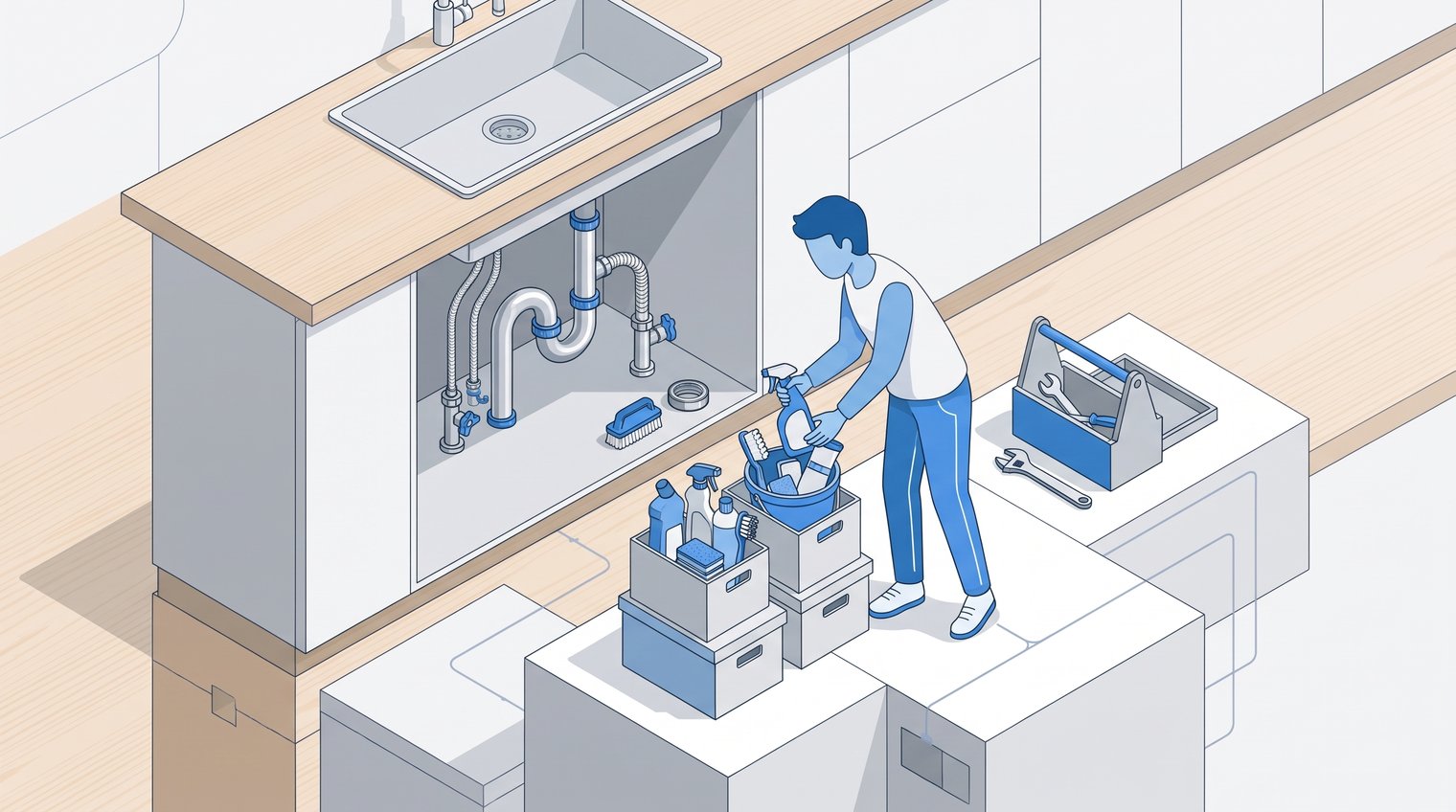
At the work area, remove toiletries, cleaning products, under-sink storage, food containers, and anything else that blocks access. Give the plumber room to kneel, use tools, and place parts without balancing them on the edge of a bath or worktop.
Do not dismantle pipework, remove sealed boiler covers, or force off bath panels and boxing that are not clearly designed to be removable. You could cause more damage, create an unsafe condition, or hide evidence of the original problem. Clear what is easily movable and let the plumber decide whether more access is required.
Prepare access to hidden plumbing points
Many plumbing faults are not located at the fixture where you first notice them. If relevant, make it easy to reach the cupboard below the sink, utility room, loft hatch, airing cupboard, water meter cupboard, and external drain cover.
If your bath has an existing removable access panel, clear the floor around it. If the issue may involve a toilet cistern, move items stored beside or behind the toilet. For a suspected drain issue, make sure external gullies or manhole covers are not buried under planters, bins, or garden furniture.
Have keys, gate fobs, parking permits, building-entry codes, and loft-ladder instructions ready. A plumber should not have to wait while you search for the only key to a meter cupboard.
Control an active leak or water emergency safely
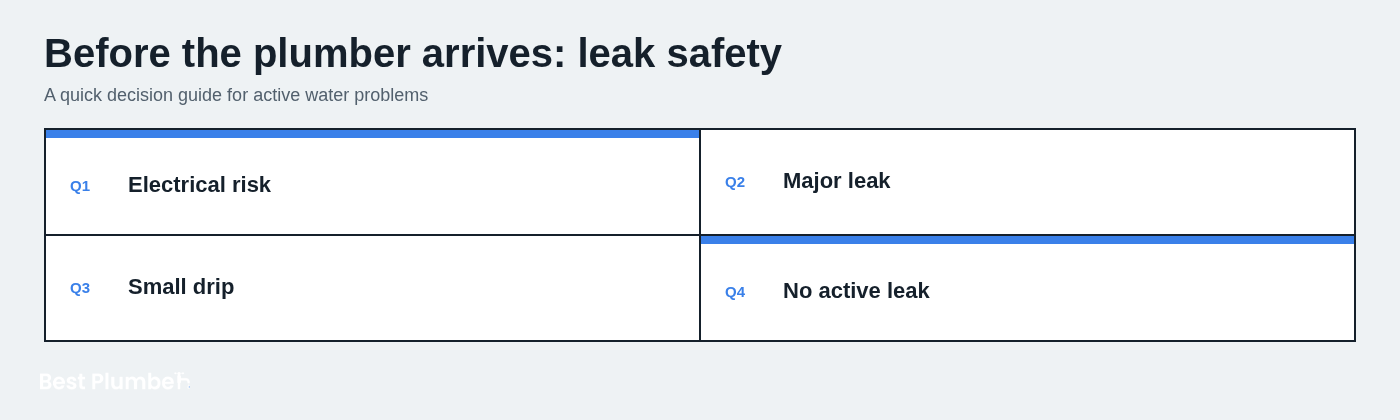
Safety comes first when water is actively escaping. If there is standing water near sockets, extension leads, appliances, electrical equipment, or a consumer unit, keep clear of the area. Do not step into the water to investigate. Seek urgent professional help, and contact emergency services if there is immediate danger. If you are waiting for help, see what to do while waiting for an emergency plumber.
If you know where the internal stopcock is and can reach it safely, turning off the water supply can limit damage from a significant leak. It is commonly located under a kitchen sink, near the water meter, in a utility area, or beneath the stairs, but locations vary widely by property.
For a small drip, place a bucket or bowl underneath and use towels to protect the floor. Move valuables, documents, and electronics away from the area. Avoid makeshift repairs involving tape, sealant, or overtightening fittings; they can make the eventual repair harder and sometimes worsen the leak.
Know when to turn off water, heating, or appliances
Turn off the water supply when a leak is substantial, continuous, or spreading and you can do so safely. If a leaking appliance has an accessible isolation valve, that may be preferable to shutting off water to the whole home, but only use it if you know what it controls.
For an intermittent problem, such as a tap that drips only occasionally or a shower that loses pressure at certain times, leave the system as found when it is safe to do so. Turning everything off, resetting controls, or taking the appliance apart can remove useful diagnostic clues.
Do not operate a boiler, immersion heater, washing machine, dishwasher, or other appliance if it appears unsafe, leaks onto electrical components, smells of burning, or shows signs of damage. Follow the manufacturer's safety guidance and tell the plumber exactly what happened.
Gather the details that speed up diagnosis
Before tidying up, take clear photos or short videos of anything visible: drips, water staining, pooling water, drain backups, boiler display messages, damaged seals, or unusual movement in pipework. For intermittent noises, a short recording can be particularly useful.
Write down the make and model of relevant equipment, especially boilers, pumps, water heaters, taps, showers, washing machines, and dishwashers. Note any error or fault code exactly as it appears. If you have paperwork for a previous repair, warranty, or recently fitted part, keep it nearby.
These details support an in-person assessment; they do not replace one. A fault code may point to several possible causes, and a photograph rarely reveals the full condition of hidden pipework or drainage.
Create a short timeline of the problem
A timeline prevents important details being forgotten during the visit. Keep it short and specific. State when you first noticed the issue, how often it occurs, whether it began after using a particular fixture, and whether it changed after recent building work or freezing weather.
Include anything that affects more than one fixture. For example, if the bath, basin, and toilet all drain slowly, say so. If only one tap has low pressure while every other outlet is normal, that is equally useful.
Record steps already taken, including switching the heating off, plunging a drain, using a cleaning product, or resetting a device. There is no benefit in hiding an unsuccessful DIY attempt. It may explain the current symptoms and helps the plumber work safely.
Protect your home and belongings around the work area
Move valuables, electronics, pet beds, food, paperwork, and soft furnishings away from the likely work zone. If the repair is near a kitchen worktop, clear appliances and food from the immediate area. If it is in a bathroom, remove towels, bath mats, cosmetics, and items from under the basin.
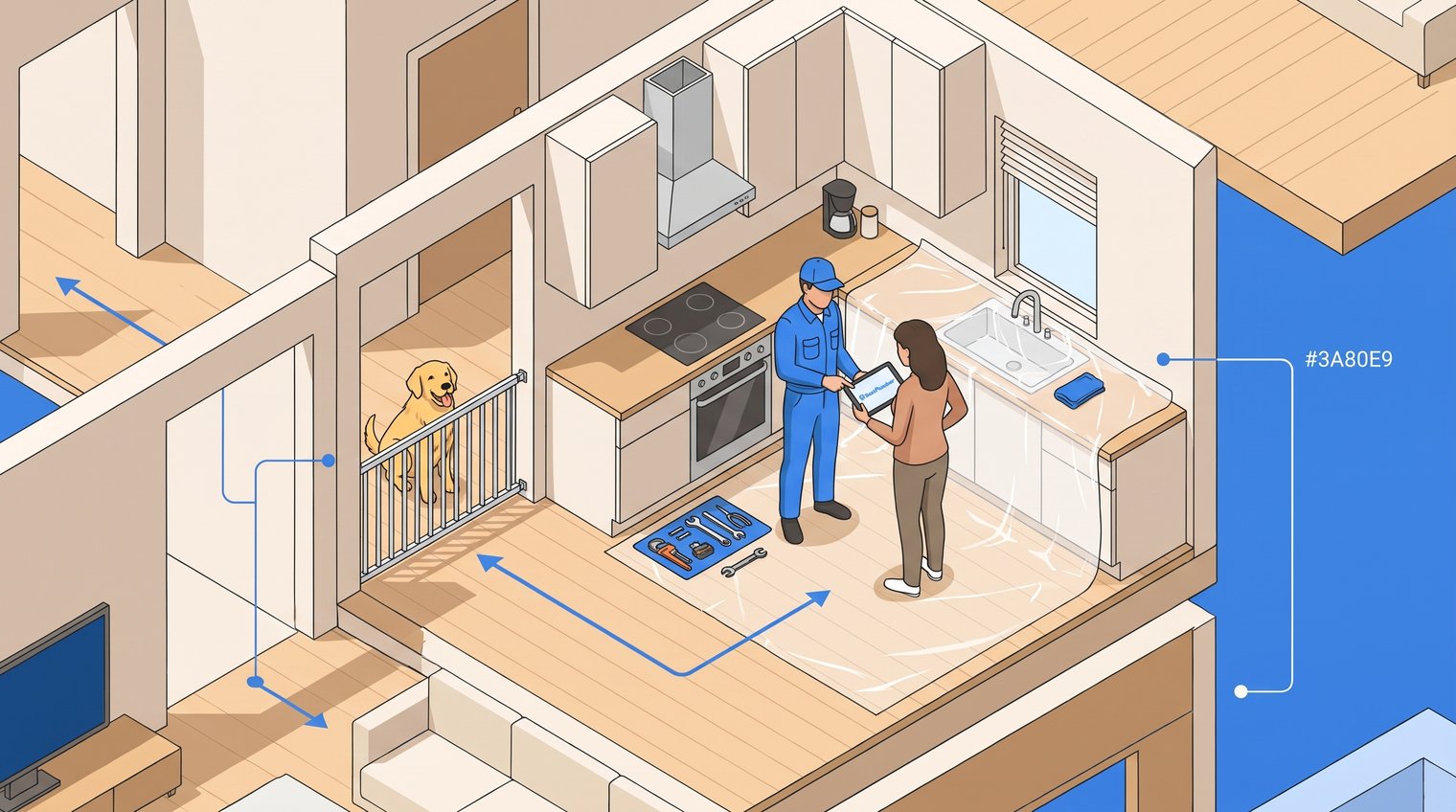
Cover nearby surfaces if there is a realistic risk of splashes, dust, or debris, but do not cover the actual access point. Leave enough clear floor space for a tool bag, replacement parts, and protective floor covering. A crowded room slows the job and creates unnecessary trip hazards.
Be prepared for basic testing. A plumber may need to run a tap, flush a toilet, operate heating controls, or inspect adjacent areas to trace a fault. Some problems also require limited access beyond the obvious location, such as checking pipe runs below a bathroom or behind a kitchen appliance.
Plan for access, children, pets, and household routines
An adult who understands the issue and can approve work should be available if possible. If you cannot be there, tell the plumber in advance who has authority to answer questions and approve costs. Do not assume a tenant, neighbour, cleaner, or family member can make decisions on your behalf.
Keep children and pets away from the work area. Tools, open cupboards, wet floors, hot water, sharp fittings, and cleaning residues all create avoidable risks. A closed door, stair gate, crate, or separate room is usually the simplest arrangement.
For flats and shared buildings, plan around the building's rules. Notify a concierge if needed, reserve visitor parking, arrange lift access, and mention any quiet-hour restrictions. If the plumber needs to shut off water affecting neighbouring properties, building management may need advance notice.
Prepare questions and agree on decisions before work begins
A good plumber should explain the diagnostic process and the likely options once they have inspected the issue. Before the visit, decide what you need to know so you are not making a rushed decision while water is dripping onto the floor.
Ask focused questions such as:
- What is the most likely cause, and what needs checking to confirm it?
- Is this repair urgent, or can it safely wait?
- What are the repair options and likely disruption?
- Are parts available today, or will another visit be needed?
- What is included in the expected cost?
- What guarantee or warranty applies to the work or parts?
State your budget limits and priorities honestly. For example, you may need the leak stopped today but prefer to schedule a cosmetic replacement later. In an emergency, immediate action may be needed to prevent further damage, but you should still understand what work is being authorised wherever circumstances allow.
Understand the estimate before authorising work
Ask whether there is a call-out or diagnostic charge, how labour is priced, whether parts are separate, and whether VAT applies. A quote normally covers the defined work and stated assumptions, while an estimate is an informed prediction that can change if the scope changes. Check any exclusions and whether additional work requires your approval before it is done.
Ask what will happen if the plumber finds an additional fault after work begins. The best arrangement is clear: they pause, explain the finding, outline the cost implication, and get approval before proceeding, unless urgent work is necessary to make the situation safe.
Avoid common preparation mistakes
One of the most common mistakes is using a harsh chemical drain cleaner and not mentioning it. These products can be hazardous to handle, splash during drain work, and affect how safely the plumber can approach a blockage. Tell them exactly what you used and when.
Another mistake is repeatedly resetting a boiler, pump, or appliance to make an error disappear. A single reset may be permitted by the manufacturer's instructions, but repeated resets can mask a recurring fault and may not be safe. Note the code and circumstances instead.
Do not clean up so thoroughly that you hide the useful signs. It is sensible to contain a leak and protect the home, but take photos first if you can do so safely. Likewise, do not block the route with laundry or leave the only person authorised to approve work unavailable.
Finally, disclose recurring issues, previous repairs, DIY attempts, and anything unusual that happened before the fault appeared. A plumber is there to solve the problem, not to judge whether you used the wrong plunger or ignored a slow drip for too long.
Be ready for the plumber's arrival and walkthrough
When the plumber arrives, meet them at the relevant entrance if possible and lead with the problem location. Point out the affected fixture or area first, then share your short timeline, photos or videos, error codes, and any other fixtures affected.
Before work starts, confirm three things: the scope of the initial diagnosis, which areas may need to be accessed, and when the plumber will update you on findings and costs. That simple conversation prevents misunderstandings later.
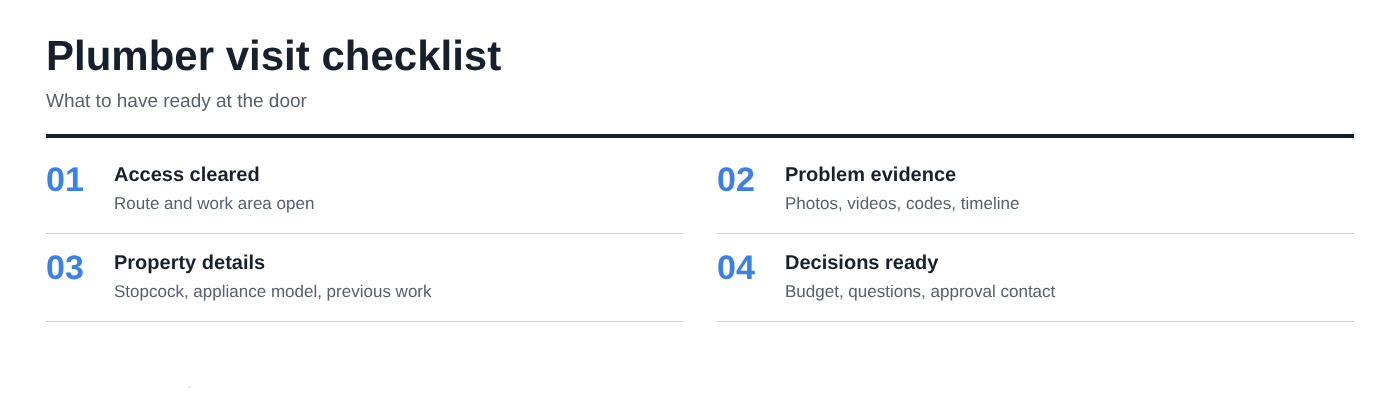
Use this final check at the door:
- Access: route clear, work area cleared, keys and entry details ready.
- Evidence: photos, videos, fault codes, and symptom timeline available.
- Property details: stopcock location, appliance make and model, previous repair information.
- Decisions: budget, questions, and an approval contact confirmed.
After the visit: confirm the repair and next steps
Before the plumber leaves, ask what they found, what work was completed, and what tests were carried out. Make sure you understand whether the fault is fully resolved, temporarily controlled, or likely to need follow-up work. For a useful post-repair review, see what to check after a plumber repairs a leak.
Ask about warning signs to watch for, such as renewed dripping, a returning error code, low pressure, slow drainage, or discoloured water. If any parts were replaced, keep the invoice, guarantee details, photos, and notes on the make and model for your property records.
If you still need to arrange a visit, you can use BestPlumber to find and contact local plumber listings. Clear access, honest symptom details, and a few prepared questions will help you get more value from the appointment once it is booked.