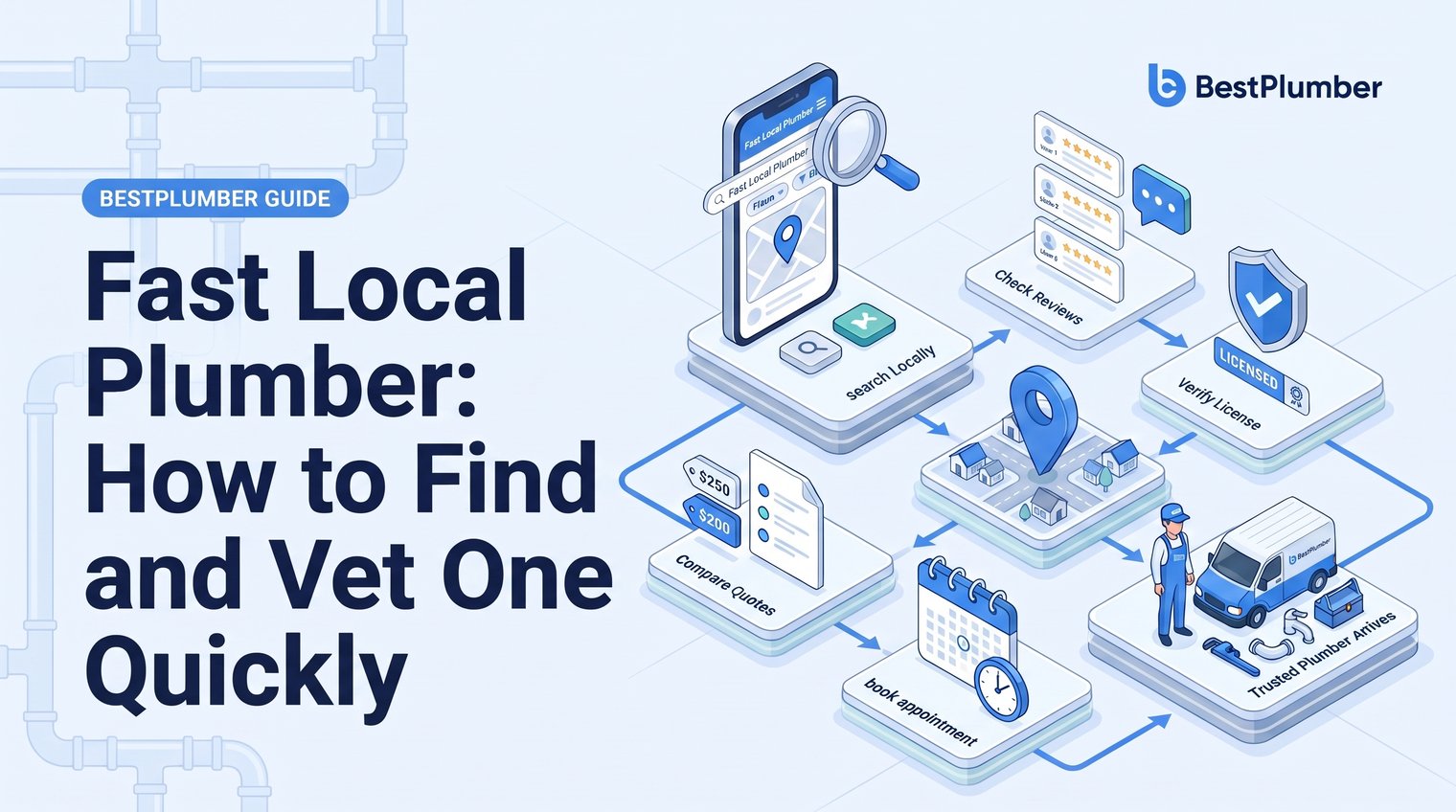
A fast local plumber can prevent a small leak becoming a damaged ceiling, ruined flooring, or a stressful night without water. But urgency also makes it easier to hire the first person who answers, without checking what they charge or whether they are right for the job.
The best approach is simple: make the property safe, contact several nearby plumbers with a clear description of the fault, then confirm the essential details before anyone sets off. Here is how to move quickly without making an expensive decision under pressure.
Decide Whether You Need an Emergency Plumber Now
Start by judging the immediate risk, not just the inconvenience. You likely need an emergency plumber if you have an active leak you cannot contain, flooding, a burst pipe, sewage backing up into the property, no running water throughout the home, or water coming through a ceiling.
Act especially quickly if water is close to electrical sockets, consumer units, appliances, or lights. Do not touch electrical equipment in standing water. If you can do so without risk, isolate the water first and move people away from the affected area.
A suspected gas leak is different. If you smell gas, hear hissing near gas pipework, feel unwell, or suspect carbon monoxide, do not rely on a plumber search. Leave the building if necessary, avoid switches and naked flames, and contact emergency services or your gas supplier's emergency line from a safe location.
Many faults can wait for a standard local plumber appointment. A dripping tap, a slow drain, one radiator not heating, a toilet that still flushes but runs occasionally, or a boiler issue with alternative heating may be inconvenient without being an overnight emergency. Use common sense: if delaying will cause damage, remove sanitation, or create a safety risk, treat it as urgent.
Limit the Damage Before You Start Calling
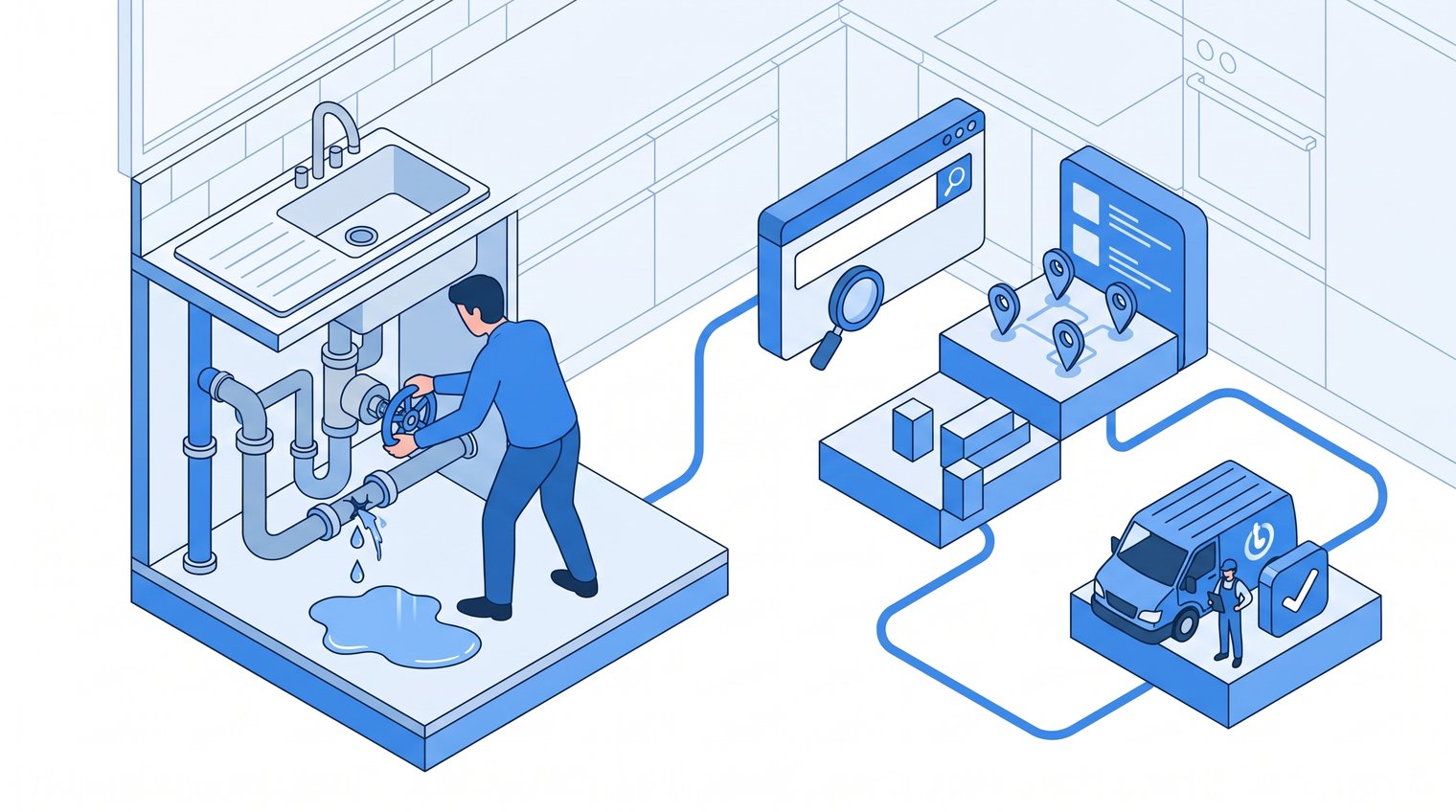
Your first job is to stop the problem getting worse. For a leak from a pipe, appliance connection, or radiator valve, turn off the nearest isolation valve if one is fitted. These are often small valves with a slot for a flat screwdriver, located beneath sinks, behind toilets, or near washing machines and dishwashers.
If you cannot isolate the affected fixture, turn off the internal stopcock to shut off the main water supply. It is commonly under the kitchen sink, near the water meter, in a utility area, or where the water supply enters the property. Turn it clockwise, but do not force a seized valve.
If water is approaching electrics, switch off the electricity at the consumer unit only if you can reach it without stepping into water or touching wet surfaces. When in doubt, leave the electrical isolation to an electrician or emergency professional. Put buckets and towels under a controlled leak, move belongings out of the area, and take clear photographs before tidying up where practical. If you are waiting for help, see what to do while waiting for an emergency plumber.
Do not try to improvise a permanent repair with tape, sealant, or force on damaged fittings. Temporary measures can fail under pressure and may make the plumber's diagnosis harder. A towel around a small, contained drip is sensible; dismantling pipework while water is live is not.
Before an emergency happens, find your stopcock and test that it moves gently. Tell everyone in the household where it is. A stopcock that has not been touched for years may be stiff, so it is better to discover that on a calm afternoon than during a burst-pipe emergency.
What to Do for a Leak, Blockage, or No Hot Water
For an active leak, isolate the local supply or the stopcock, contain the water, and note exactly where it is escaping: beneath a sink, at a radiator, from a ceiling, or behind an appliance. If a ceiling is bulging with water, keep clear of it and move valuables away rather than puncturing it yourself.
For a blockage, stop using the affected sink, toilet, shower, or drain. Do not keep flushing a blocked toilet, and do not pour multiple chemical drain cleaners into the pipe. Mixing products or adding a plunger after chemicals can create a splash hazard. Tell the plumber whether sewage is backing up, which fixtures are affected, and whether the blockage appeared suddenly.
For no hot water, check whether cold water is still running and whether the boiler displays an error code. Record the code and avoid repeatedly resetting the boiler. If the issue involves a gas boiler, make sure the attending engineer is qualified for gas work.
Search Locally Using the Right Terms and Location Details
Generic searches can return businesses that are far away, unavailable, or unsuitable for the fault. Search using the problem and your exact area: "fast local plumber in Leeds," "emergency plumber near me in SW16," or "plumbers near me leaking radiator." Include your town, postcode district, and the type of issue whenever possible.
Check nearby providers first. A plumber based close to you may be able to attend sooner and may have lower travel costs than one coming from another town. Expand your search radius only if local calls do not produce a realistic arrival window.
A location-based directory can make the first stage quicker because it gives you a focused set of local listings to contact. BestPlumber is one route for browsing plumber listings by location and contacting suitable providers directly.
BestPlumber
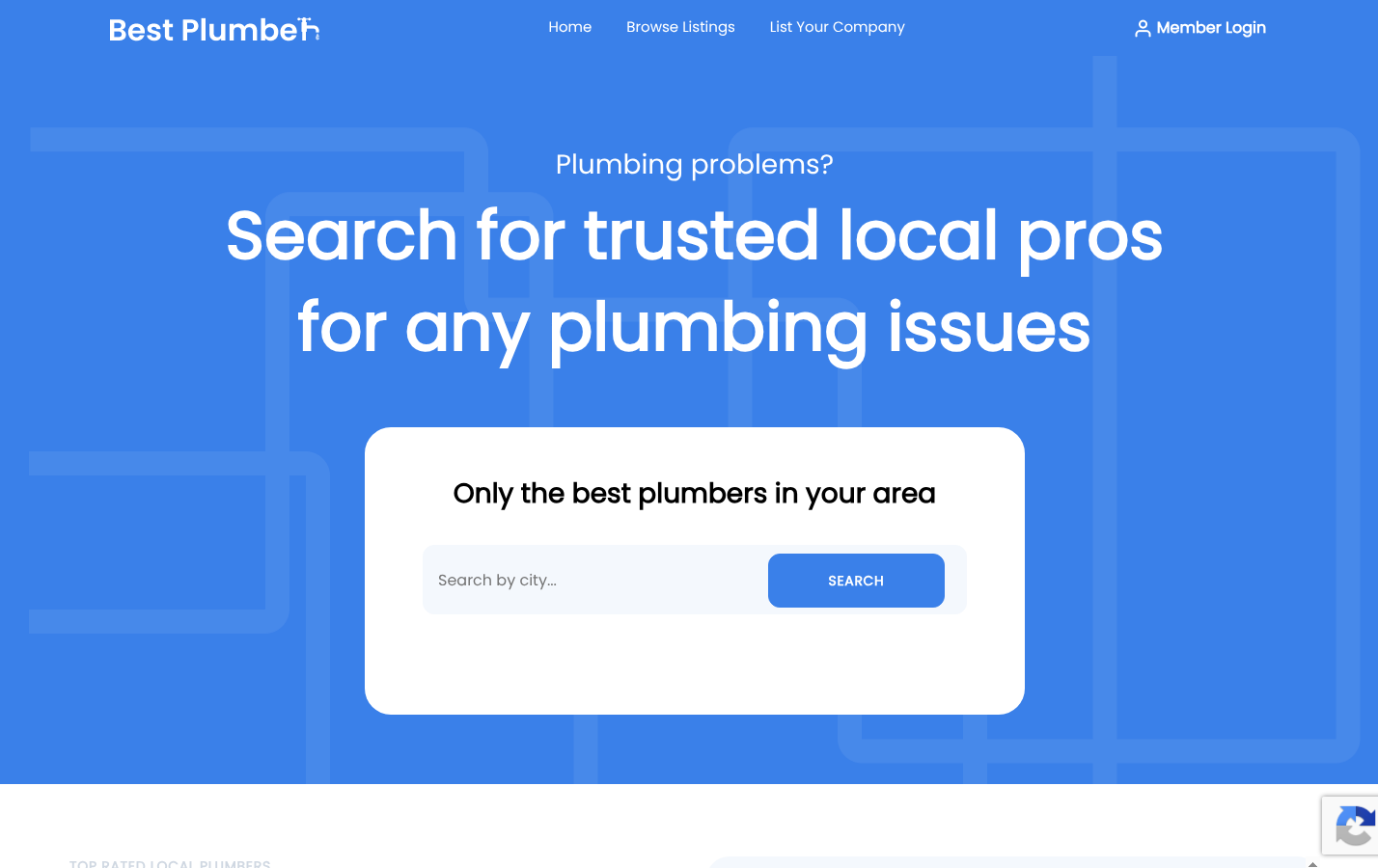
BestPlumber is most useful when you need to narrow your search by city and start contacting local plumbing businesses without working through broad, irrelevant results. It is a discovery and contact directory, so it can help you identify nearby options for an urgent or routine problem.
The important limitation is that a listing is not a guarantee of immediate availability, a fixed quote, or a verified booking. You still need to call or message the plumber, confirm who can attend, and ask about their charging basis before agreeing to a visit. It suits homeowners and tenants who need a practical starting point for finding local contacts quickly.
Contact Several Available Plumbers Efficiently
Do not wait an hour for one unanswered number when water is still leaking. Contact two to four suitable local plumbers by phone or message. The aim is not to collect endless quotes during an emergency; it is to find a legitimate professional who can attend in a sensible timeframe and explain their charges clearly. For a broader process, see this guide on how to order a plumber.
Have the essentials ready before you call:
- Your full postcode and any access issue, such as gated entry, parking restrictions, or a flat without a lift.
- The fault and its location, such as "water leaking from the pipe under the kitchen sink."
- When it started and whether it is worsening.
- Whether you have turned the water off at the local valve or stopcock.
- Any visible damage, error codes, or signs of sewage backup.
- Photos or a short video if the plumber asks for them.
A generic "24-hour" claim is less useful than a direct answer to three questions: Can you attend today? What is the realistic arrival window? What is the call-out charge? Someone who answers those clearly is giving you a better early signal than someone who makes a vague promise to "try and get over."
Use This Short Call Script
Keep the call factual and short:
"I'm in [postcode]. I have [problem] at [location in the property]. It started [time]. The water is [on/off], and [brief damage or access detail]. Can you attend today, and what are your call-out and hourly rates?"
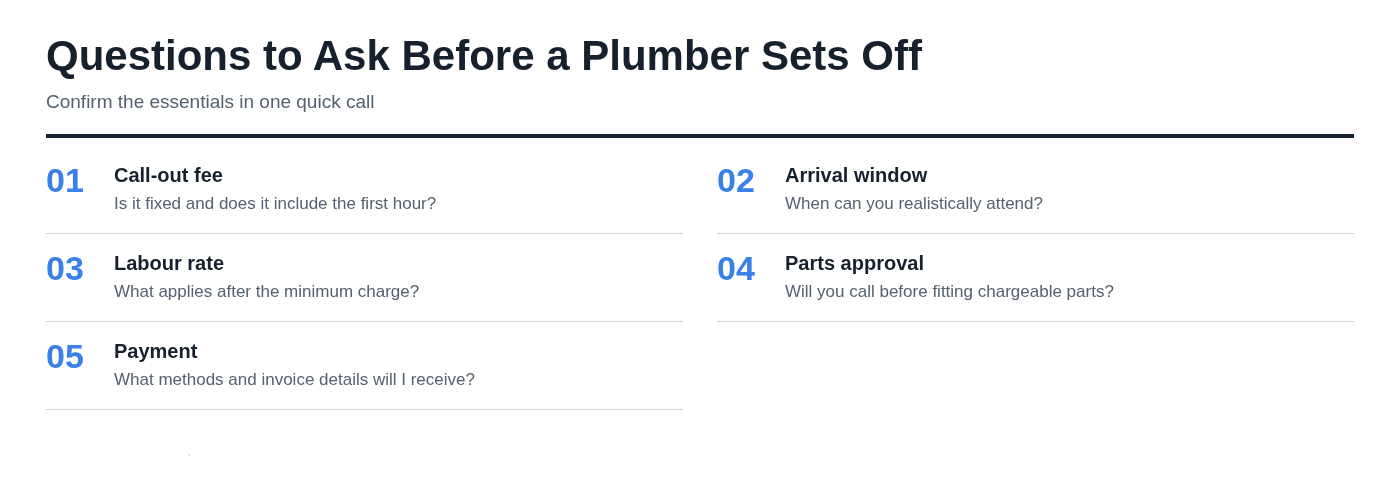
If they can attend, ask whether the call-out includes any labour time and whether they will contact you before fitting parts that add significant cost. For example: "Does the call-out include the first hour, and will you get my approval before replacing any chargeable parts?"
Verify the Plumber Before You Agree to a Visit
Fast does not mean anonymous. Before you confirm, ask for the business name and the name of the person expected to attend. Check that the business has a credible local service area or address, look for recent independent reviews where available, and ask whether they hold appropriate insurance.
You can complete these checks in a few minutes while you are waiting for a return call. Look for consistency: the business name, phone number, website or listing details, and review history should broadly align. One missing online profile is not proof of poor work, but a vague identity combined with pressure for immediate payment is a reason to pause.
For any work involving gas appliances, boilers, or gas pipework, the engineer must be Gas Safe registered for the work they are undertaking. Ask them to confirm their registration and the relevant scope of work, then verify it before work begins. A general plumber is not automatically qualified to repair a gas boiler.
Never send unnecessary card details or pay a large amount upfront simply to secure an emergency visit. A reasonable call-out fee may be requested, but the payment arrangement should be clear and tied to an identifiable business.
Match Credentials to the Job
Routine water plumbing, such as a leaking trap, toilet cistern repair, tap replacement, or a non-gas pipe leak, calls for a competent plumber with relevant experience. Ask whether they regularly handle the type of fault you have, particularly if it involves older pipework or a concealed leak.
Gas boilers, gas hobs, gas pipework, and gas appliances require a Gas Safe registered engineer. Electrical connections around pumps, immersion heaters, or heating controls may require an electrician or a professional qualified to work safely on that part of the system. For larger or regulated work, ask who will actually attend rather than assuming the person answering the phone will carry out every element.
Ask for Costs and Approval Terms Up Front
You may not get an exact repair price before the plumber sees the fault, and that is normal. A hidden leak, failed valve, or blocked drain often needs diagnosis first. What you should get is a clear charging structure.
Ask about the call-out fee, whether it includes the first hour, the hourly labour rate after that, any minimum charge, and whether emergency or after-hours rates apply. Also ask about VAT, parking, mileage or travel fees, and how parts are priced. If the job needs parts, ask whether the plumber will seek your approval before fitting anything beyond immediate damage-control work.
After-hours plumbing charges vary by area, time of day, access, and the nature of the fault. There is no single reliable figure for an emergency call-out. The useful question is not "How much does an after-hours plumber cost?" but "What will I be charged to attend, what time does that cover, and what rate applies after that?" Get those answers before authorising attendance.
Spot Red Flags Without Delaying a Genuine Repair
Be wary of anyone who refuses to discuss even a basic rate structure, will not provide a business name, insists on cash only, demands a large upfront payment, or says they cannot issue an invoice. Another warning sign is a rushed claim that an entire boiler, cylinder, or section of pipework must be replaced immediately without explaining the fault or alternatives.
That does not mean every additional cost is a scam. Emergency diagnosis can uncover corrosion, concealed damage, failed components, or unsafe installations that were not visible at first. The difference is communication: a reliable plumber should explain what they found, what must be made safe today, what can wait, and what each option will cost.
A common mistake is approving a large replacement while stressed by a manageable leak. Authorise the work needed to stop damage or restore safe basic service, then ask for a written estimate for substantial repairs where the situation allows.
Confirm the Visit and Prepare Access
Once you choose a plumber, confirm the essentials in writing by text or message where possible: the plumber's name, business name, estimated arrival window, call-out fee, and the rate or terms you discussed. This avoids misunderstandings when the engineer arrives.
Clear a route to the affected area, remove items from under sinks or around the boiler, and secure pets. Keep photographs of the damage, previous repair paperwork, boiler error codes, and any relevant landlord or warranty information ready. If you rent, notify the landlord or managing agent promptly, especially where a leak may affect another property.
Arrange for an adult to be present if the plumber needs access inside. Once a suitable professional has confirmed attendance, cancel the other calls politely so another household can use that emergency slot.
Review the Diagnosis Before Authorising Further Work
When the plumber arrives, separate the urgent fix from the longer-term repair. Ask: what needs doing today to make the property safe and prevent further damage, and what can be scheduled after you have reviewed the options?
For substantial work, request a written estimate that identifies labour, parts, VAT if applicable, and any follow-up visit. Ask what warranty applies to the labour and supplied parts. If there are several possible repairs, have the plumber explain the practical difference between them rather than choosing solely on the lowest initial figure.
Keep the final invoice, photographs, and any written diagnosis. These records may be useful for a landlord, home insurer, warranty provider, or future plumber who needs to understand the history of the fault.
Build a Faster Plan for the Next Plumbing Problem
The quickest emergency response is the one you prepare before anything goes wrong. Save the number of a plumber you trust, locate the stopcock, and take a few photos showing the boiler make and model, water meter area, and accessible pipework. Keep your postcode, landlord or managing agent contact, and home insurance details easy to find.
Most plumbing emergencies become less stressful once the water is isolated and a capable local professional is on the way. When you need a starting point for local contacts, use BestPlumber to locate and contact nearby plumber listings, then confirm availability, credentials, and costs before the visit.