
If a pipe is leaking in your flat, act first and sort out responsibility second. Call an emergency plumber if water is flowing, cannot be contained, is near electrics, or is causing visible damage. If you rent or the leak may involve another flat or shared pipework, notify your landlord, letting agent or managing agent at the same time.
Plumbers do repair leaking pipes, but the person who should authorise and pay for the work depends on where the leak starts and whether you are a tenant, leaseholder or owner-occupier. A quick report, photos and sensible action can prevent a minor leak becoming a damaged ceiling, ruined flooring or electrical hazard.
Call the right person first: plumber, landlord, managing agent or emergency service
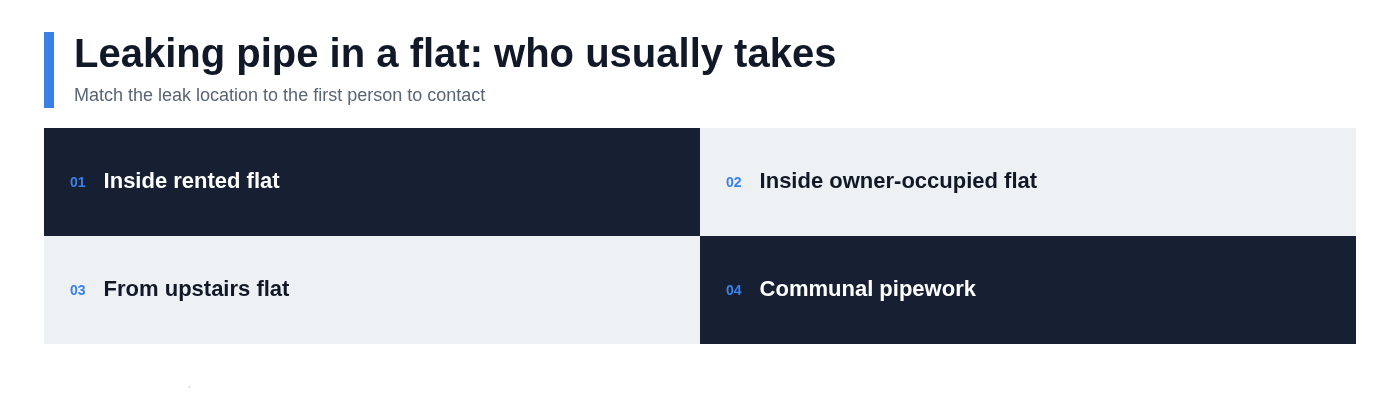
The right first call depends on the source and severity of the leak. For a leak inside an owner-occupied flat that you can identify and safely isolate, a qualified plumber is usually the appropriate call. If you are renting, contact your landlord or letting agent immediately, especially for a fixed pipe, radiator pipe, bathroom fitting or water supply issue.
Where water appears to be coming through the ceiling from another flat, tell the upstairs occupier if you can do so safely. You should also report it to the building managing agent, freeholder or landlord, because they may need to coordinate access and establish where the water is actually escaping.
If the leak involves a communal riser, a shared supply pipe, a soil stack or another common part of the building, the managing agent or freeholder will often need to arrange investigation and repair. Do not assume the responsibility based solely on which flat has the wet patch; water can travel a surprising distance before it becomes visible.
Tenants should be particularly careful about authorising non-emergency work themselves. You may need a plumber urgently to stop active flooding, but for routine repairs your tenancy agreement and landlord's reporting procedure may determine what happens next.
What to do immediately when a pipe leaks in a flat
Your immediate goal is to keep people safe and limit damage. Do not wait to establish who pays before reporting an active leak. For practical steps while help is on the way, see What to Do While Waiting for an Emergency Plumber.
- Keep clear of electrical risks. Do not touch wet light fittings, switches or appliances. If water is close to electrics, avoid the area and seek urgent professional help.
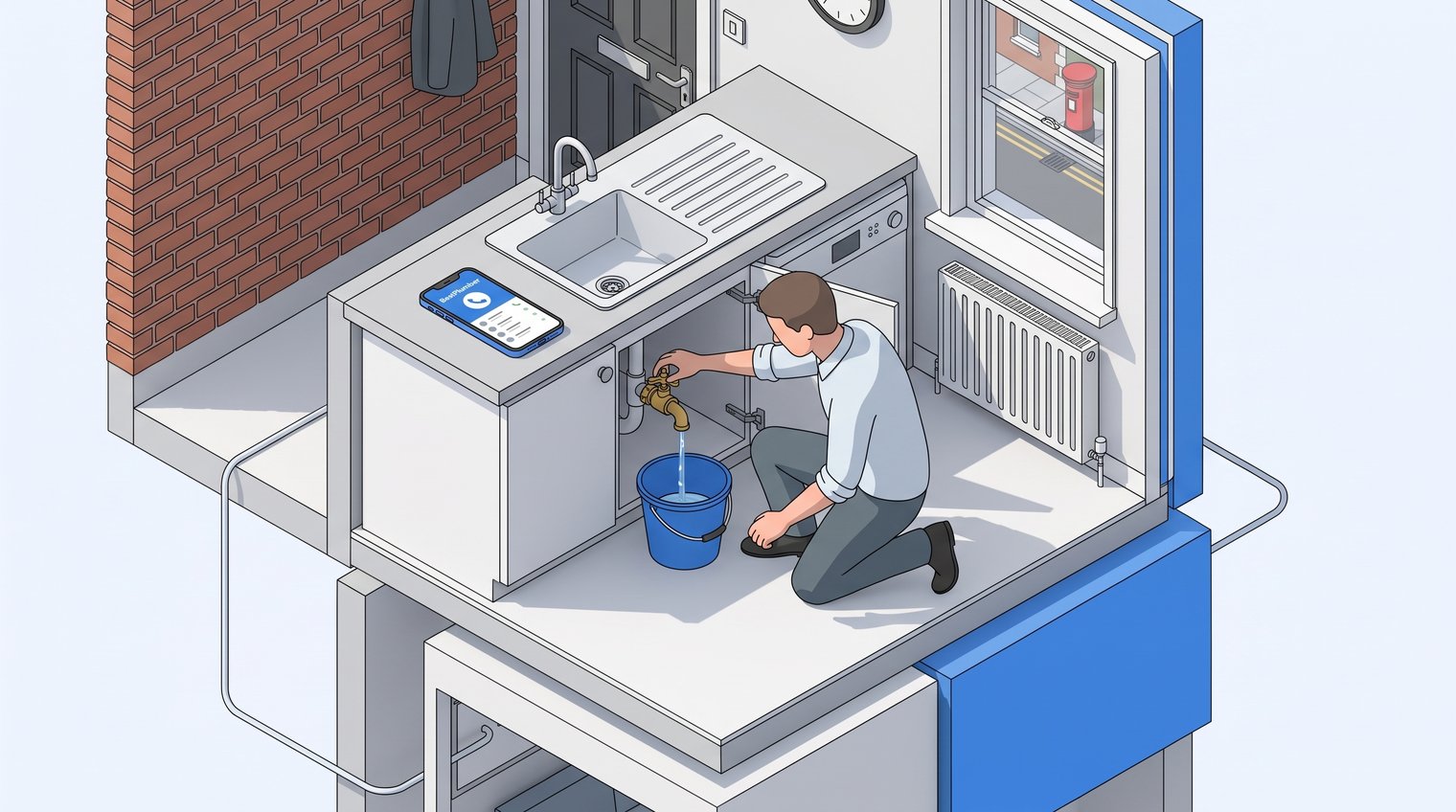
- Stop the water if it is safe. Turn off the internal stopcock if the leak is in your flat and you know where it is. It is commonly located under the kitchen sink, near the water meter, in a utility cupboard or by the boiler.
- Contain what you can. Use buckets, towels and waterproof containers. Move furniture, belongings and rugs out of the affected area where safe to do so.
- Document the problem. Take dated photos and short videos of the leak, the damage, the water source and any affected possessions.
- Report it promptly. Contact the landlord, letting agent, managing agent or plumber as the situation requires, then confirm the report in writing.
Turning off the internal stopcock is usually sensible for a leak within your own plumbing system, provided it can be done safely. Do not interfere with communal valves or inaccessible building equipment. If the problem appears to be in the external water main or street supply, contact your water supplier instead.
Call 999 only where there is an immediate threat to life. Water near a serious electrical hazard may also require a call to the electricity network operator. A plumber can isolate a domestic water supply, but they are not a substitute for emergency services where the building is unsafe.
If you rent: report the leak to your landlord or letting agent
If you are a tenant, report a leaking fixed pipe to your landlord or letting agent straight away. In general, landlords are responsible for keeping water, gas, electricity and sanitation installations in repair, which commonly includes fixed water pipes, sinks, baths, toilets and drainage installations.
For an active or damaging leak, use the emergency contact method provided in your tenancy information and follow up by email or message. Include the time you noticed the leak, where the water is appearing, whether you have turned off the stopcock and photos or video where possible. Written evidence makes it easier to show that you acted promptly.
A slow drip beneath a sink may be a routine repair request, but a pipe spraying water, water entering a ceiling, or a leak near electrical fittings is not routine. Make that clear when you report it. If you cannot reach your landlord or agent and reasonable emergency action is needed to prevent further damage, keep records of every attempt to contact them and retain any plumber's invoice.
Responsibility can change if a tenant caused the damage, such as by drilling into a pipe, mishandling a fitting or failing to report a known leak until it worsened. That does not mean you should delay reporting it. Prompt action is still the sensible and responsible step.
If the leak is coming from the flat above
When water is coming through your ceiling, the first repair often needs to happen in the flat above, not yours. If it is safe and practical, tell the occupier upstairs immediately. They may be able to turn off their stopcock, stop using a leaking appliance or arrange a plumber before the damage spreads.
Also contact the building managing agent, freeholder or your landlord, depending on your living arrangement. They may have emergency contact details for the other flat and may need to assess whether the cause is private plumbing or shared building pipework.
Do not rely on a quick visual guess. Water can run along pipework, floor voids and joists, so the point where it drips into your flat is not always the source. A plumber may need access to the upstairs flat, your flat, or both to identify the failed pipe or fitting.
Record the time the leak began, how quickly it is worsening, your communications and the resulting damage. Photograph ceiling staining, bulging plaster, affected electrics and damaged belongings before clearing them away where possible. This information can be useful to the managing agent, insurer and plumber.
When the managing agent or freeholder should arrange the repair
The managing agent or freeholder is usually the first point of contact for suspected communal pipework. This may include shared water risers, common supply pipes, soil stacks, drains, pipes in communal areas and services passing through parts of the building that are not privately owned.
For leaseholders, the lease is the key document. It sets out what forms part of your flat, what counts as a common part and how repair costs may be handled. A pipe being physically close to your flat does not automatically make it your responsibility.
Report the issue quickly and give the managing agent enough information to act: the flat number, location of the leak, whether water is still flowing, affected rooms and any access restrictions. In a block of flats, the manager may need to arrange access to several properties, send a contractor to investigate and then decide how the work should be allocated.
That investigation can take time, but it should not delay emergency action to make the property safe. If water is actively causing damage, tell the managing agent that clearly rather than submitting a standard maintenance request without urgency.
When to call an emergency plumber
Call an emergency plumber when you cannot safely contain the water or delay is likely to cause significant damage. This is appropriate even if the permanent repair, liability decision or insurance claim will be dealt with later.
Urgent warning signs include:
- Water is running continuously from a pipe, fitting, ceiling or wall.
- The internal stopcock does not work, cannot be found or does not stop the flow.
- A ceiling is bulging, sagging or rapidly becoming saturated.
- Water is close to sockets, light fittings, consumer units or electrical appliances.
- Flooding is spreading into neighbouring flats or communal areas.
- The leak is outside normal working hours and cannot safely wait.
An emergency plumber can often isolate the supply, cap or temporarily repair the failed section and reduce the immediate risk. A full repair may require a follow-up visit, replacement parts, access to concealed pipework or reinstatement of a wall, floor or ceiling.
Do not use 999 for a standard plumbing emergency. Use it only where there is an immediate danger to life. If water has created a serious electrical risk, keep people away from the area and contact the electricity network operator or emergency services as appropriate.
Who pays for a leaking pipe repair in a flat?
There is no single answer: payment normally depends on who is responsible for the failed pipe, what the tenancy agreement or lease says, and whether anyone's actions caused or worsened the damage.
For tenants, the landlord will commonly be responsible for repairing fixed plumbing that has failed through normal wear, age or defect. For owner-occupiers, repairs to pipework serving only their own flat are commonly their responsibility. Shared services and common pipework may fall to the freeholder or management company under the lease arrangements.
Repairing the pipe and paying for water damage are separate issues. Building insurance may deal with damage to the structure, such as ceilings, walls and fixed flooring, while contents insurance may cover personal belongings, subject to the policy terms, excess and any exclusions. The party who owns the flat above is not automatically liable merely because water appeared in your home; the source and circumstances matter.
Keep photos, messages, emails, invoices and the plumber's written findings. An invoice that states what failed and what temporary or permanent work was completed can be far more useful than trying to reconstruct events weeks later.
How much does it cost to fix a leaking pipe in the UK?
The cost of fixing a leaking pipe varies widely because access is usually the biggest factor. A visible loose joint, faulty isolation valve or accessible trap can be a relatively straightforward repair. A leak behind tiled walls, under a concrete floor, within a ceiling void or in shared pipework can require investigation, opening-up work and later reinstatement.
Emergency visits generally cost more than a booked daytime appointment, especially overnight, at weekends and on bank holidays. The final bill may include a call-out charge, labour time, materials, VAT and an out-of-hours premium. Leak detection, specialist drying, ceiling repairs and redecorating are often separate from the plumbing repair itself.
For non-urgent work, ask the plumber to explain what is included before authorising it. A clear estimate should separate call-out, labour, materials and VAT, and should make clear whether the price covers only locating and stopping the leak or also permanent repair and making good any access damage.
In a rented flat or a block with suspected shared services, check with the landlord or managing agent before arranging non-emergency work. Paying for a plumber to investigate a problem that belongs to the building may not mean you will be responsible for the final cost, but authorisation and reimbursement should be discussed early.
How to find a plumber for a leaking pipe
Choose a plumber who can deal with the urgency and type of work involved. For a live leak, ask whether they can attend promptly and whether they can isolate the water supply. For a planned repair, confirm their availability, relevant qualifications, insurance and how they explain pricing.
When you make contact, provide useful details rather than simply saying you have a leak. Mention the flat location, where the water is visible, whether it is flowing or dripping, whether the stopcock is off, any signs of ceiling or electrical damage, and access constraints such as entry systems, parking or a need to coordinate with a managing agent.
Photos can help a plumber judge urgency, though they do not replace an inspection. If the source may be in another flat or communal pipework, say so before the visit. The plumber may need to advise that the managing agent arrange access or authorise further investigation.
When a plumber is the appropriate person to call, BestPlumber can help you find and contact local plumbing professionals by location. Check the listing details and discuss the specific leak, timing and expected charges directly before work begins.
Keep a clear record until the leak is resolved
The best response to a leaking pipe is simple: stop or contain the water where safe, report it to the right person immediately, and keep evidence while the cause is investigated. Do not wait for an argument about liability before protecting the property and notifying the people who need to act.
- Take photos and videos as the issue develops.
- Keep copies of emails, messages and call notes.
- Record when the leak was reported and who you contacted.
- Save plumber reports, estimates, invoices and receipts.
- Document damaged belongings before disposal or replacement.
Whether you are a tenant, leaseholder or owner-occupier, a fast and well-documented report gives everyone a better chance of limiting the damage and arranging the correct repair. If the pipework is your responsibility or needs urgent professional attention, use BestPlumber to locate a local plumber and make contact quickly.